Hello, I’m Veronica
The sky is not completely dark at night. Were the sky absolutely dark, one would not be able to see the silhouette of an object against the sky.


-
Taiwan #IlhaFormosa
Taiwan was such a pleasant surprise! It is not a very common tourist destination and in retrospect I realized how little I knew about this small beautiful country before arriving.
Why you should consider Taiwan as your next destination:
- The island country is also known as Ilha Formosa or the Beautiful Island in Portuguese for a reason
- Food is so delicious, different and rich in flavour that you cannot not turn this trip into a food exploration feast
- The people are extremely kind and warmhearted. I cannot stress this enough! For example there hasn’t been a single time we looked a bit like confused tourists and a person didn’t come to try and help us
- Taiwan offers a rich cultural experience combining tradition and modern in a unique way. The years of influence from Japan, China and the West (Portugal, Spain and Holland set foot here in the past) have created a truly beautiful place and culture
- Last but not least: it is safe and cheap. Also travelling around is convenient
- Here are some highlights from the places we visited, the Taiwanese food and some things about Taiwan that we found interesting (including the next in line places we wished we had time to visit).
Taipei
We got to familiarize ourselves with Taipei with the help of Like it Farmosa free walking tours which offered a great introduction into this vibrant city. They have several different tours a day, every day and we’d definitely recommend them (note that the guides are not professionals and it’s tip based but you get to learn a lot in a short period of time).
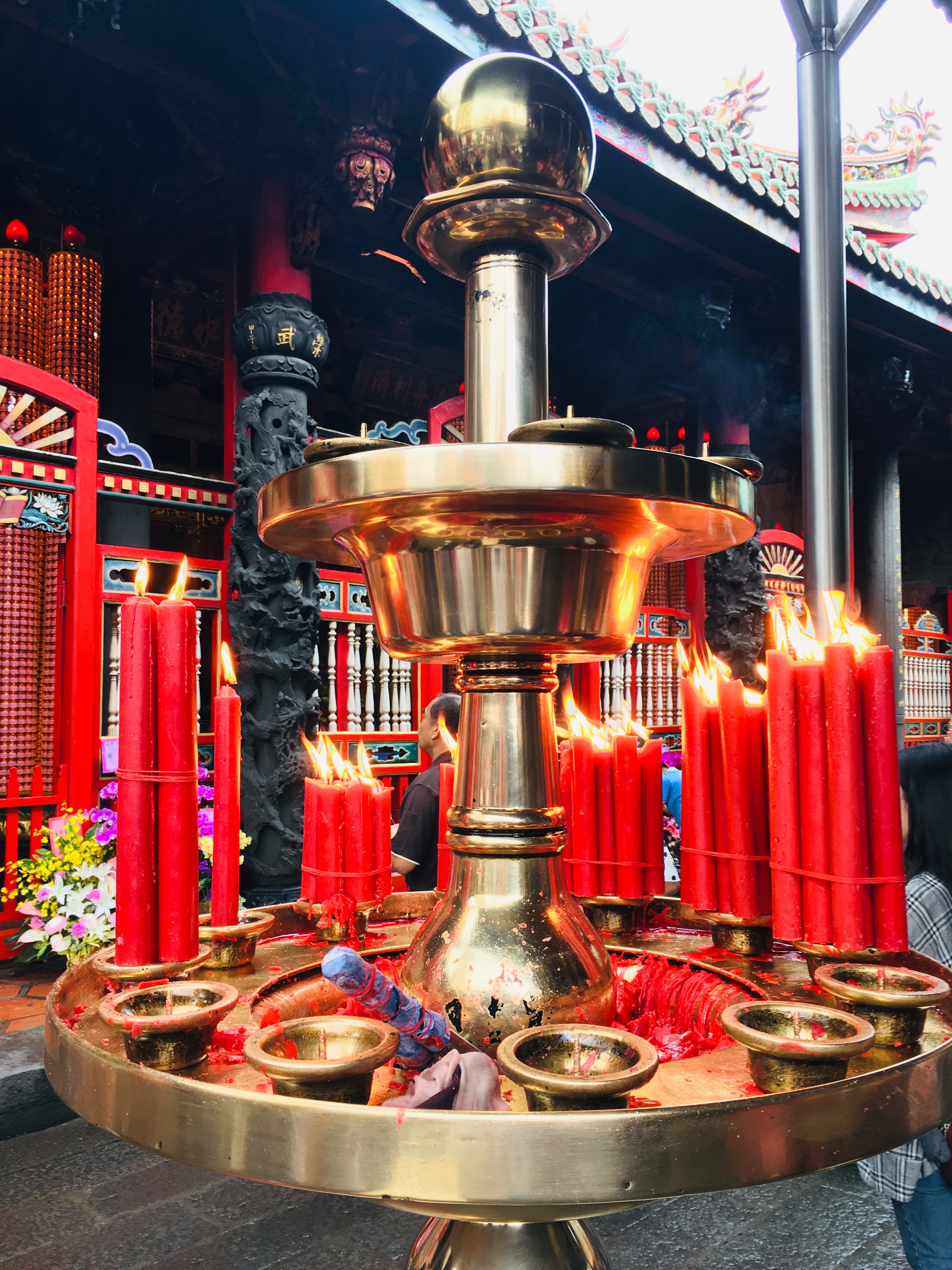
We took the Historical tour which showed us Longshan temple and explained the meaning behind some of the rituals (which was really nice actually); we also passed by the Red house and saw the LGBT district as well as the old Chinese quarter (where a.o. we learned about the differences between Chinese and Western zombies). We further strolled to the presidential house and saw the area where people protest, we continued to the 2-28 Peace Memorial Park which has rich history and ended up at the Chiang Kai-shek memorial hall. And I even skipped mentioning some stops 🙂
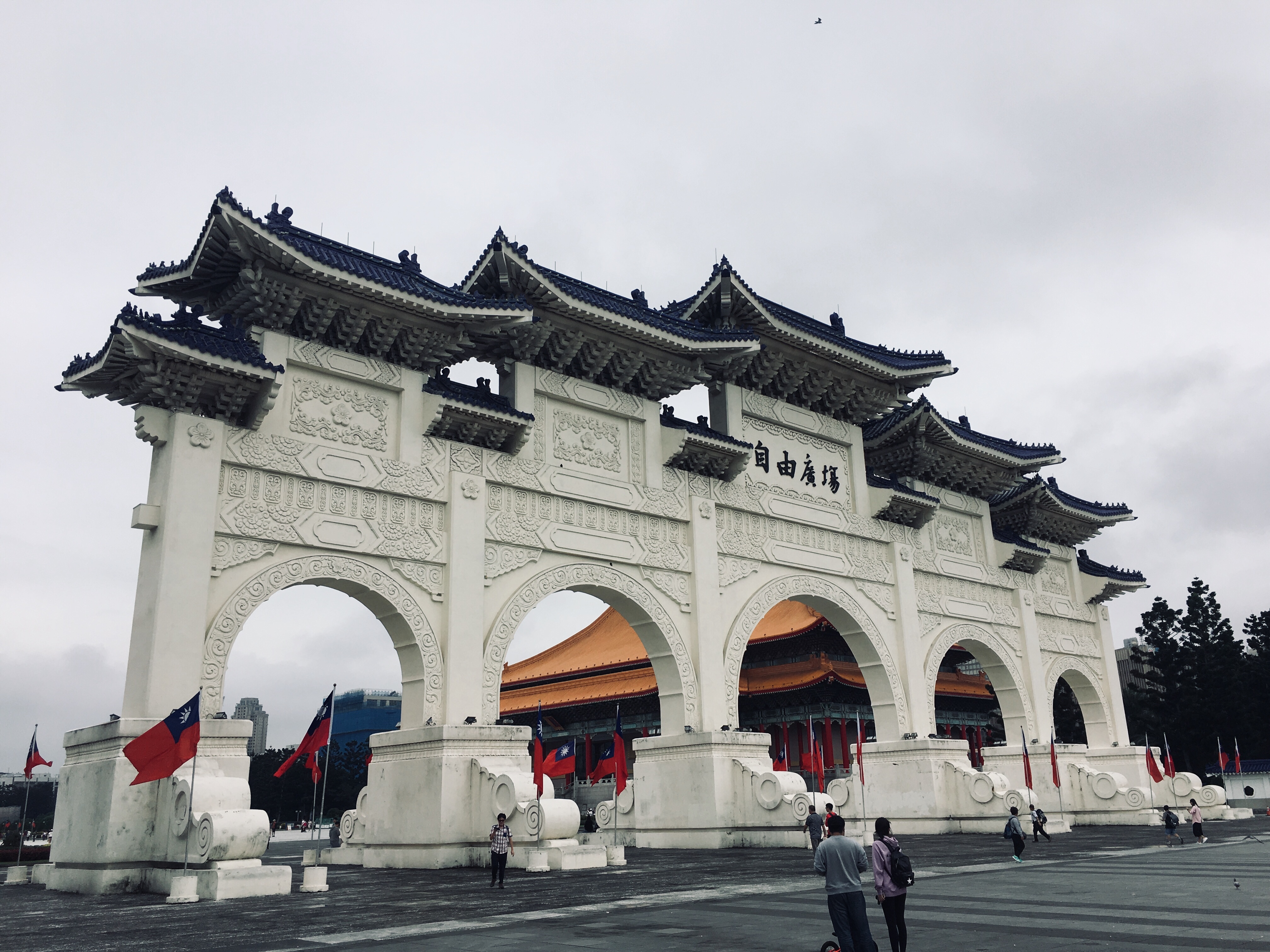
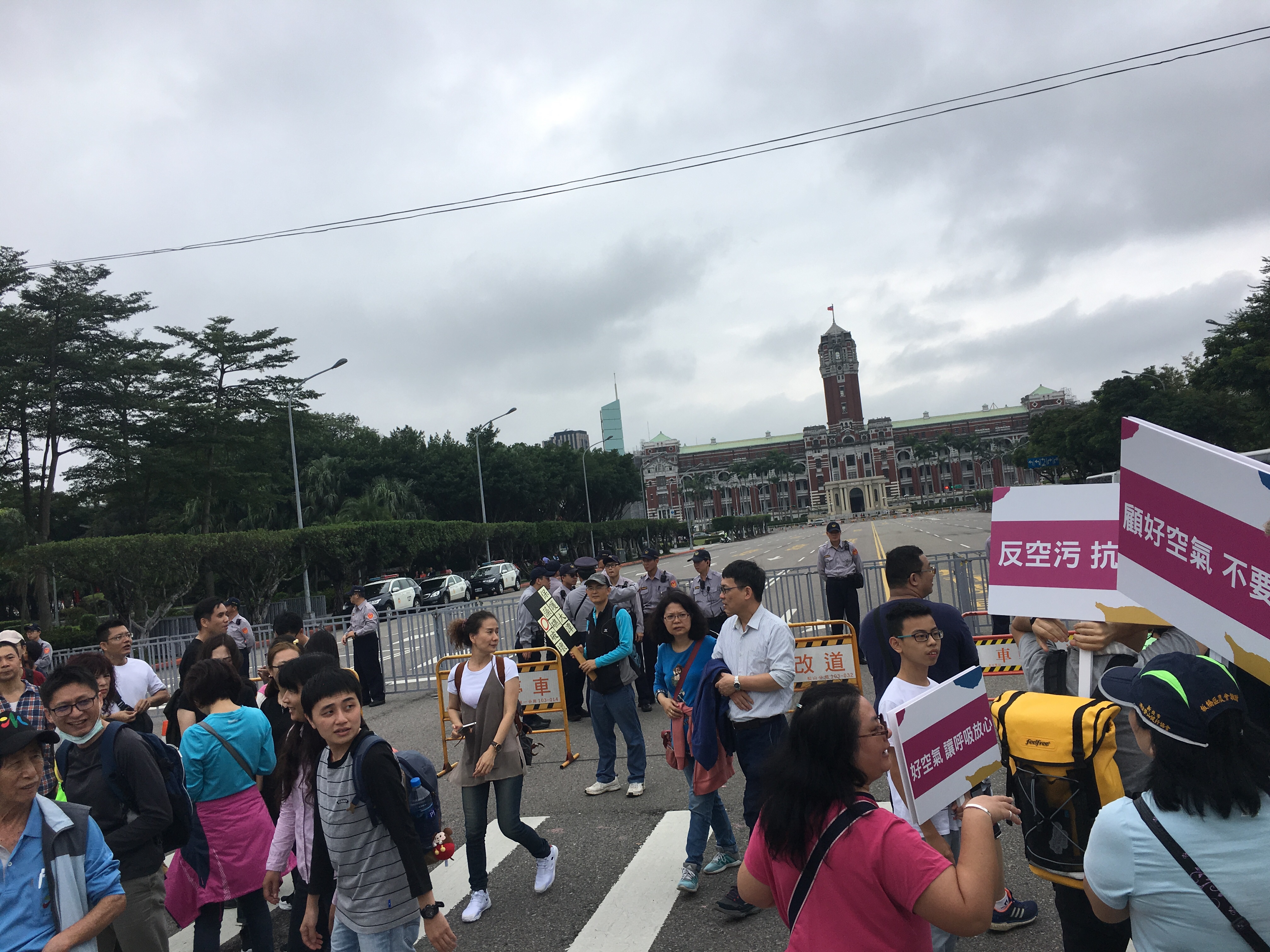
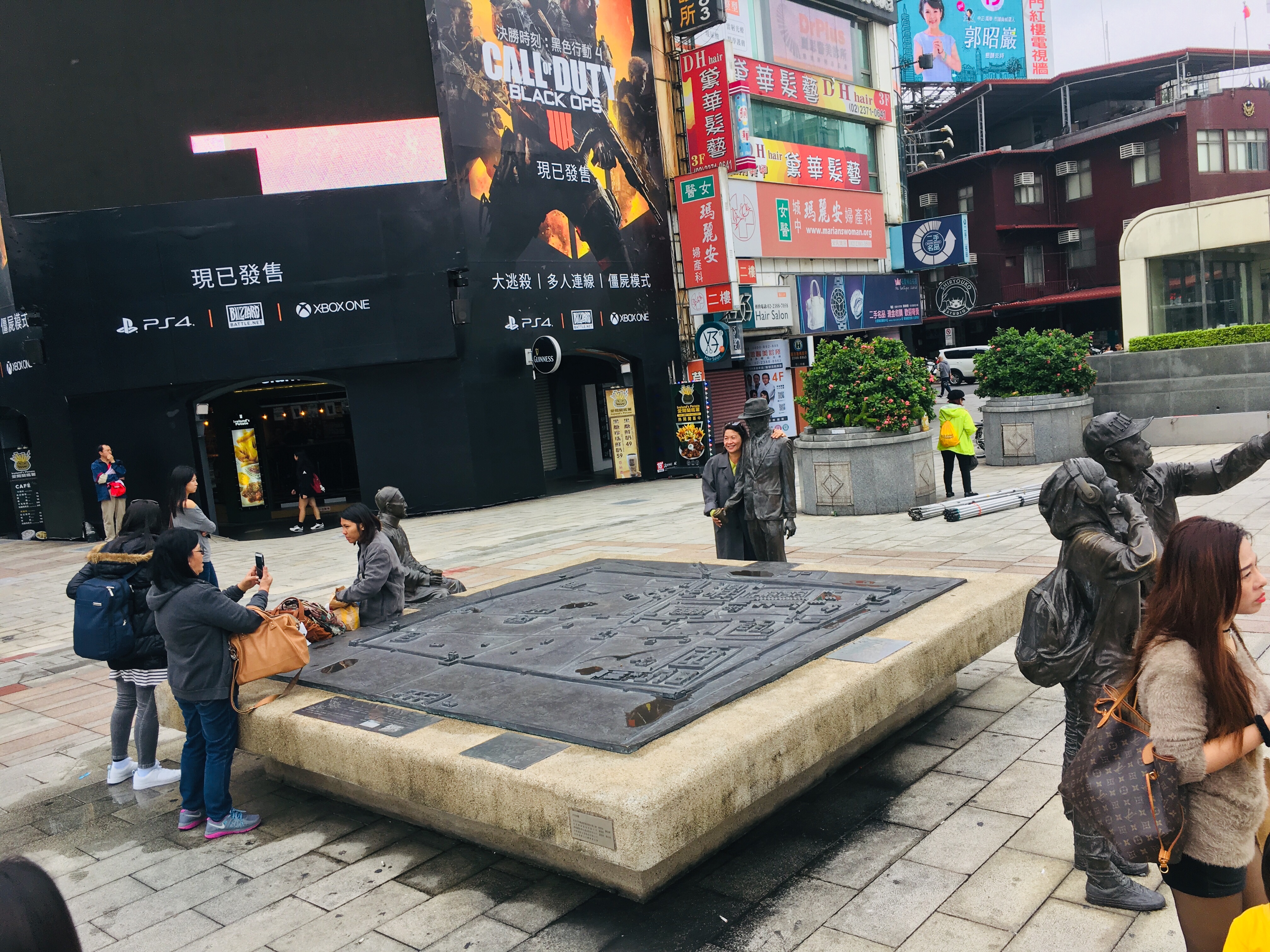
Note on the last picture the statues of the Chinese and Japanese men each with a cup of bubble tea and the modern Taiwanese teenagers taking a selfie – so much meaning behind this.
The tour ends very close to the Nanmen market, which offers great Taiwanese lunch options. If you want to try some good Taiwanese coffee or you miss your latte macchiato, around the corner is Cafe No.7.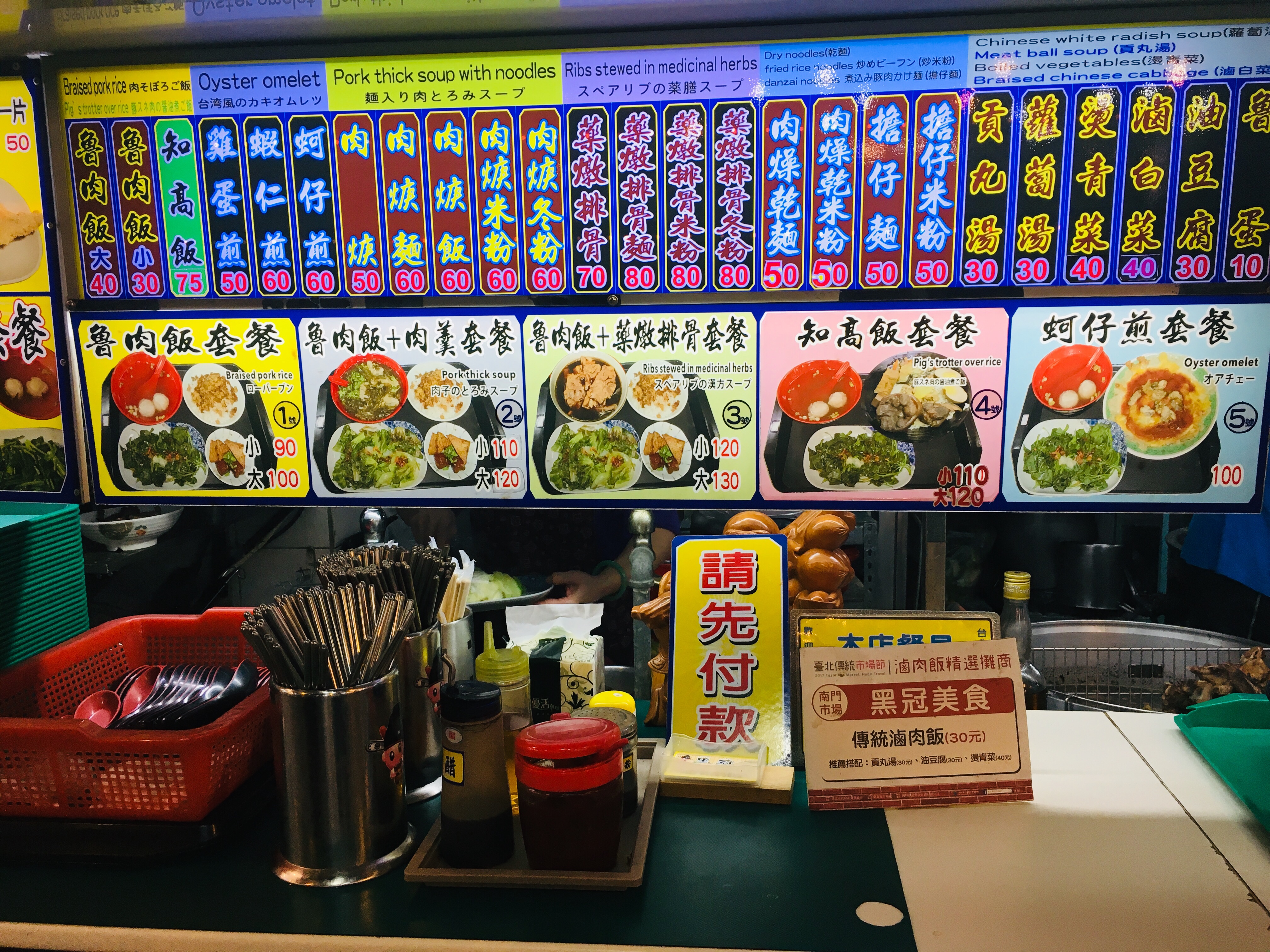
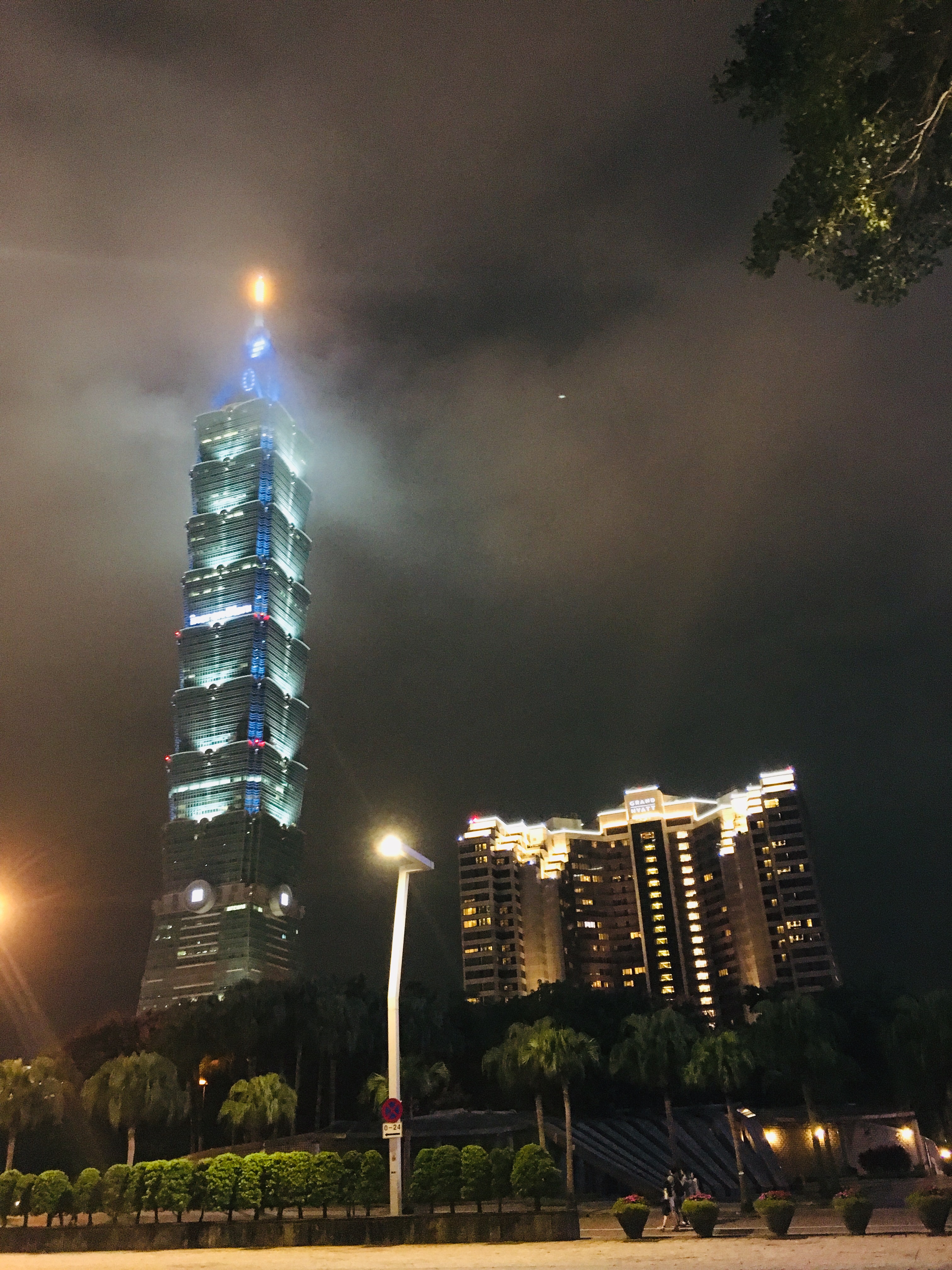
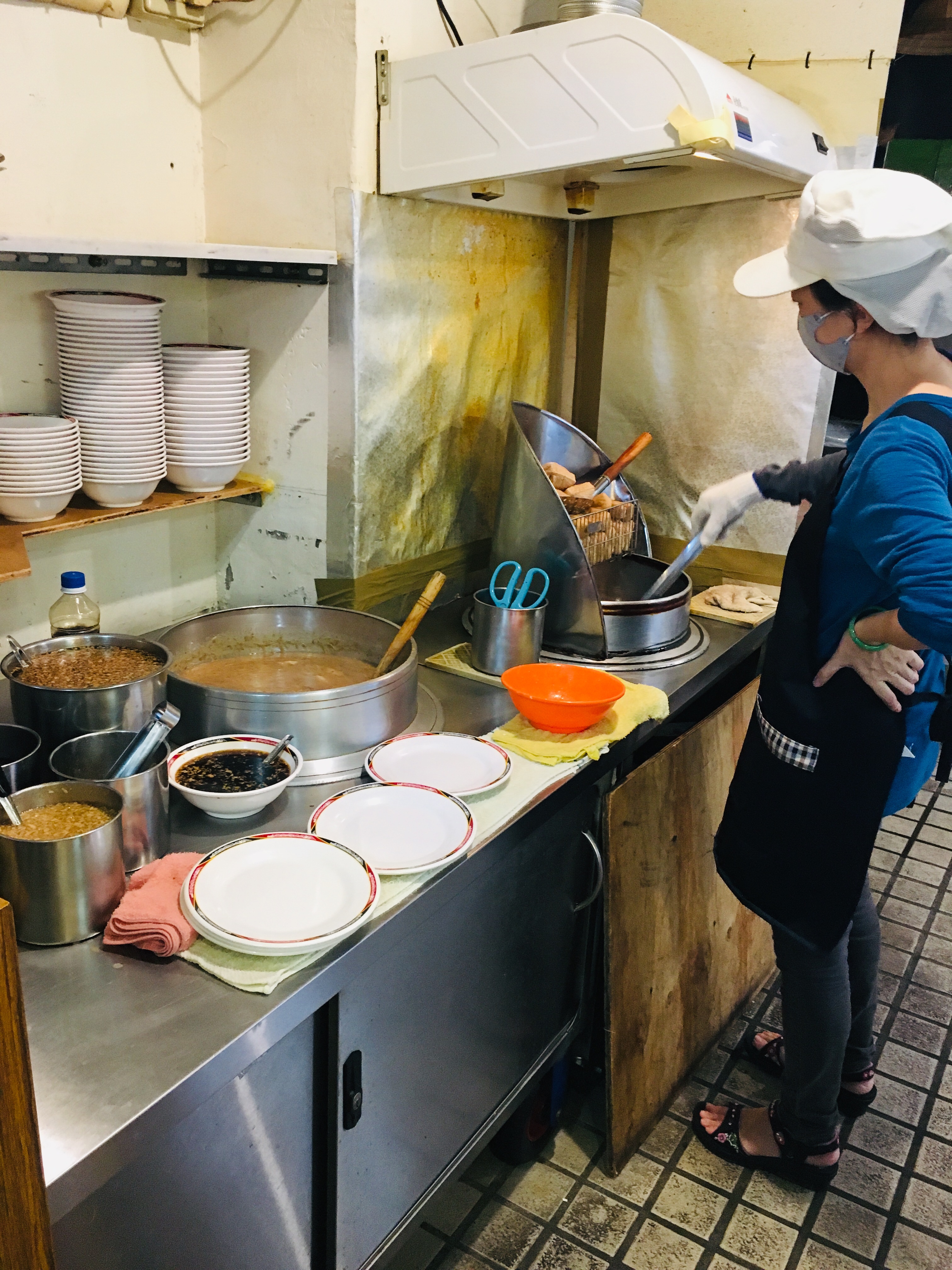 We also did the Modern walking tour which was shorter and a bit less exciting than the Historic one but it was still worth doing. We started close to Sun Yat-sen Memorial Hall monument, passed by the city hall and ended up at Taipei 101 which at 508 meter high was for a while the tallest building on earth.
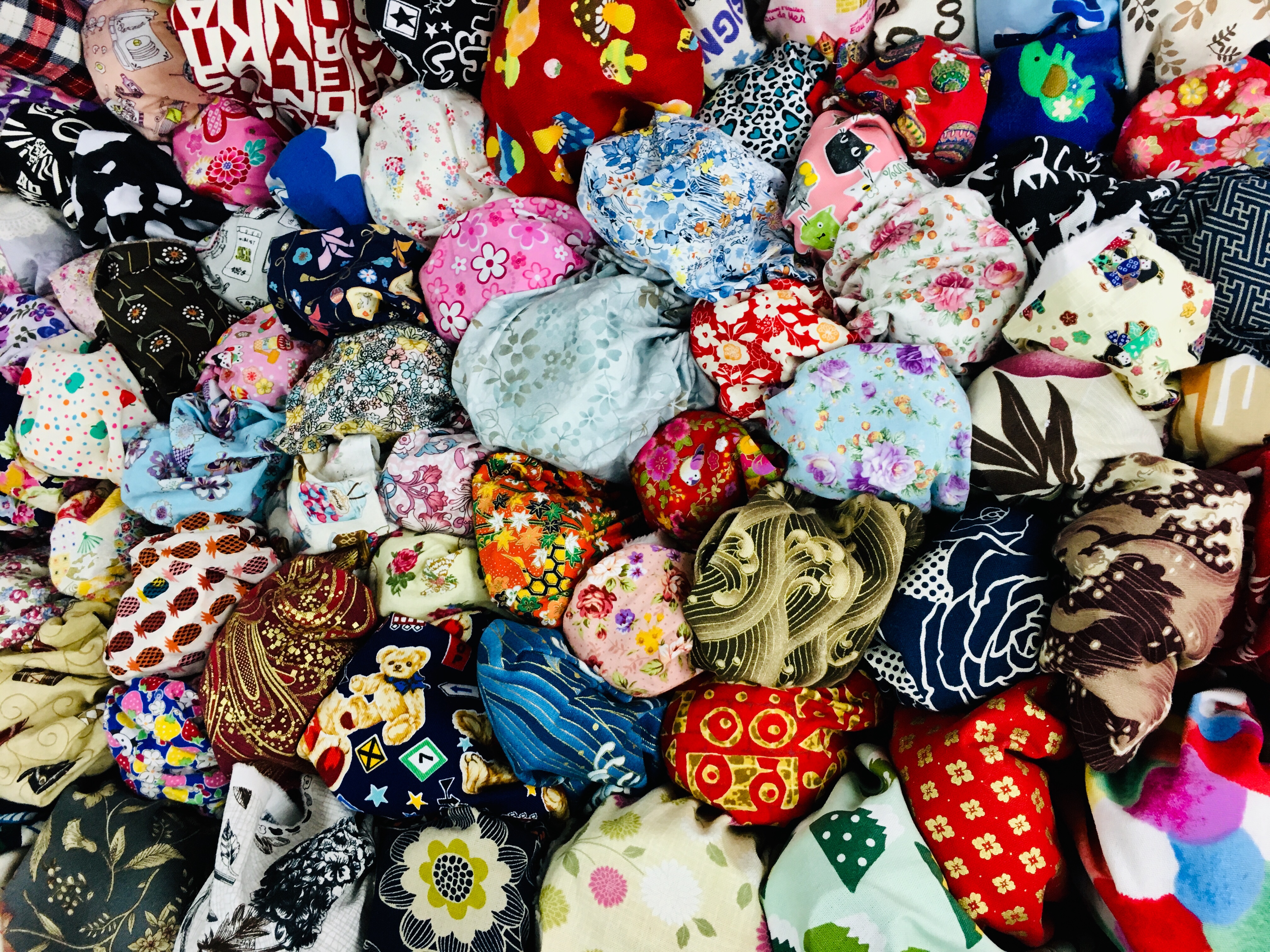
 To round off the walking tours we ended up going to the Golden Age tour too (I hope this doesn’t feel too much as a promotional post for the tours :).This was a relaxed one and also a favourite one where we got to explore most of Dihua street, namely a long shop street with lots of history, a small and beautiful City of God temple and a hipster section. We also got to see the typical Taiwanese cloth made from plastic bottles (yey for the environment!).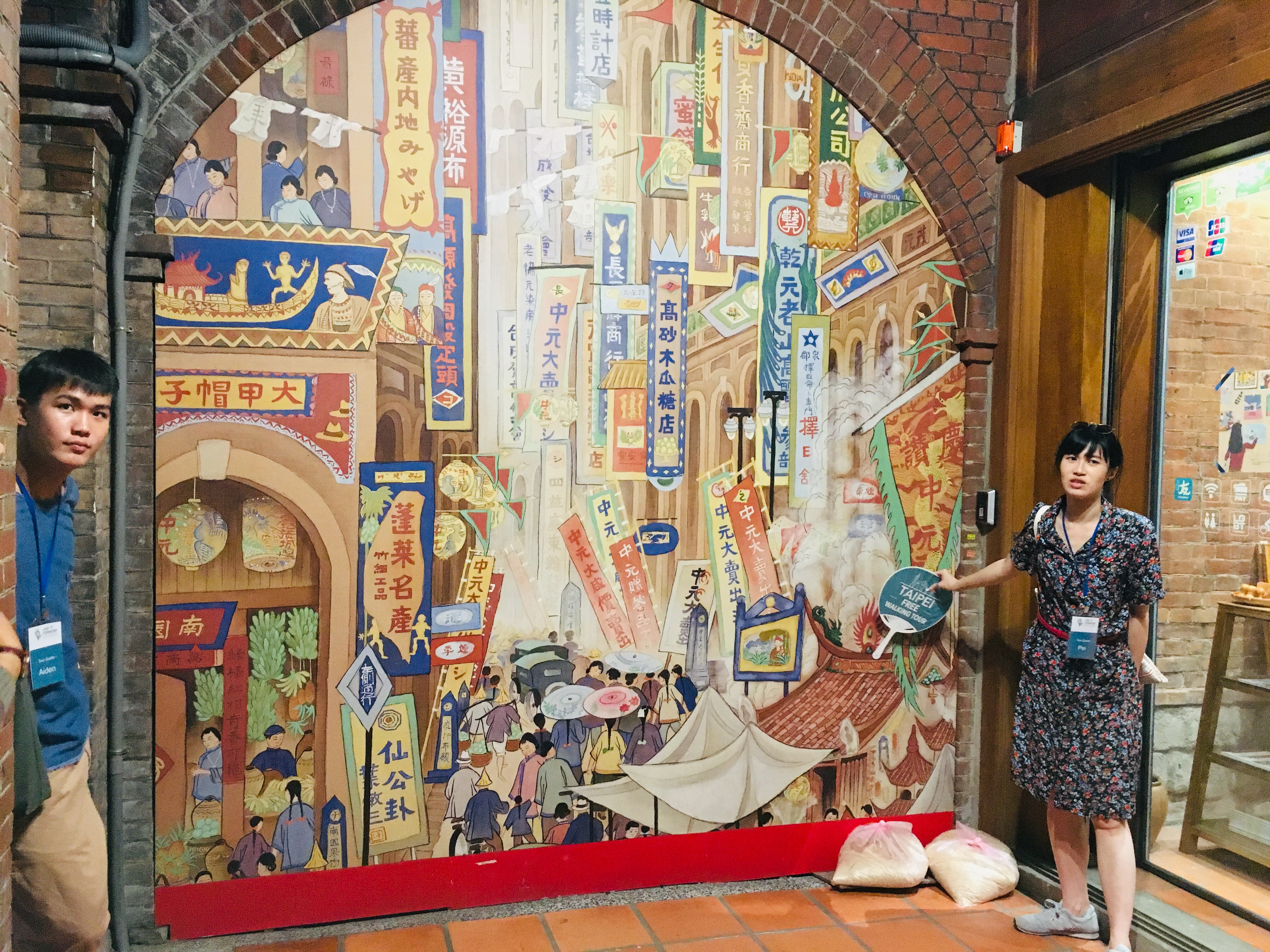
 At night we went to the Raohe night market, one of the oldest ones. This is definitely a must! Great endless choice of food and next to the entrance there is another beautiful temple. It is mostly focused on food and is less touristy than others.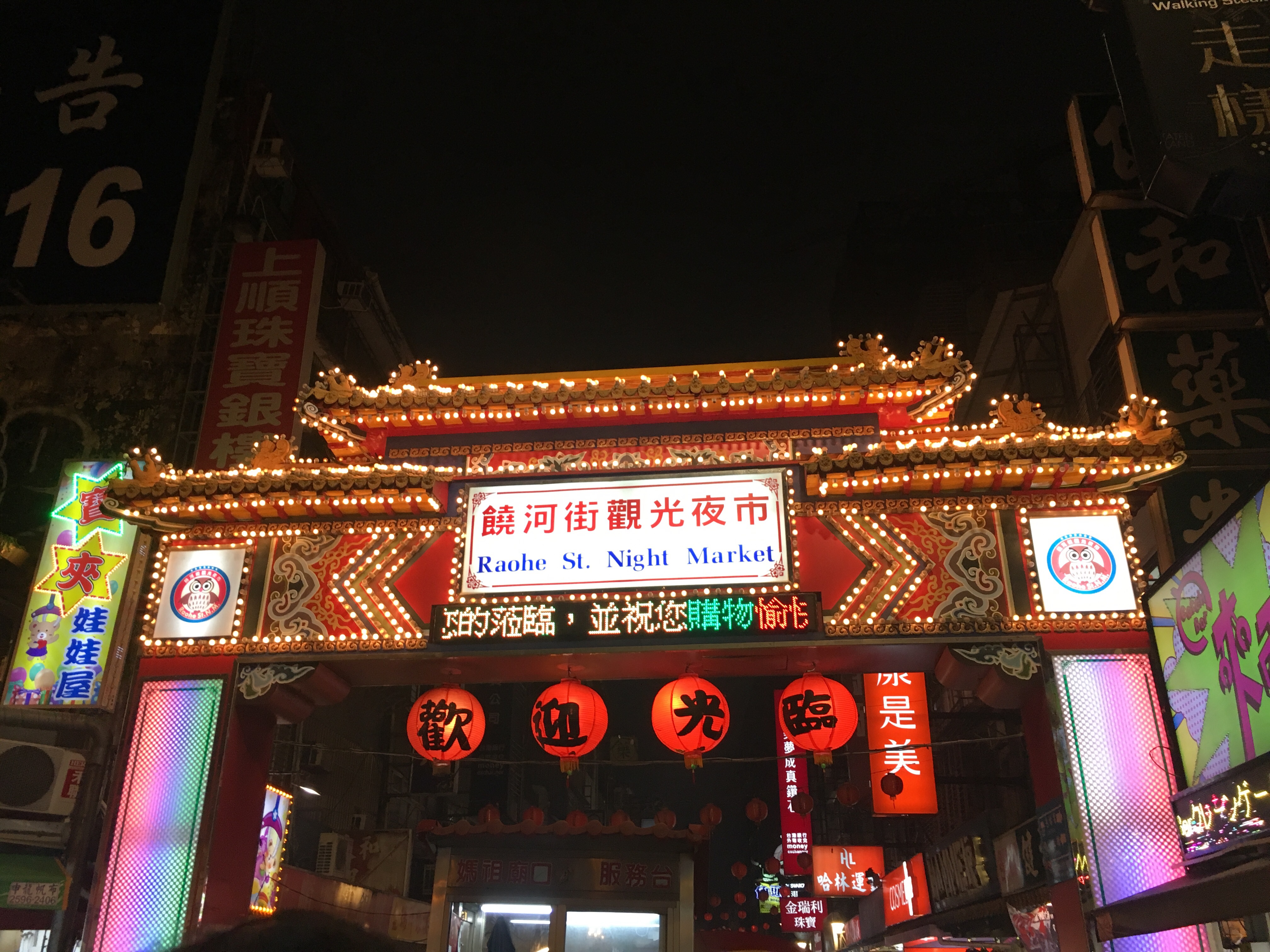
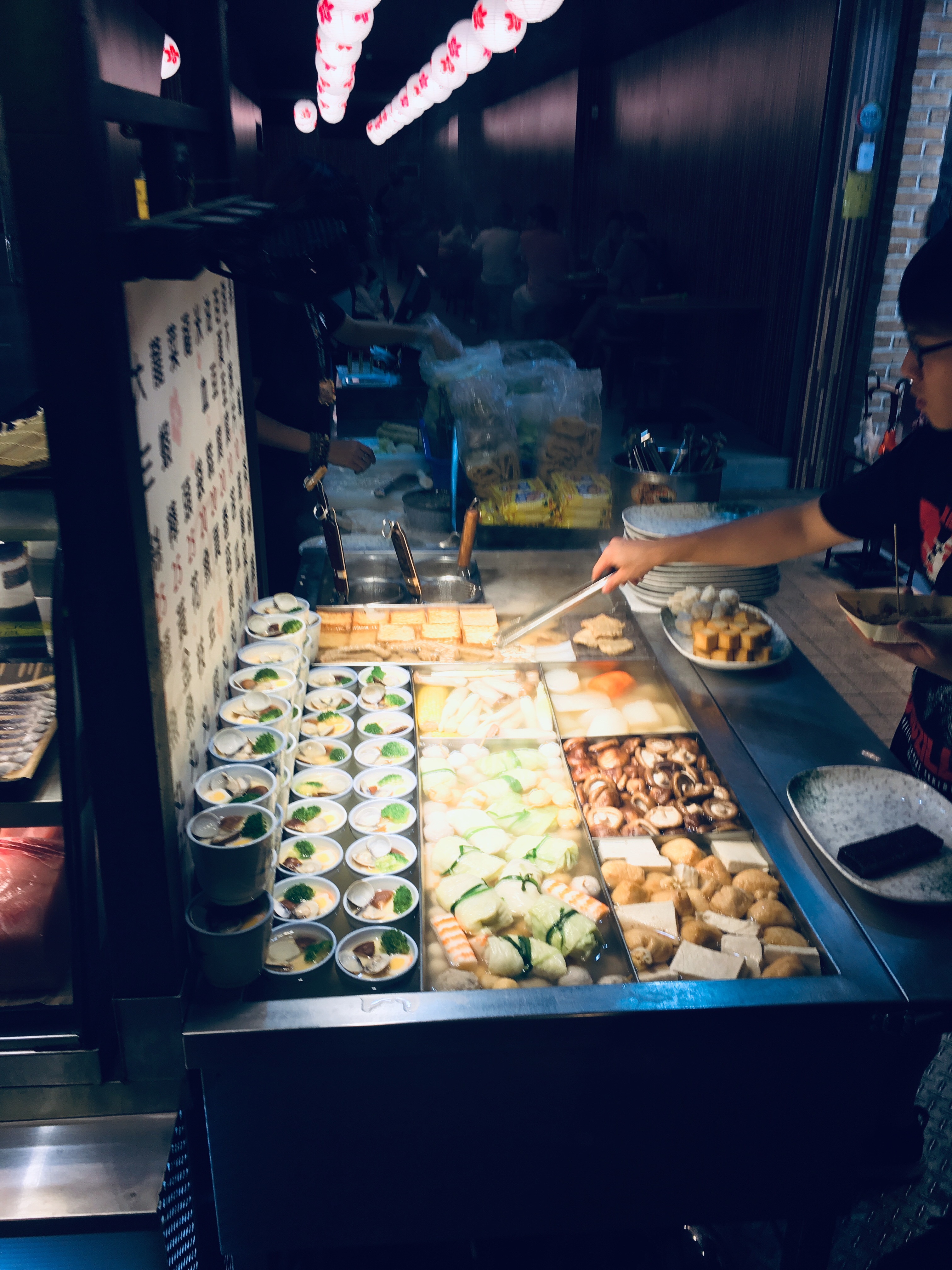
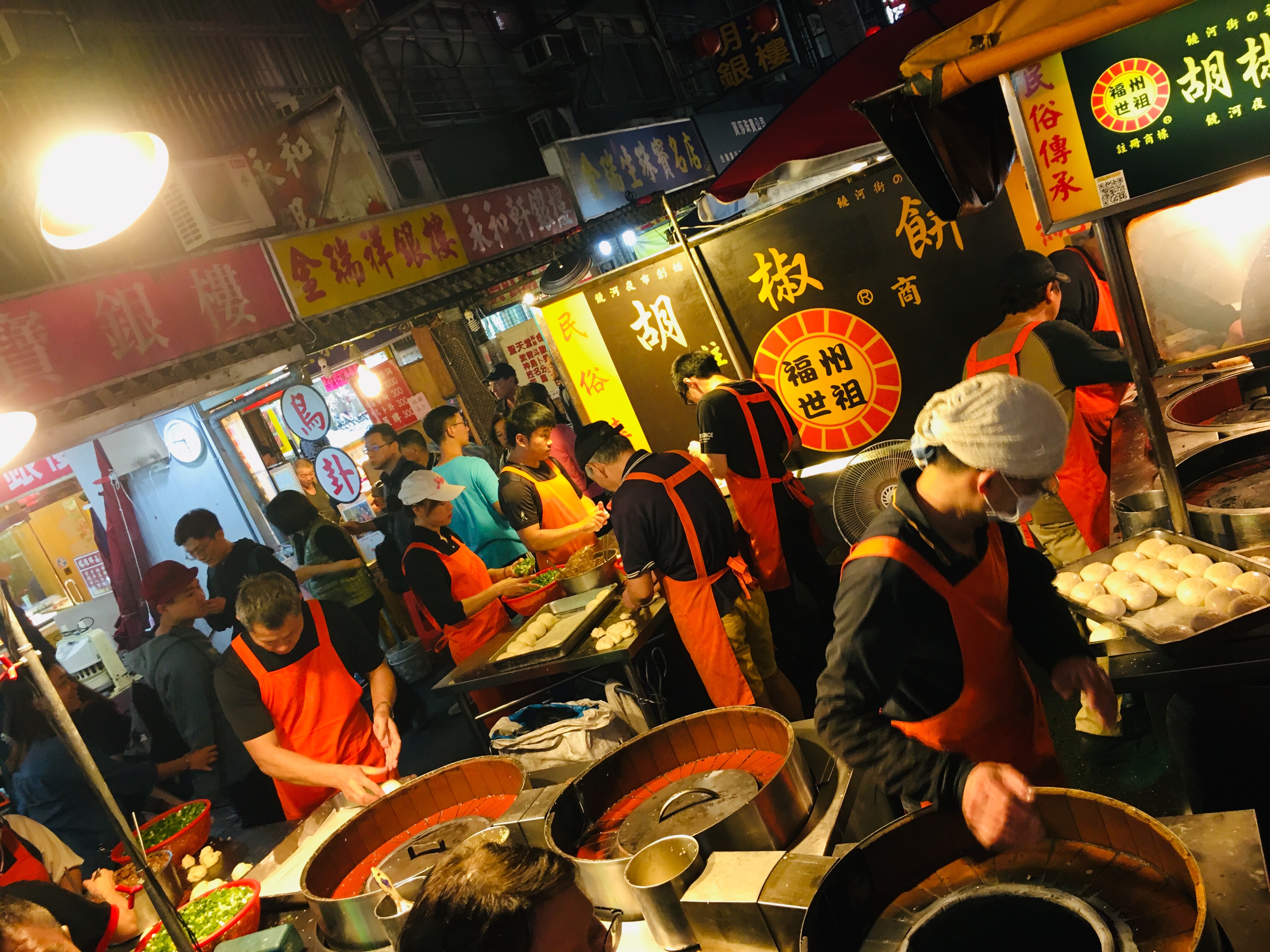
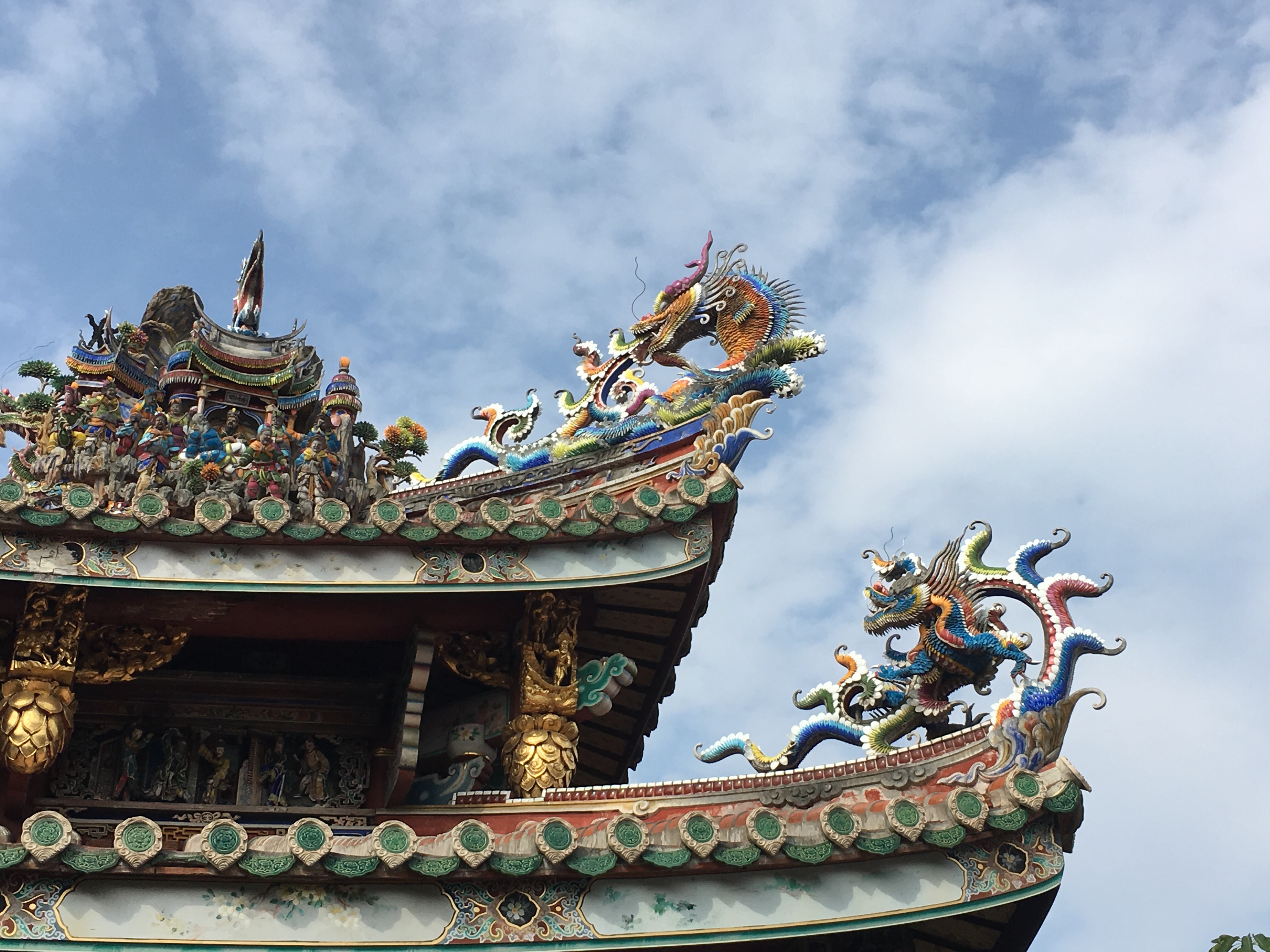
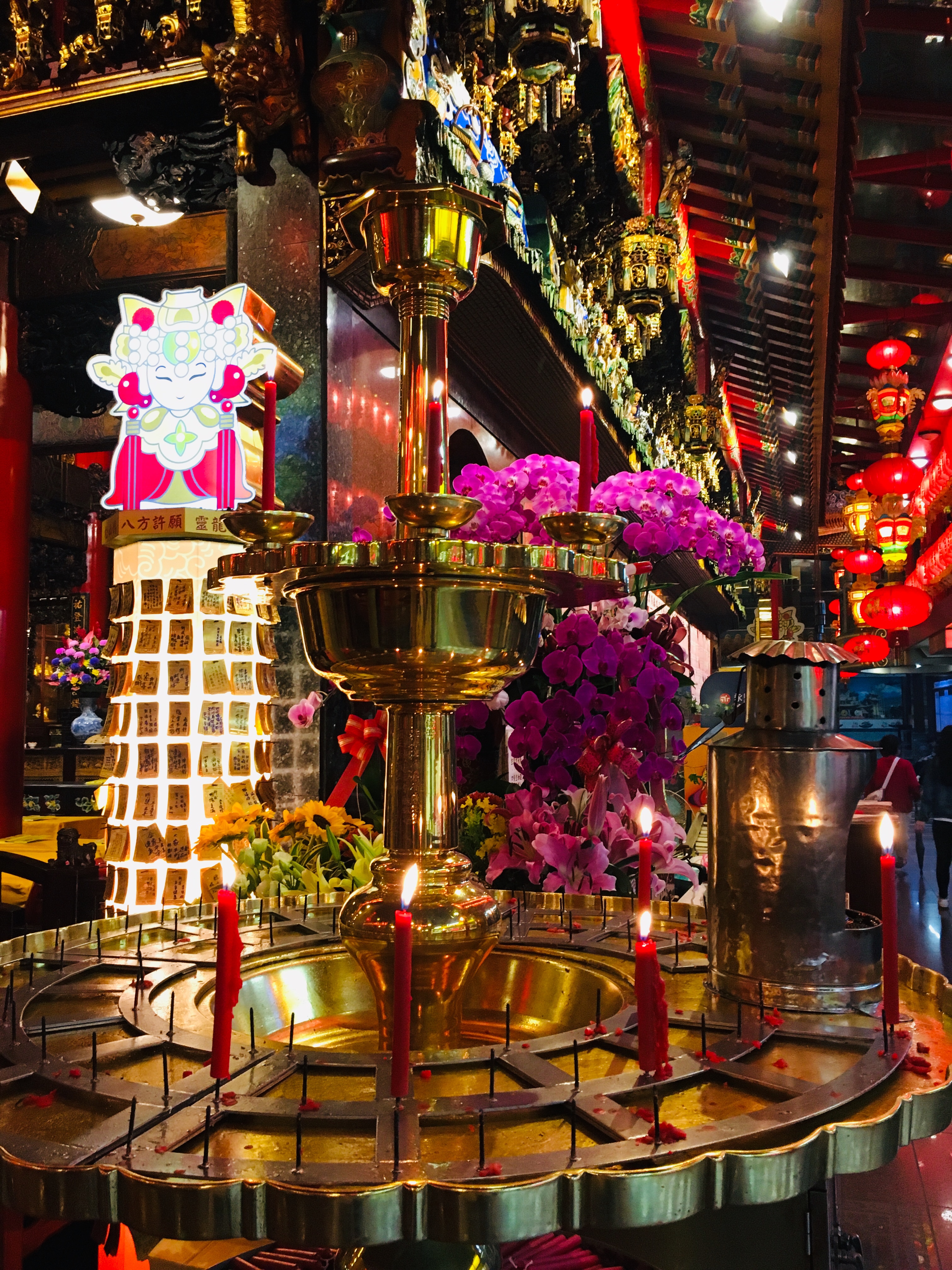 We went to several more night markets and another big one was Shilin night market. It covers a large area of streets and side streets selling food but also clothes, souvenirs, cosmetics, etc. It is also a more touristy one. If you have time, try to visit several night markets for the full experience.Perhaps the most interesting and beautiful temple we saw was the Baoan temple so try to squeeze it in. Just next to it is the Confucius temple which was rather majestic.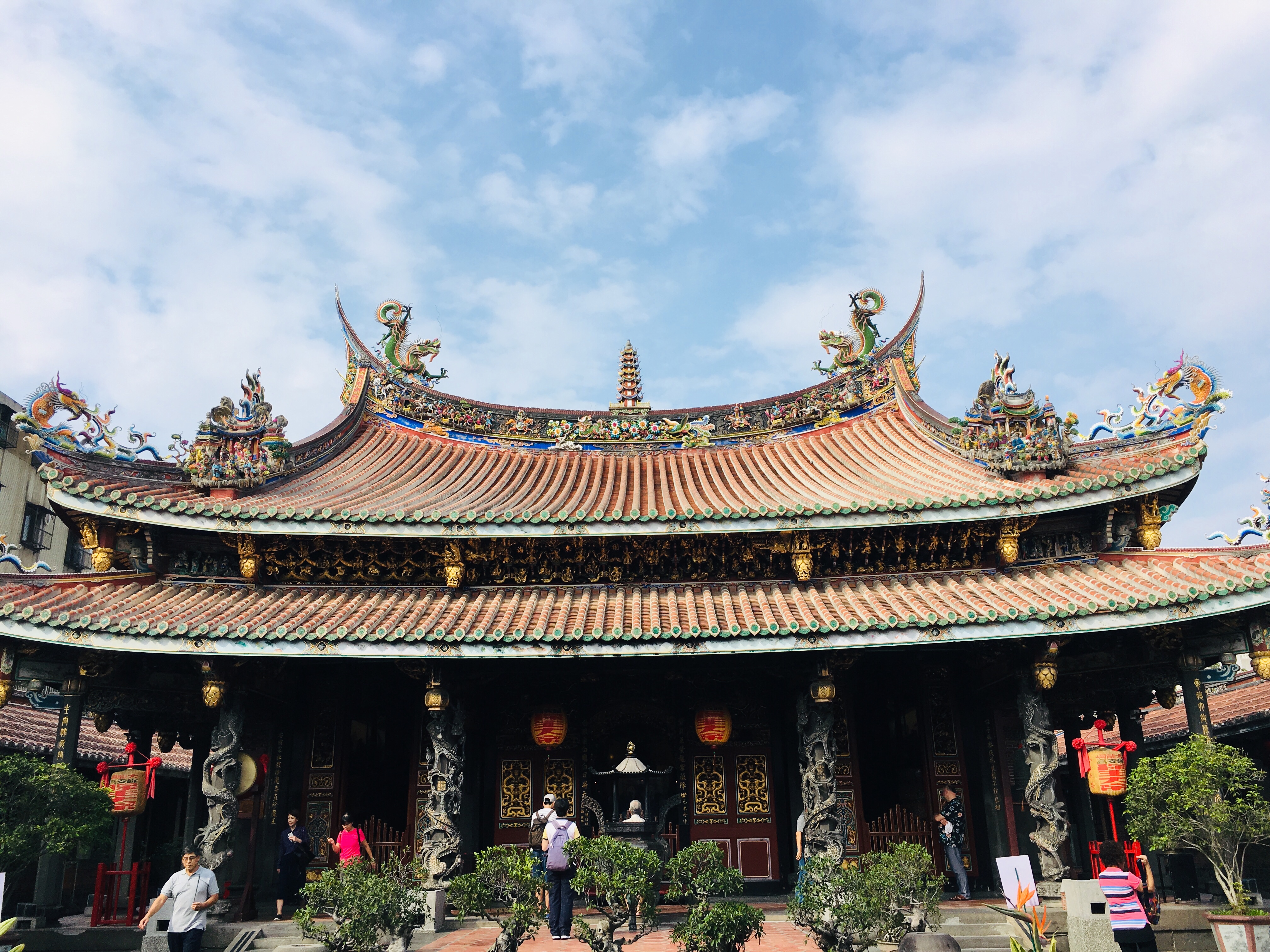
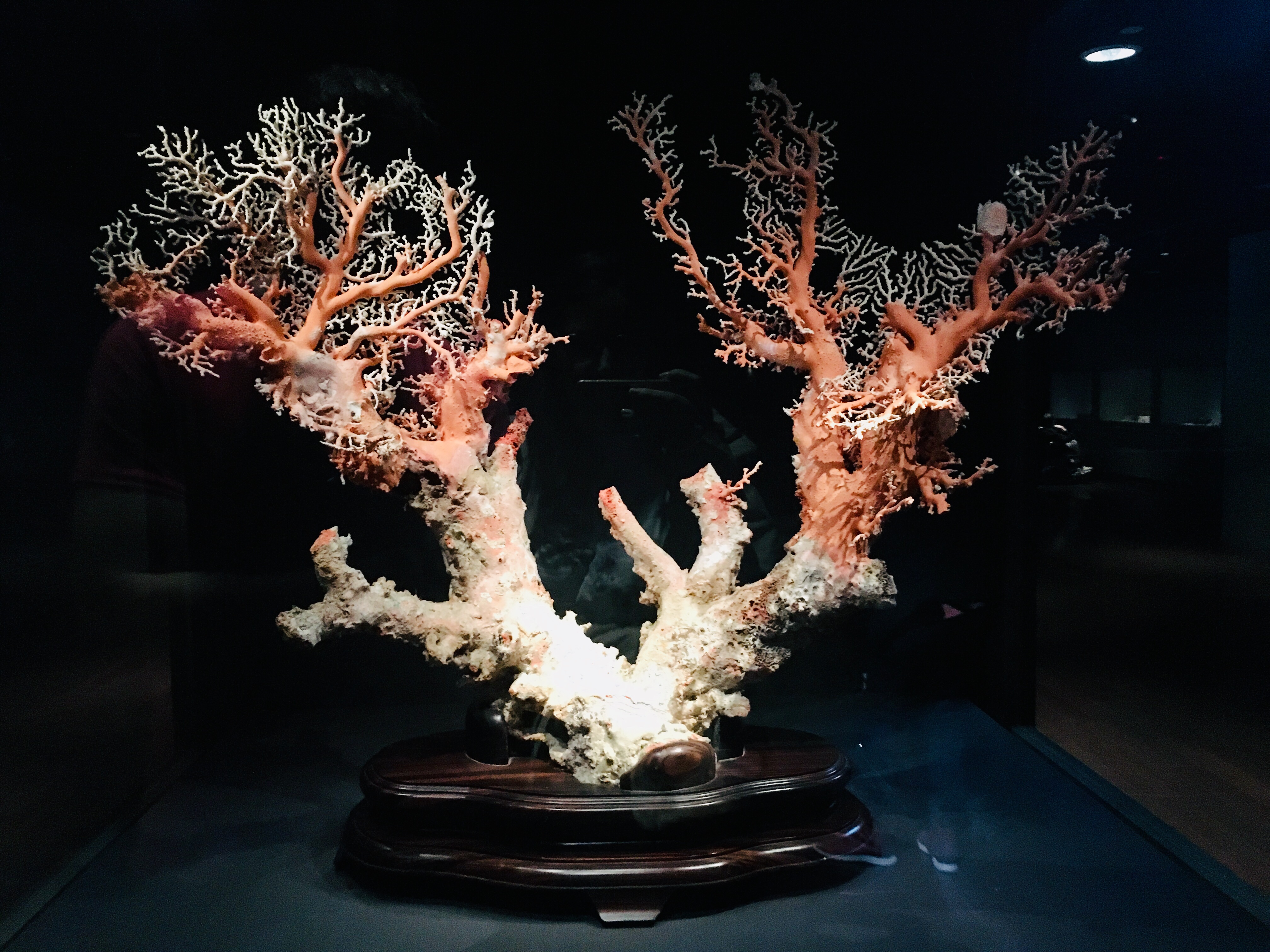
 Another must-see attraction is the National Palace Museum containing endless Chinese artifacts transported from the mainland some 70+ years ago. We followed the general advice and visited the museum on a Friday after 6pm when it was less packed with tourists (or in our view normally packed for a museum sometimes referred to as the Chinese Louvre). We unfortunately missed the highlight piece by a week, the Mona Lisa of the museum, namely a Jadeite cabbage (yep, you read this correctly.. but to be fair it looks beautiful on the photos). The lightning in the museum is a bit dark and there’s a lot to see so it could get a bit tiring at some point, to be frank.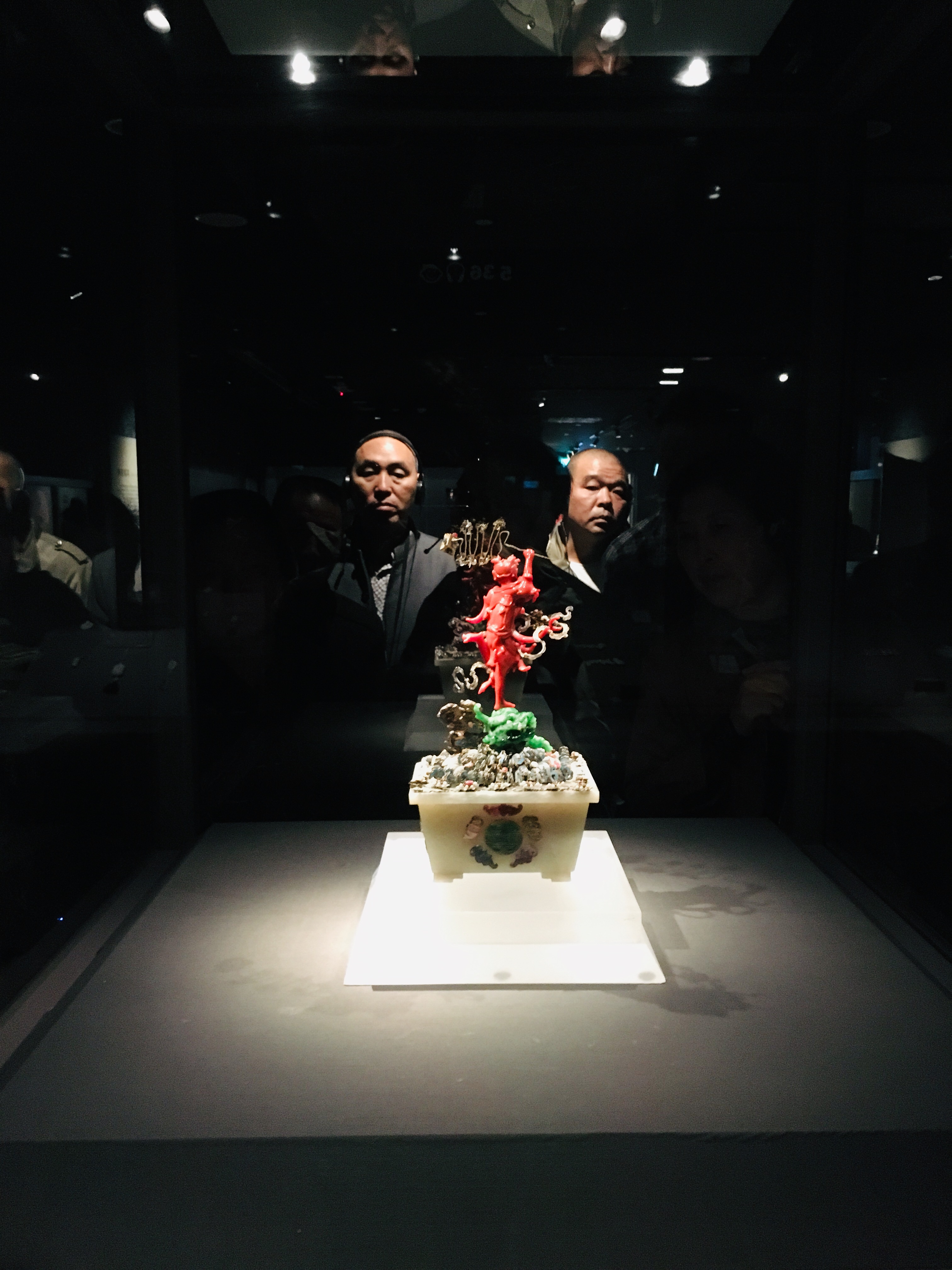
It is handy to equip yourself with an easy card to navigate the public transport. You can get it at the airport. Ours had Hello Kitty at the back.
Tainan
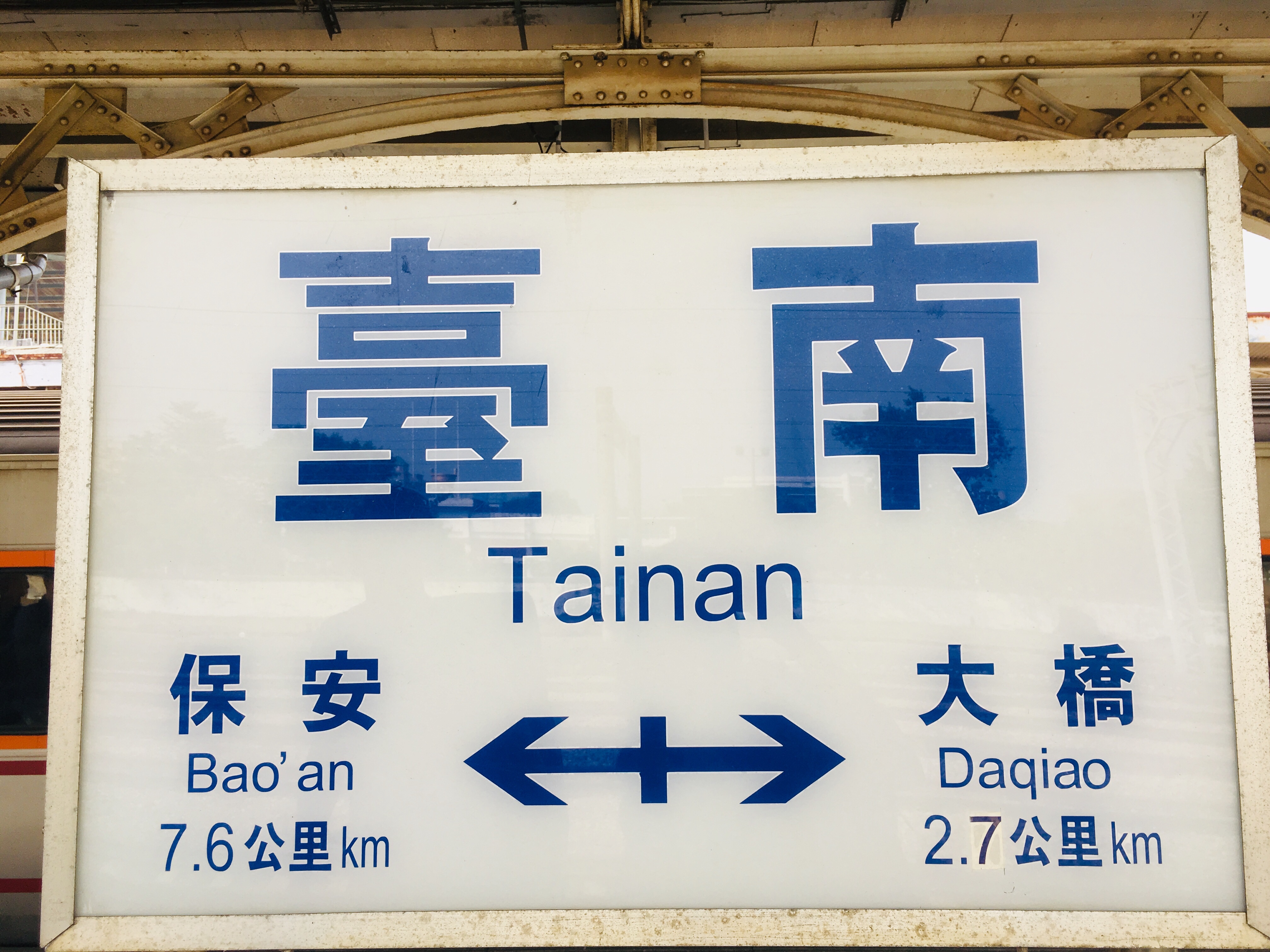
Tainan is the old capital of Taiwan and has a lot of temples, delicious food and sights to offer. We took the normal train line from Taipei which took four hours (not the high speed one which apparently stops at the outskirts of the city). It’s a perfect city for a one or two day trip.
Most of the sights are temples (eg Grand Matsu Temple or actually two of them; God of War temple; Confucius temple), as well as several sights linked to the Dutch presence on the island (such as the Chihkan towers and the Dutch fort). Also fun to see is the ‘hipster’ Shennong Street.
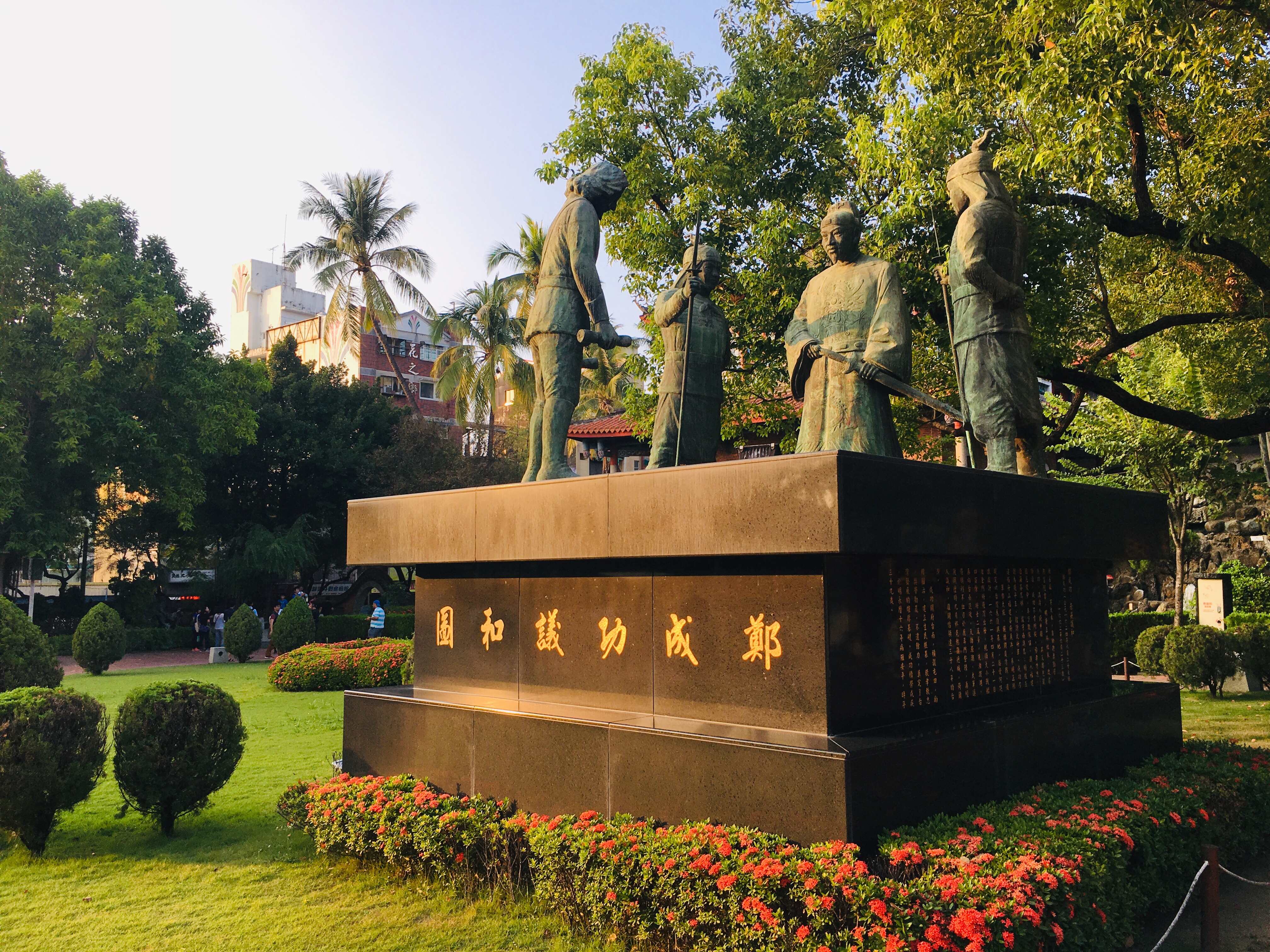
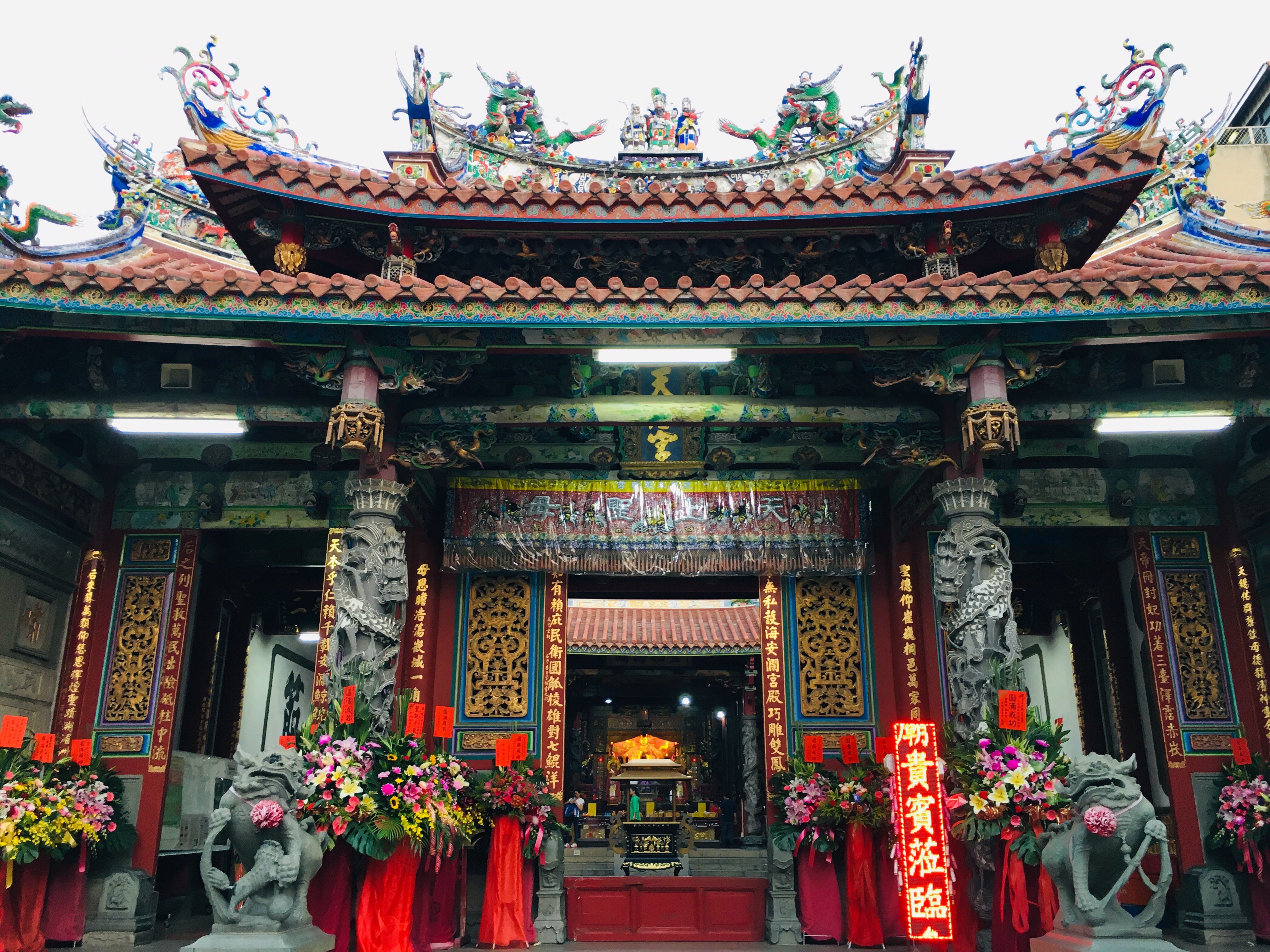
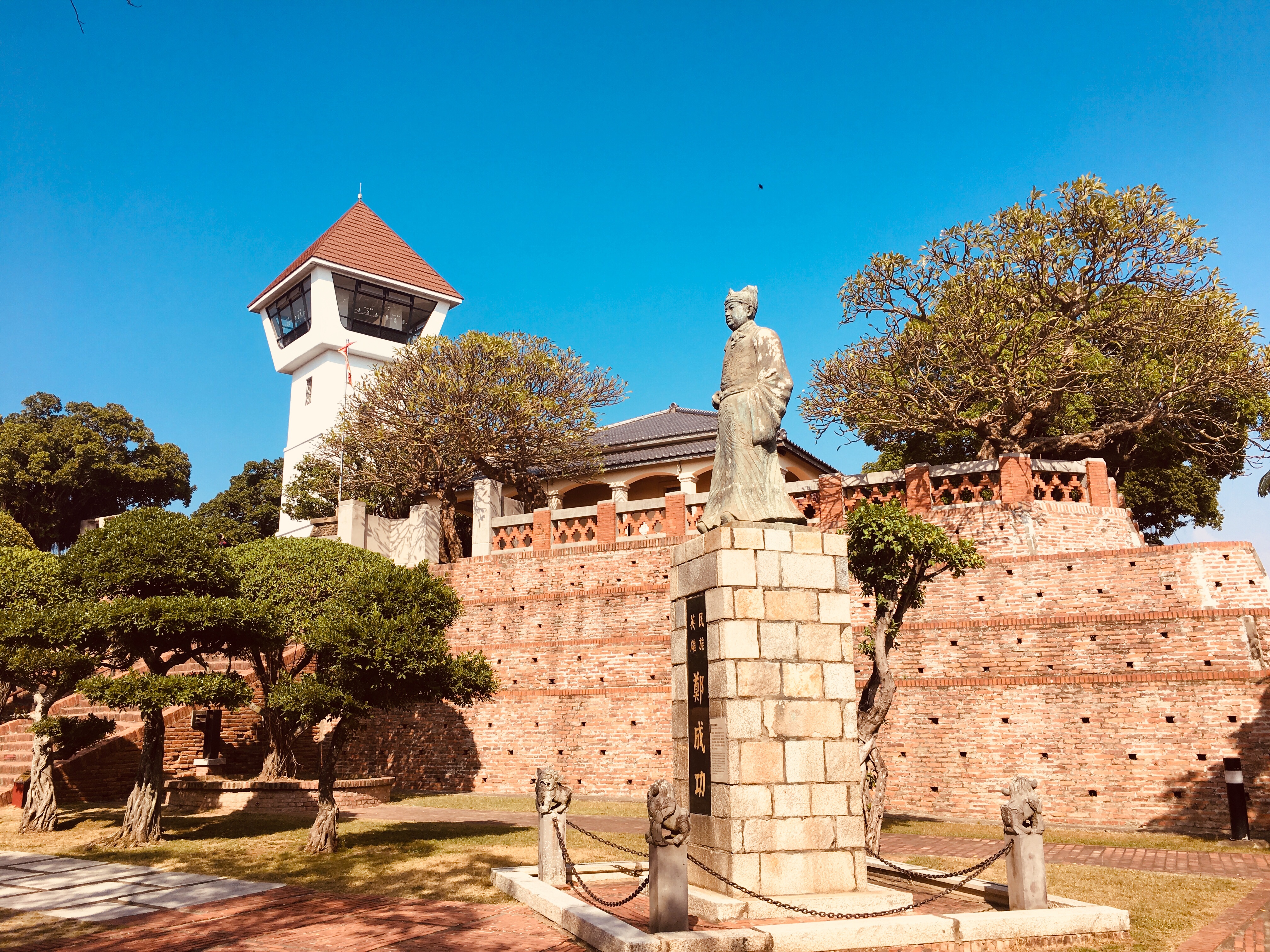
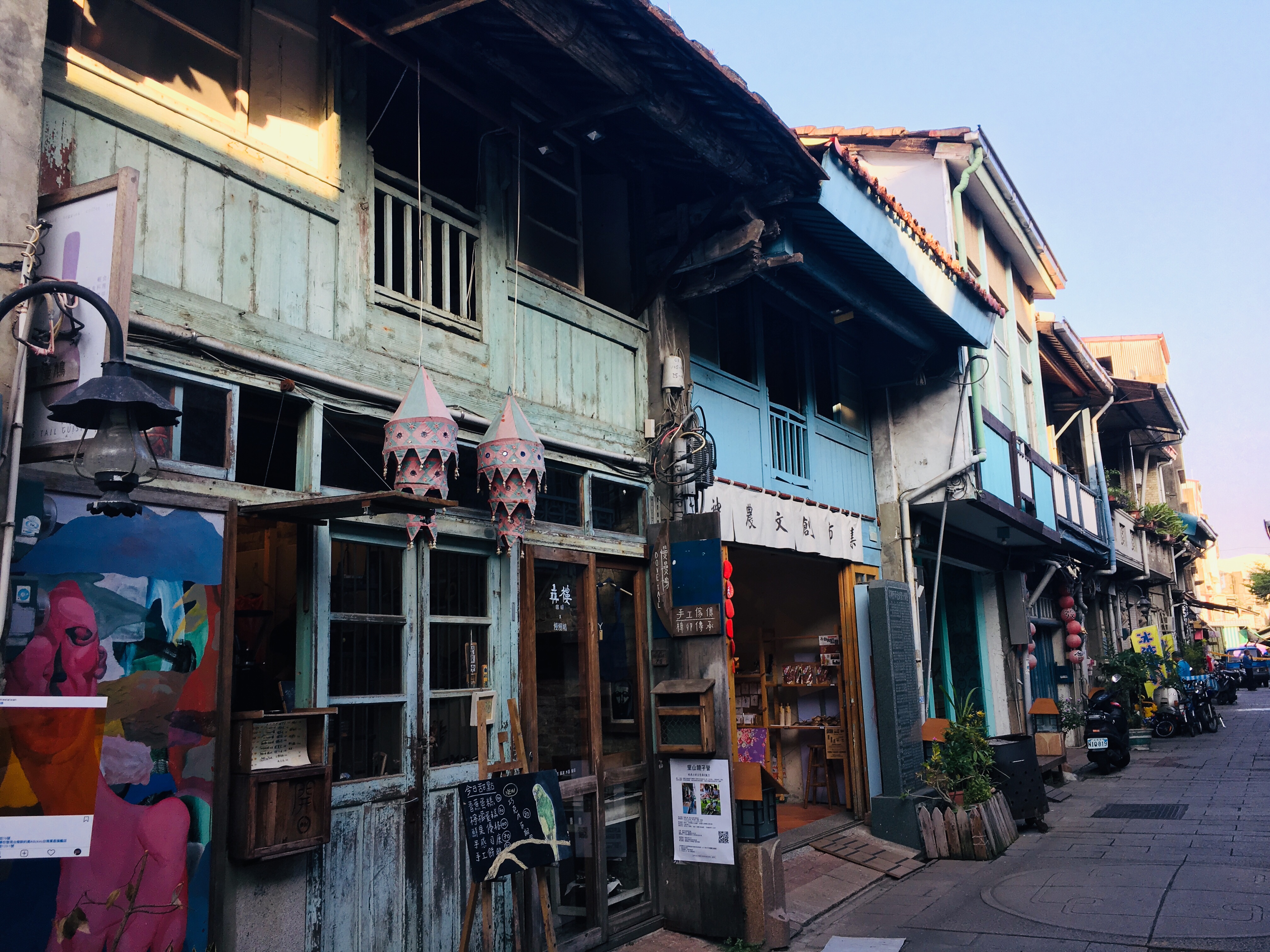
We would really recommend to get bikes to explore around the city. You can find them at several locations throughout the city (including at the station) and these are easy to rent with a credit card or otherwise with the easycard (though for that it seems you need to register and a Taiwanese number is required). Rate was rather cheap, around 3 euros for the day.
With the bikes we easily got to Anbing area where the old Dutch fort is and came back cycling by one of the canals.
Alishan National Park (and Chiayi)
The Alishan national park offers a great escape from the city life to a beautiful fairytale forest. In spring the trees blossom will likely be very beautiful, we were however there in November. The park offers some easy walks and we managed to walk nearly all in several hours. There are two cute short train rides you can take as an alternative. There are lots of Chinese tourists but you can still find quiet spots (we were there on a weekday).
Spoiler alert – the oldest tree we saw was 2000 years old! Let us know if you’ve been there and you’ve seen an older one as we might have missed it.
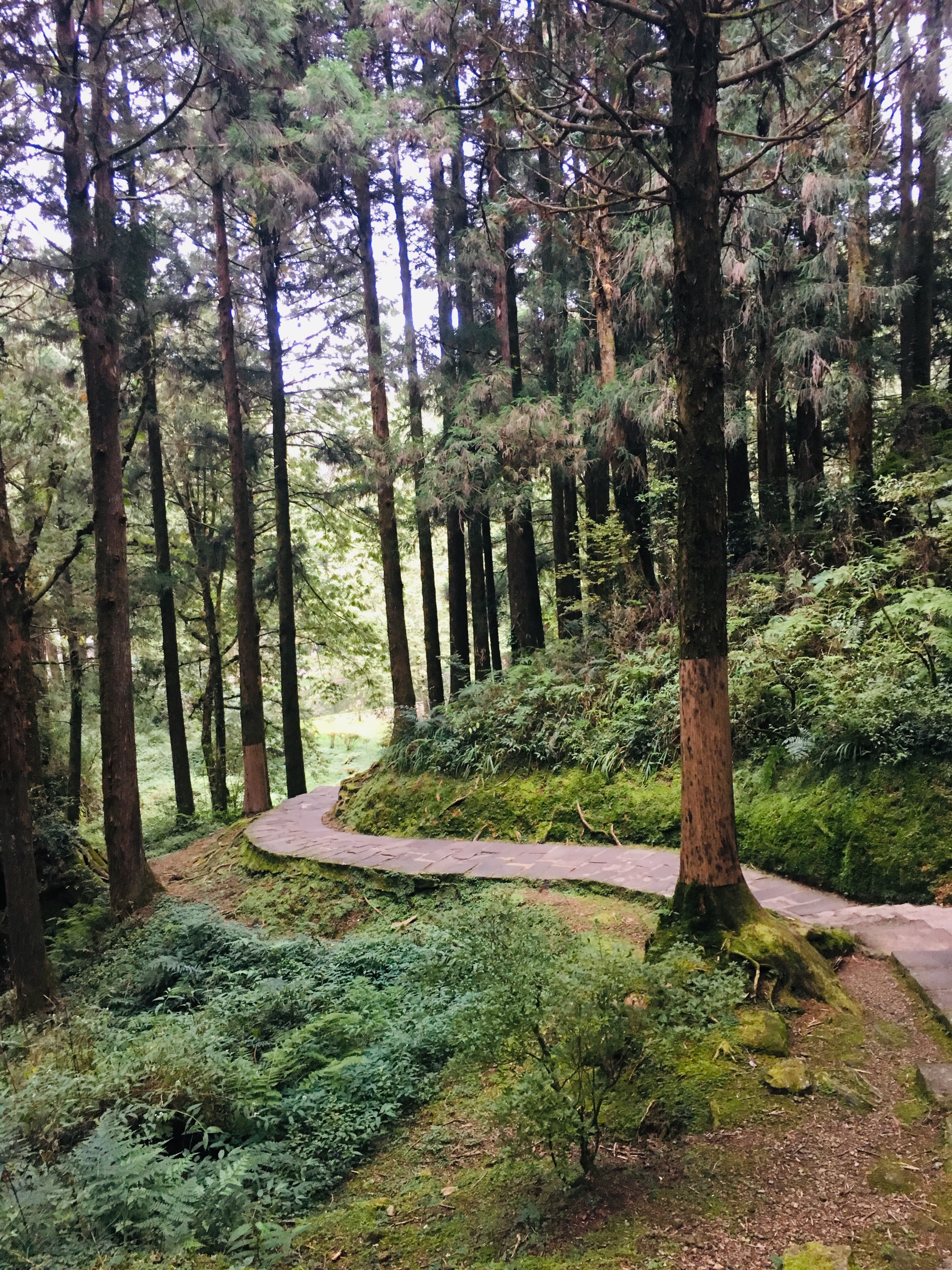
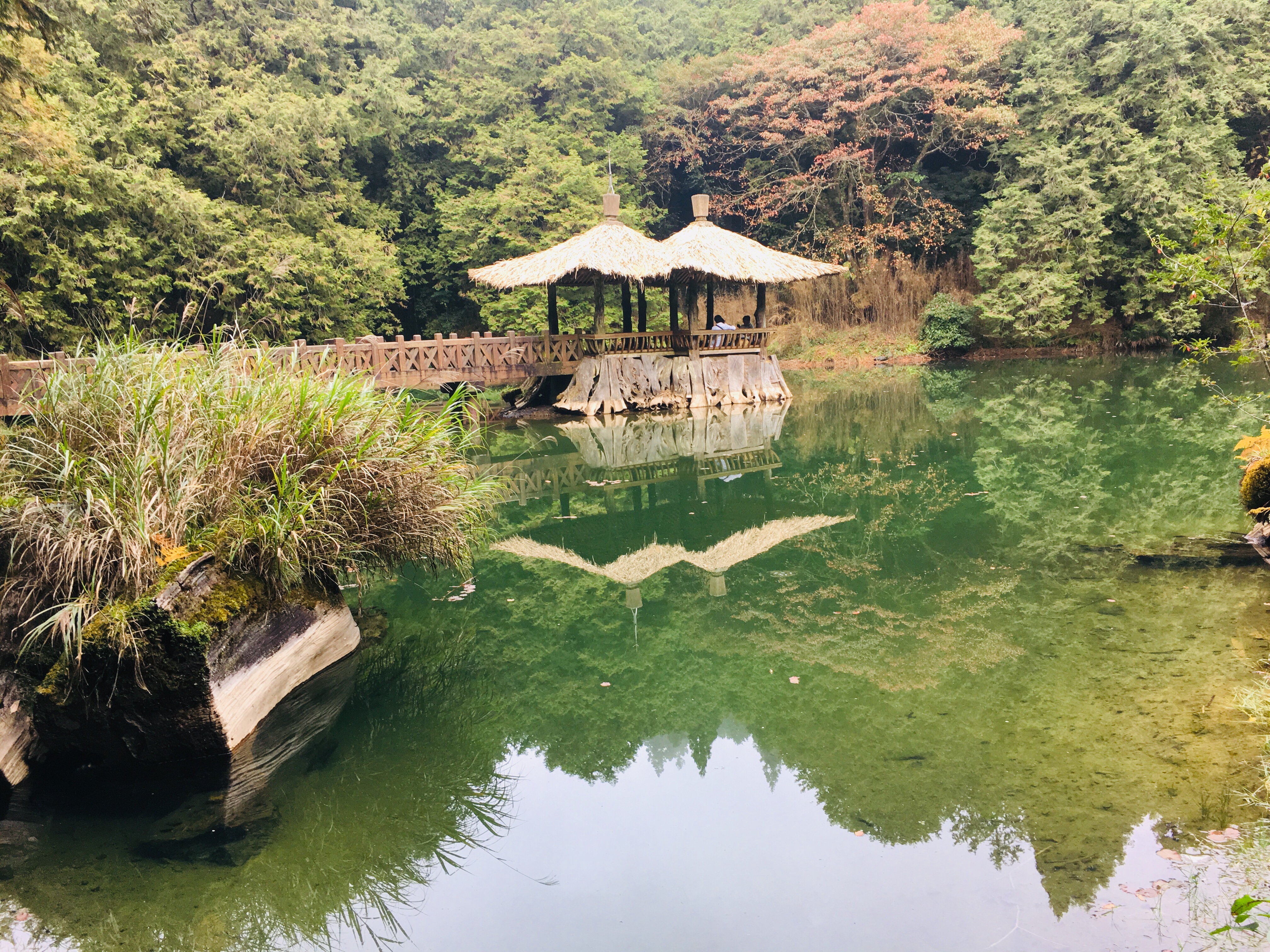
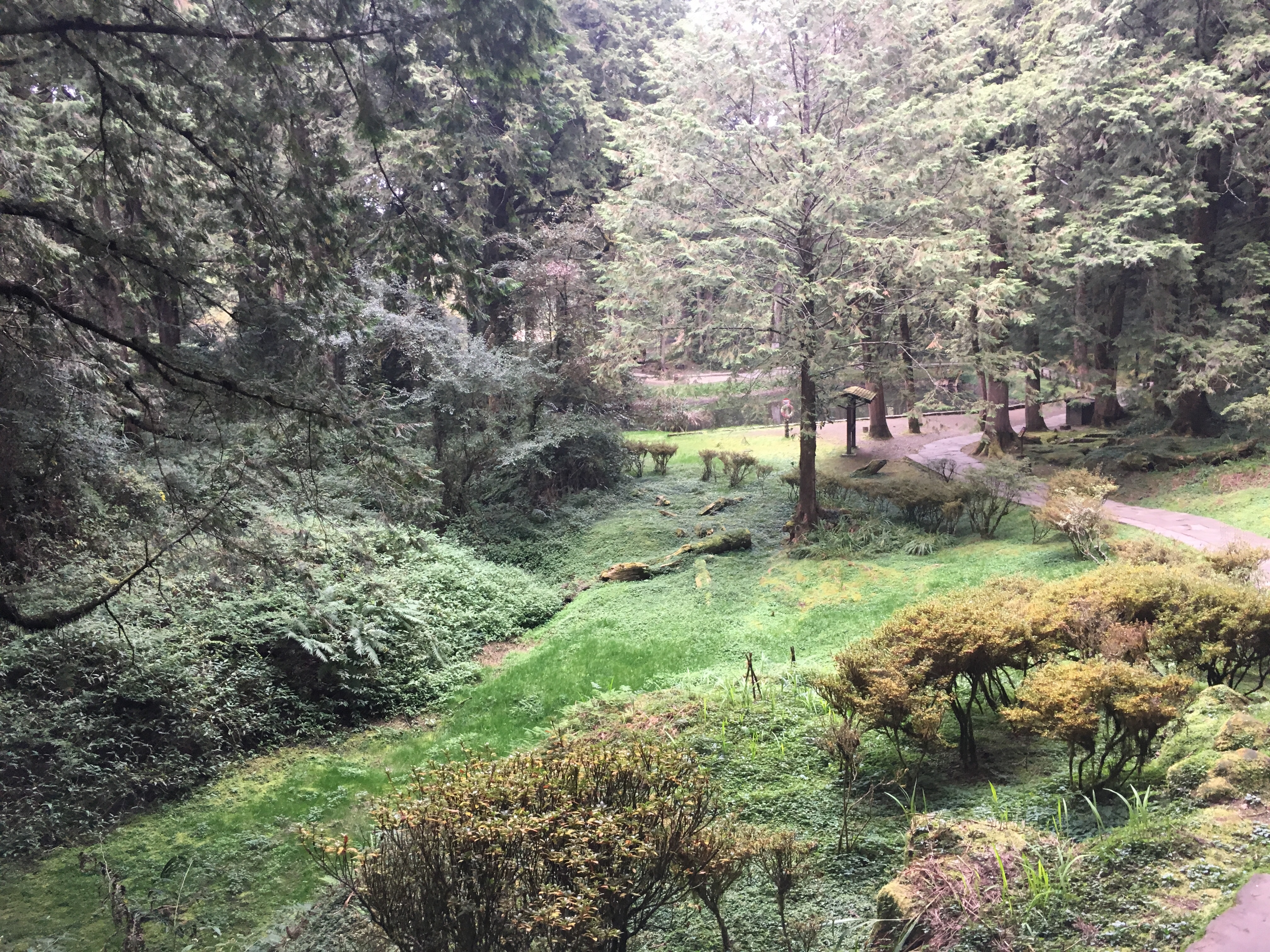
In terms of logistics in order to get to Alishan, you likely need to go via Chiayi. You can get there from Chiayi in around two hour bus ride or split the way there into a beautiful forest train ride to Fenqihu (elevating from 30m to around 1400m in two hours; the original train goes all the way to Alishan elevating to nearly 2500m! But it’s currently closed). The last bus leaves at 17.10 from Alishan.
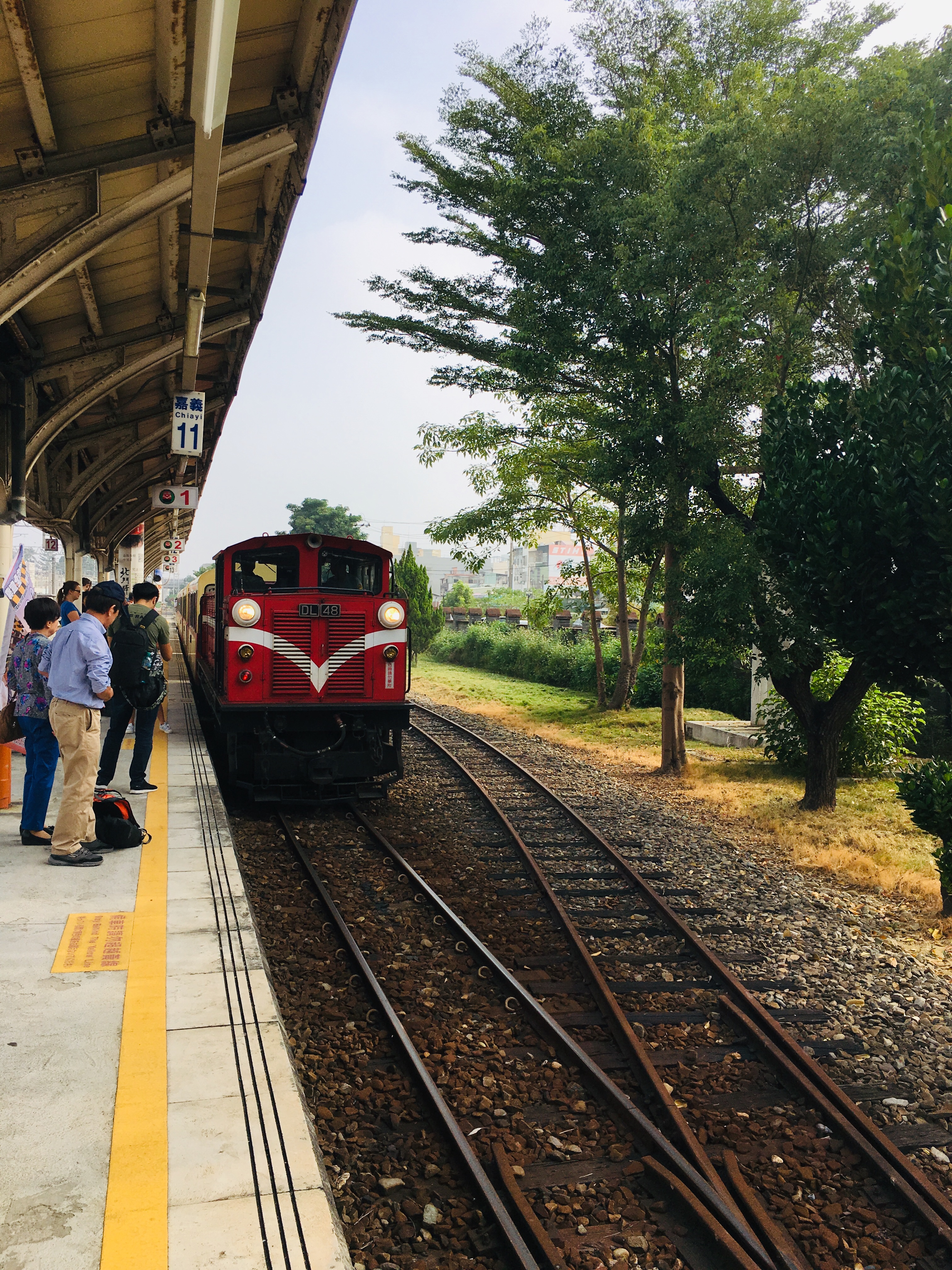
Some words on Chaiyi – the city turned bigger than what we had expected. We didn’t do much, just walked around and ate 🙂 We also went to the cinema, which has turned into a tradition for us when we go for longer travels – English-spoken movies are run in English with subtitles.
Taichung
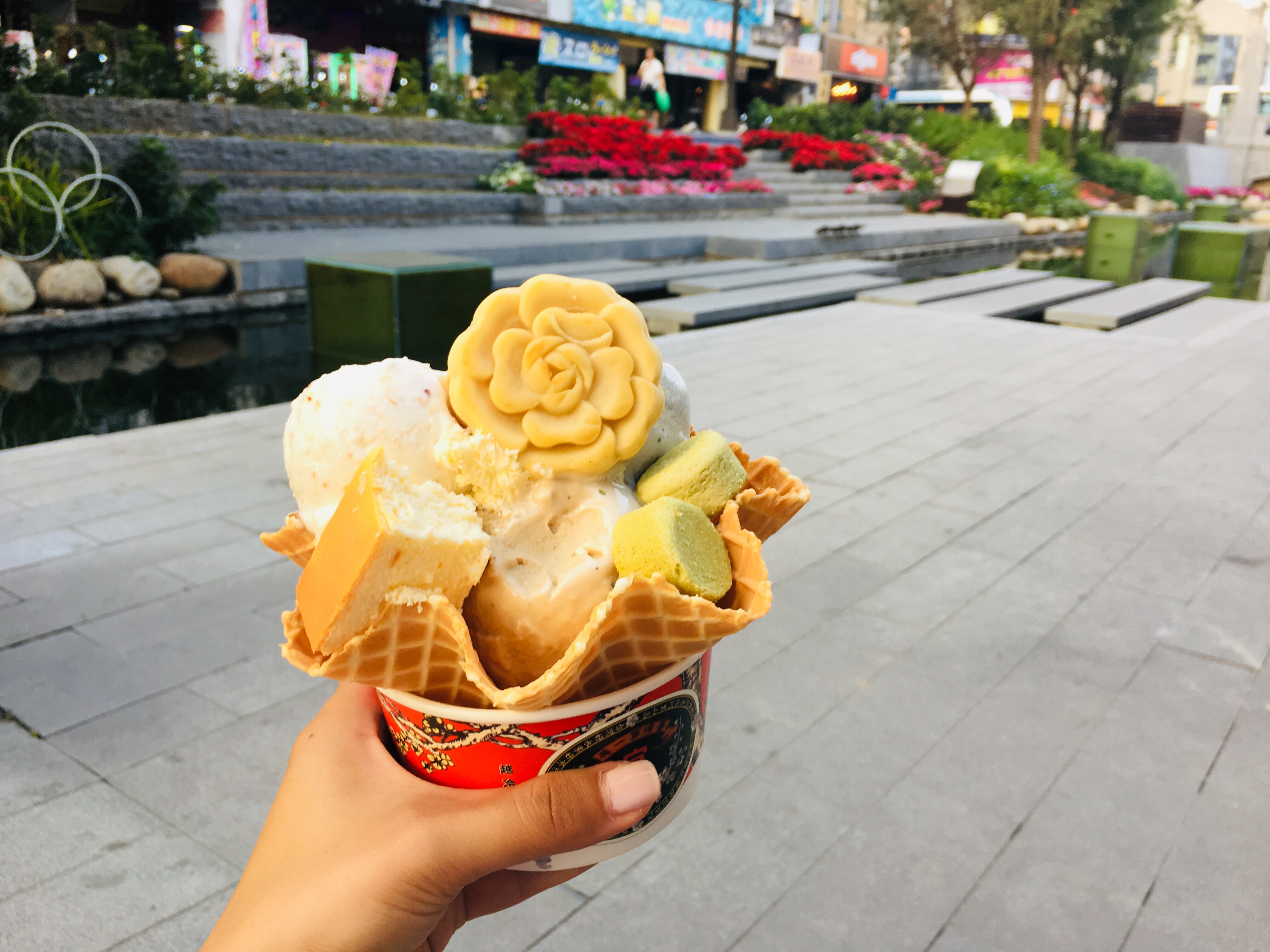
We spent a day and a night at Taichung which was okay. The city center doesn’t offer too many sights but it’s still nice to stroll around and have some food (ice cream at Miyahara is an experience).
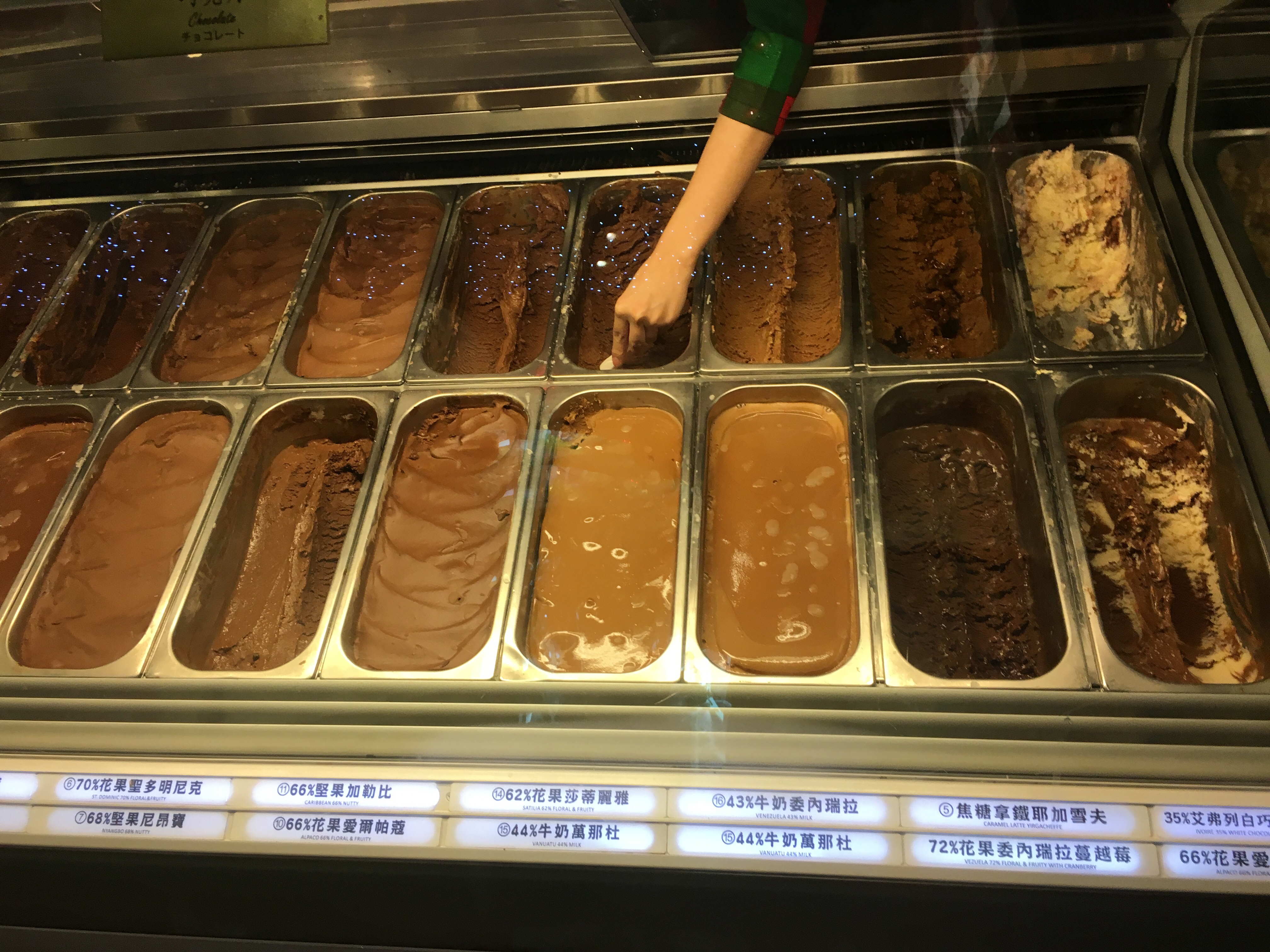
The above picture is in case you wondered how many types of chocolate ice cream can one think of.
We again rent some bikes in order to see more of the city. We also visited the National Museum of Fine Arts.
Many people use Taichung as a gate to Sun Moon Lake. We also read about a very nice bike tour around an hour to hour and a half outside of the city but that was just a bit too far for our lazy day.
Food!
Food is so delicious, accessible and everywhere! Night markets offer a real food feast where the concentration of deliciousness is unimaginable.
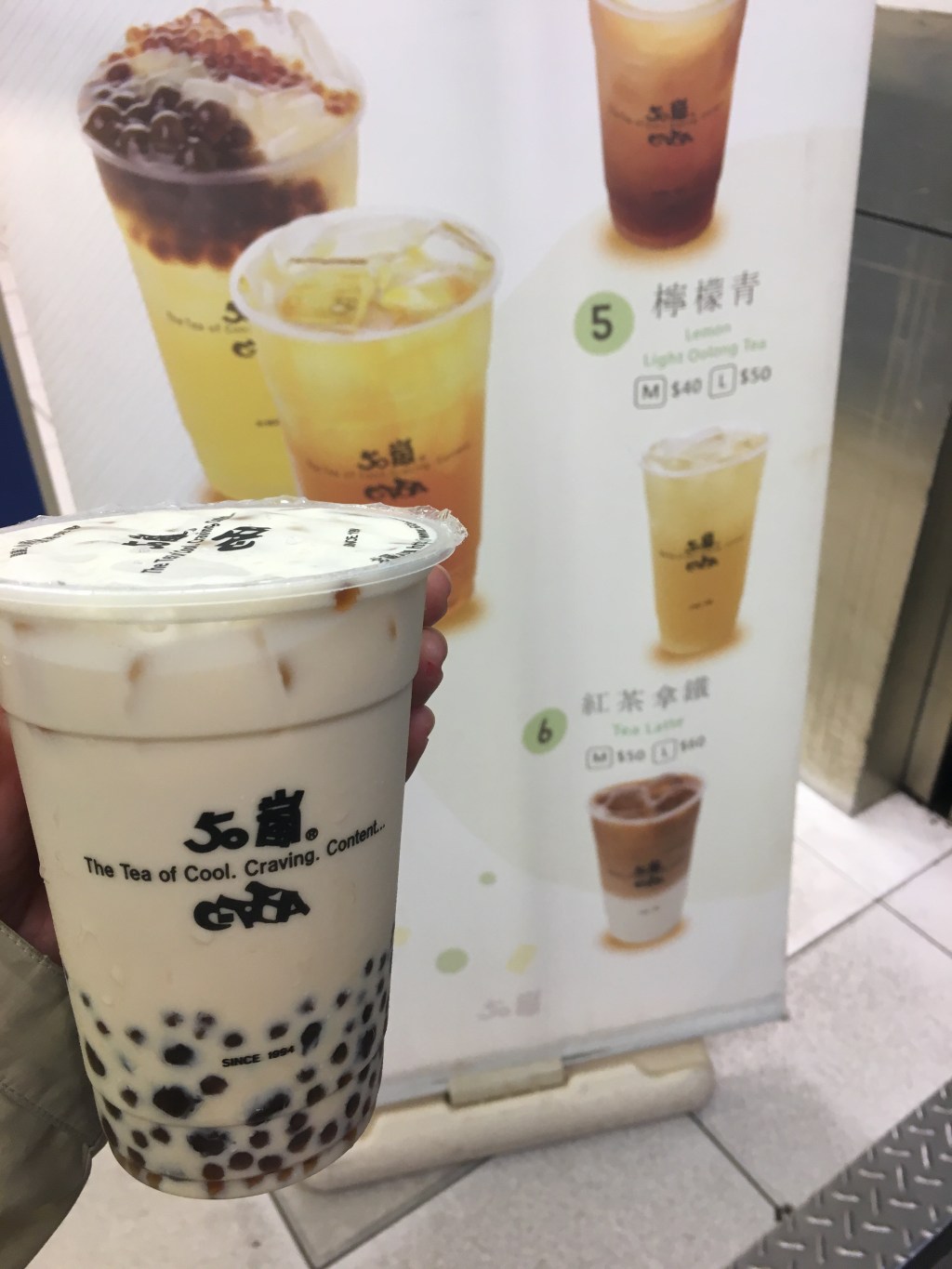
And apparently Taiwan brought both bubble tea and dumplings to the world. Thank you, Taiwan!
Here are some of the things we tried and which we wish we had more of 🙂
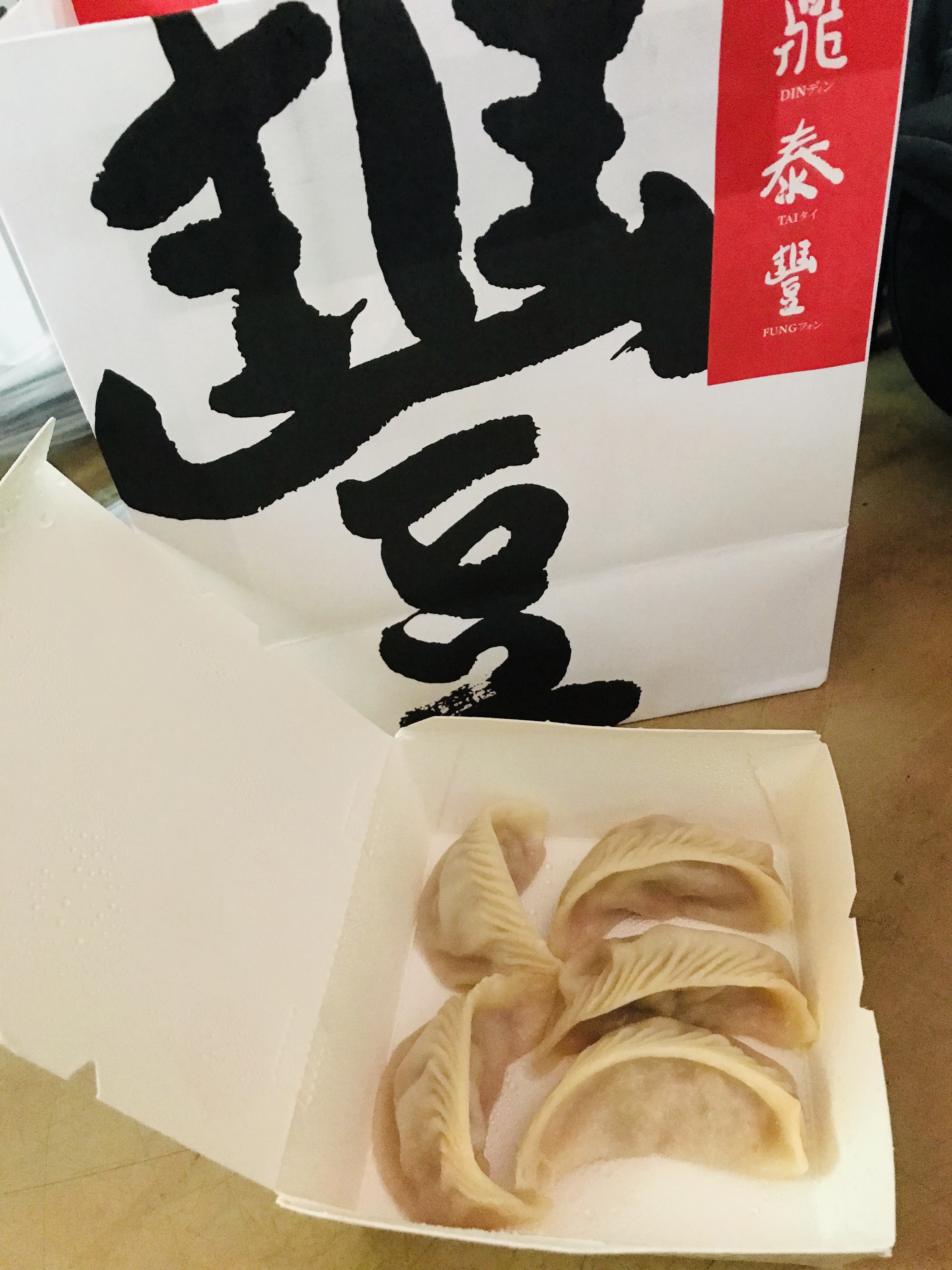
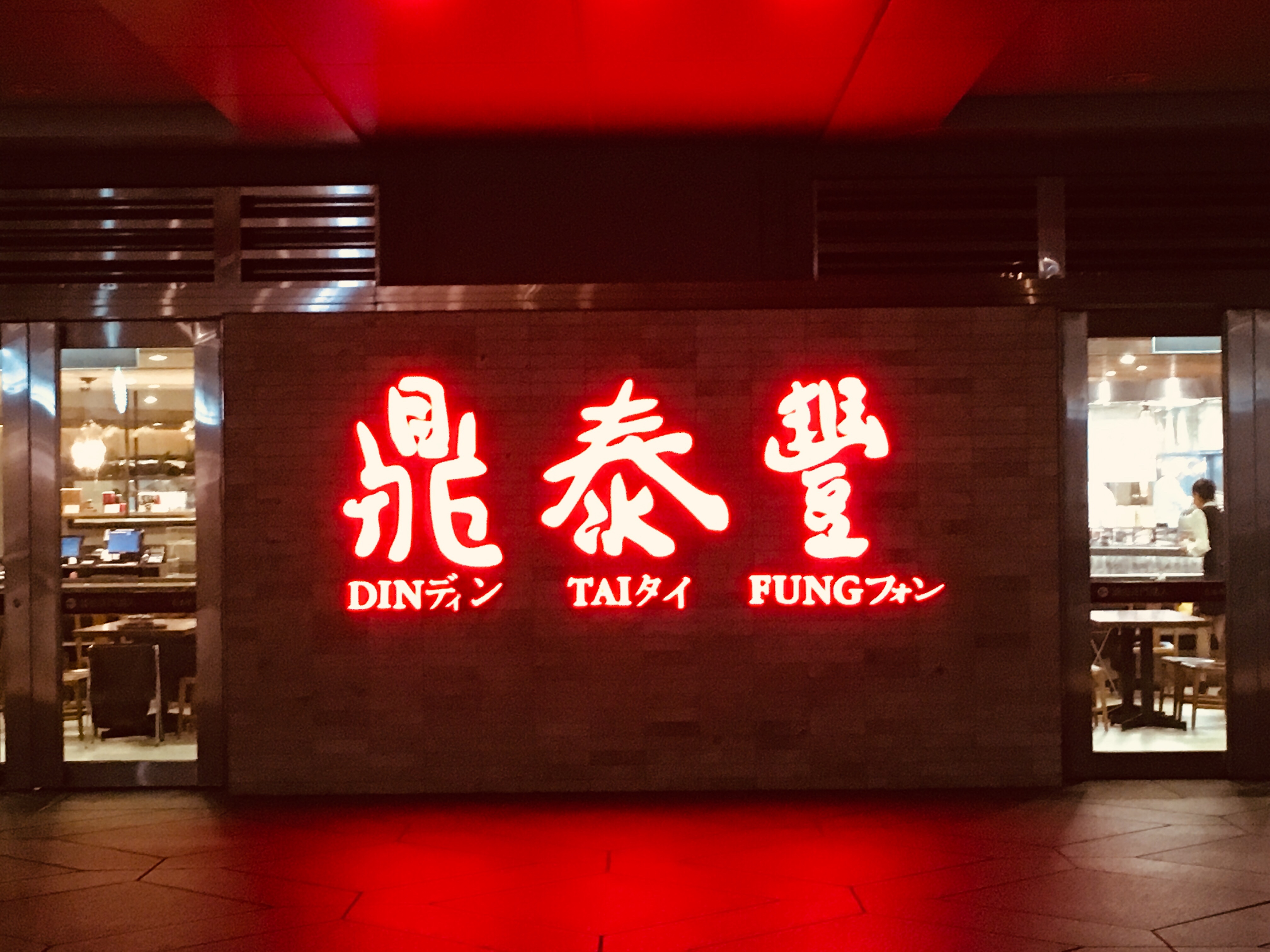
Steamed dumplings (Din Tai Fung – waww!)
Oyster omelette and Stinky tofu (the one we tried was not that stinky but we didn’t try a second one after it 😉
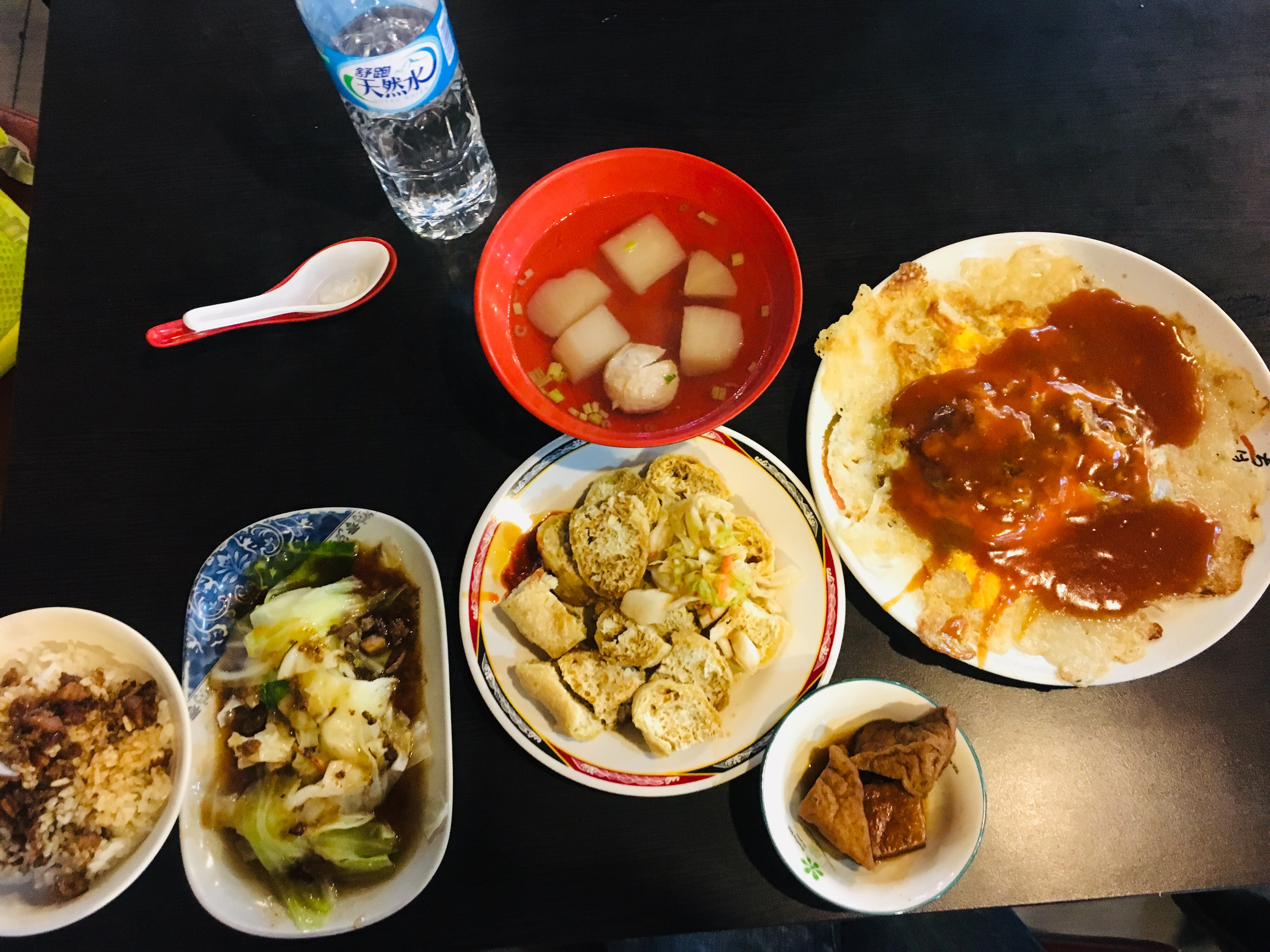
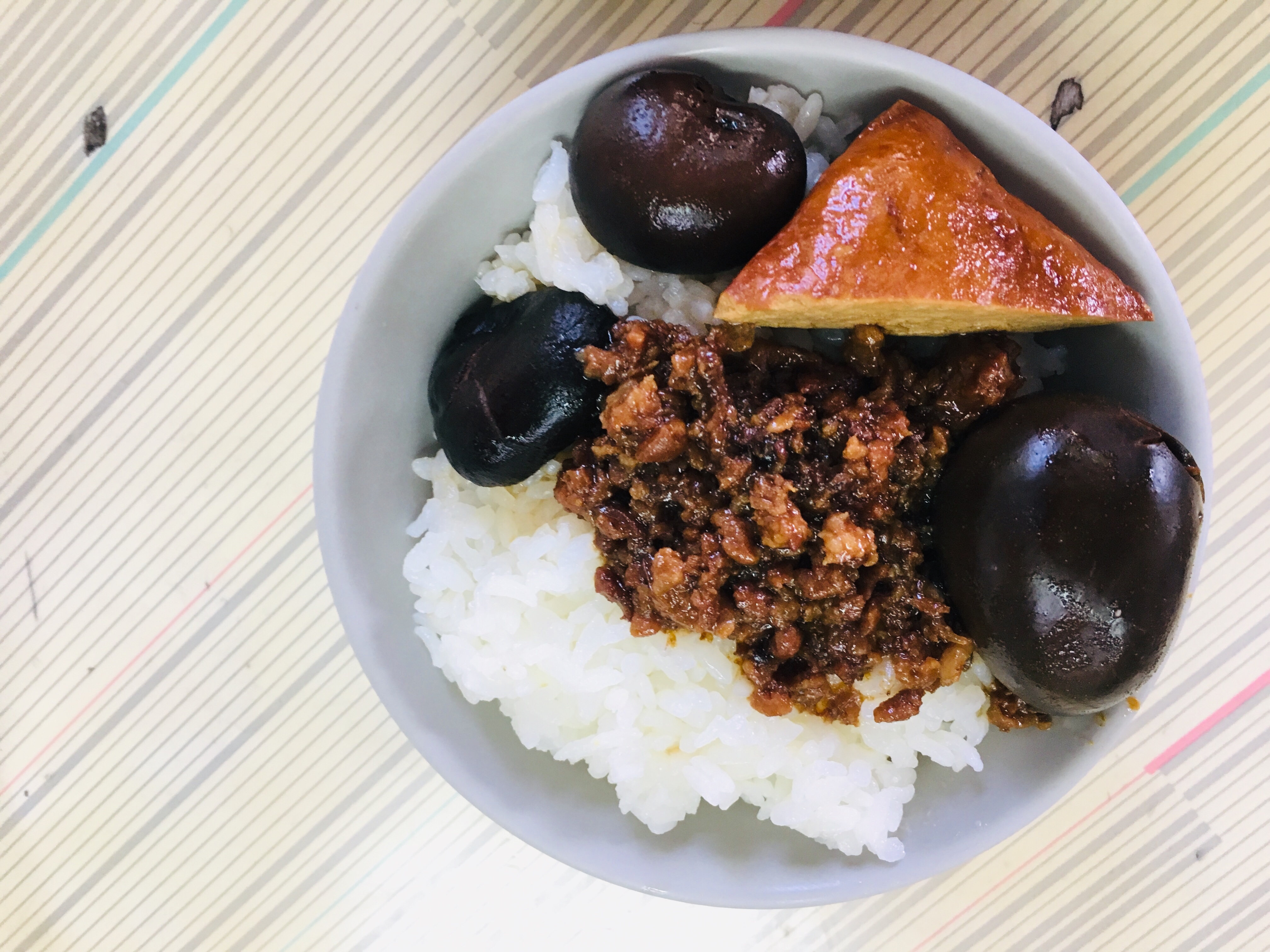
Lurou fan or rise with braised pork (less than a euro and super delicious; it can also be with beef)
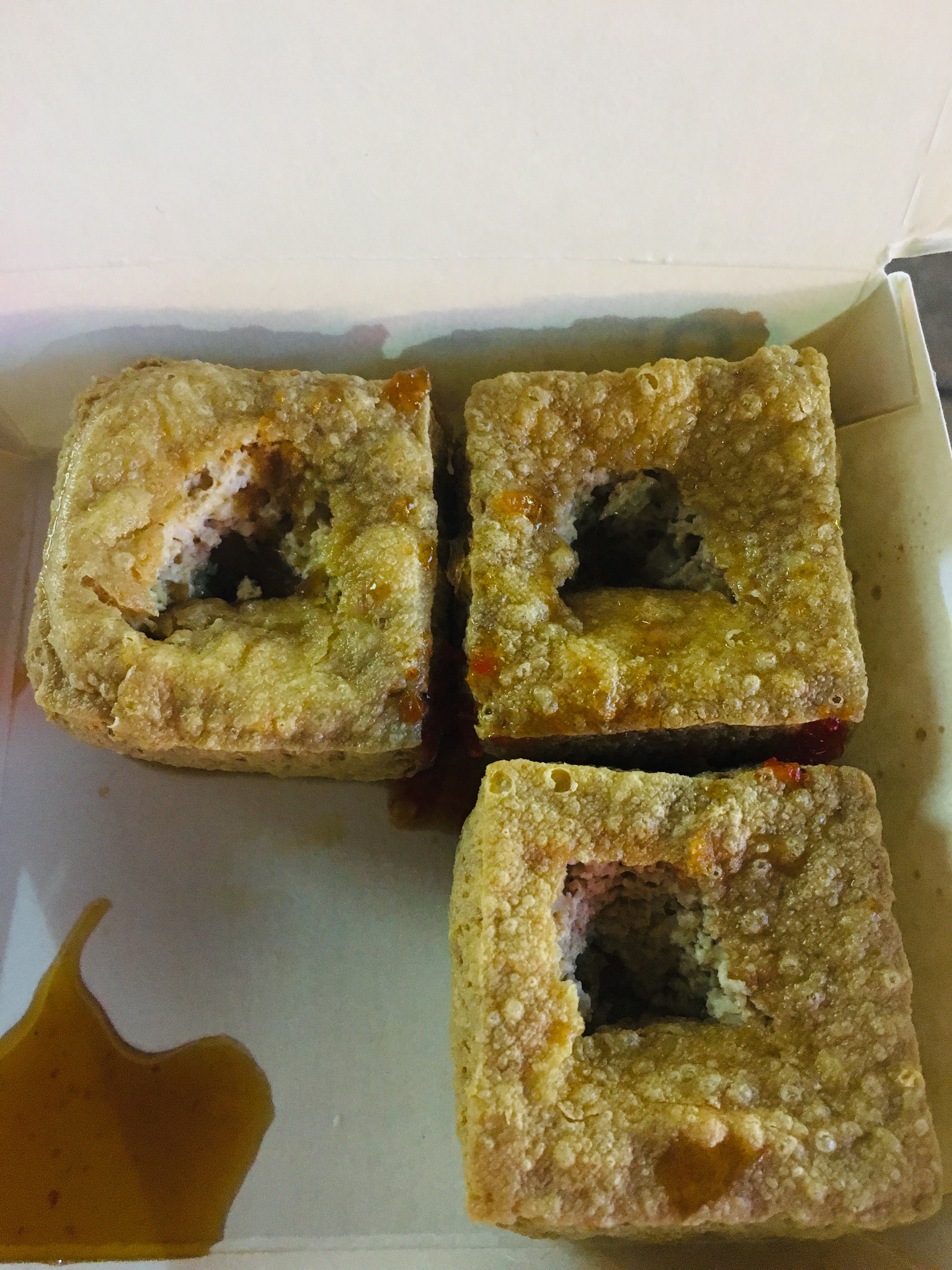
Stinky tofu .. because I had to try it. This one was the deep fried version which was recommended as the best one. I tried a simple stinky tofu as well as and I indeed liked the fried one better. Both were stinky! The aftertaste stays with you for longer than I would have hoped, to be honest
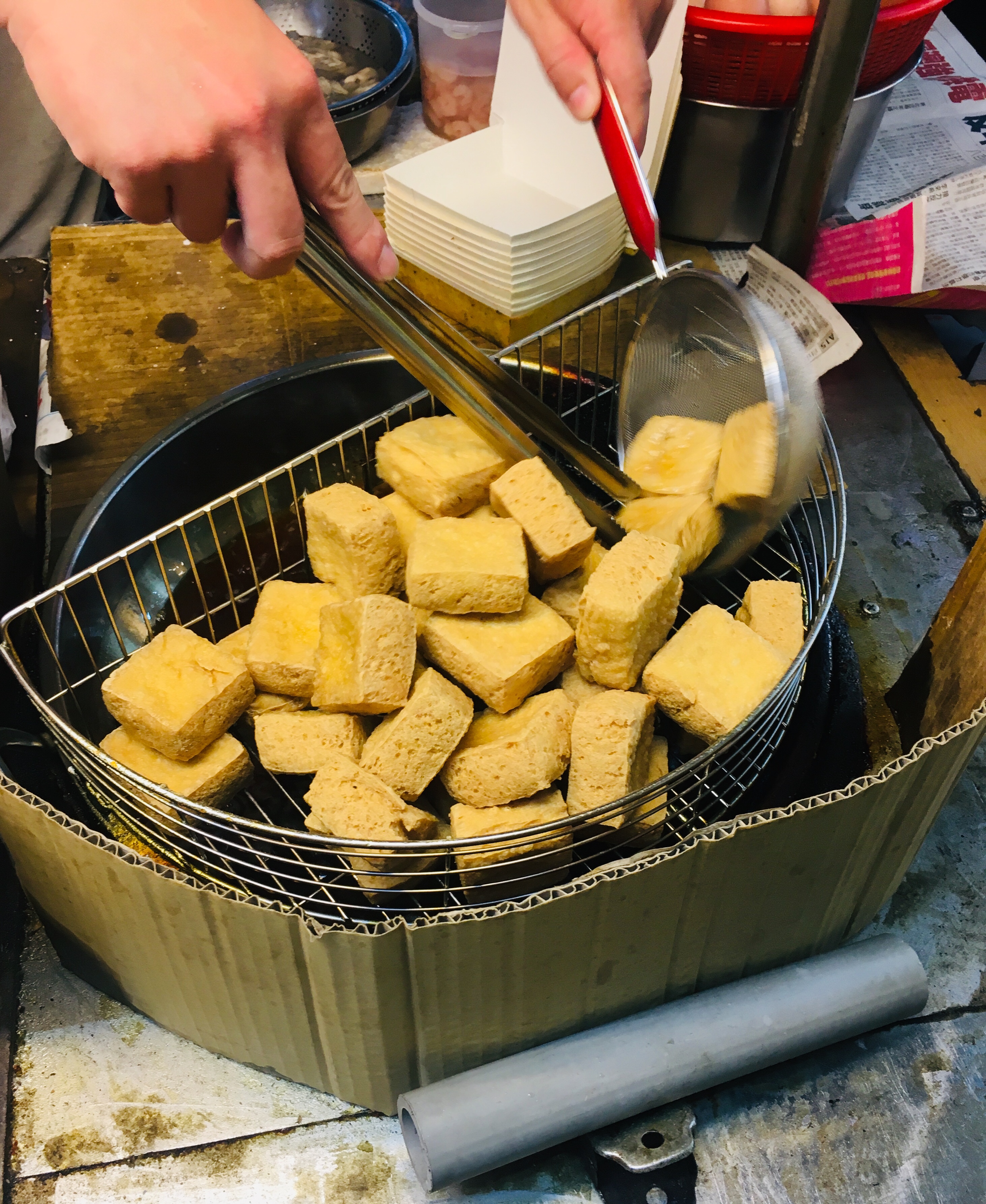
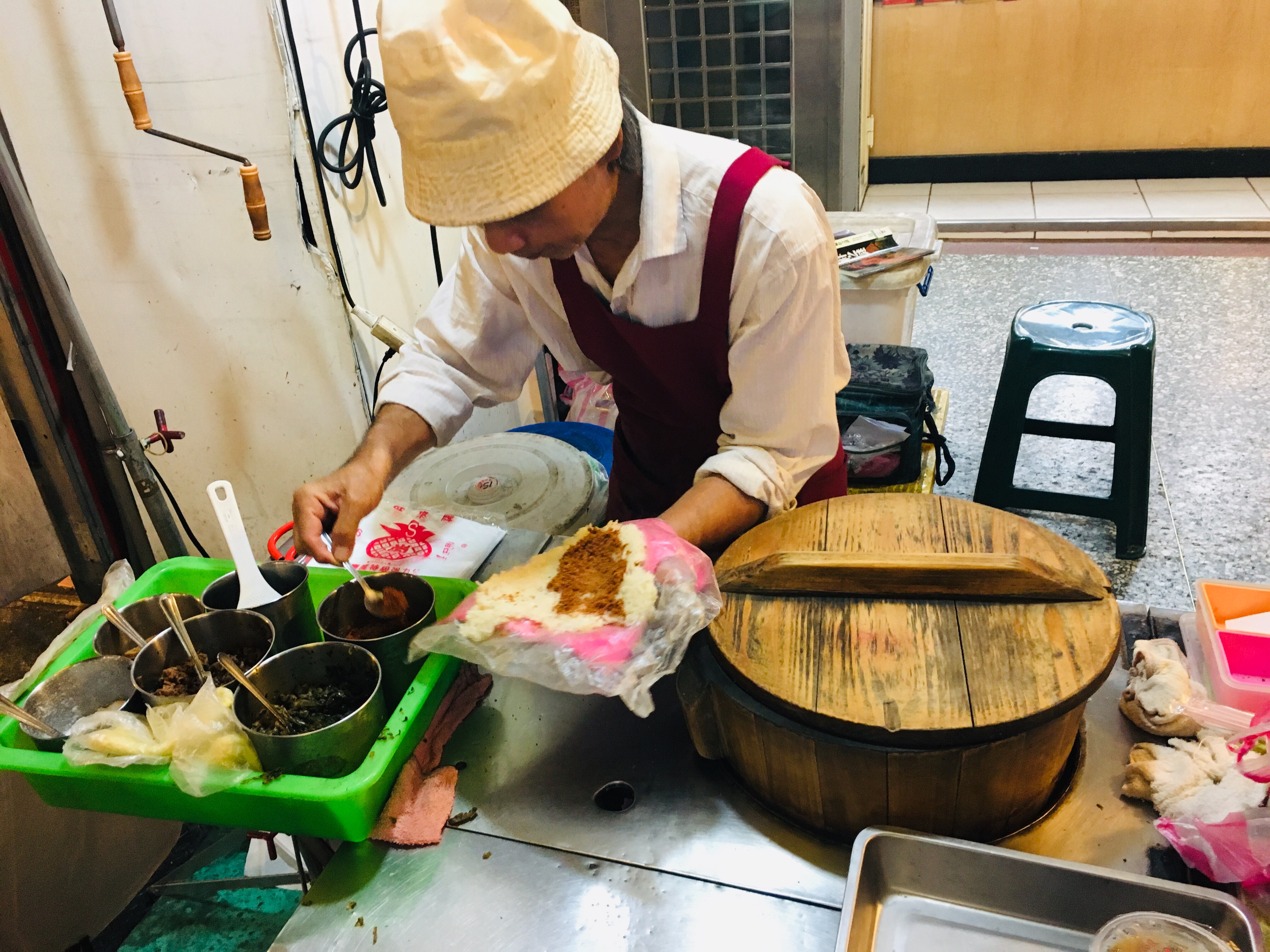
Rise ball with fish and/or meat (here in the making, it is great on-the-go food)
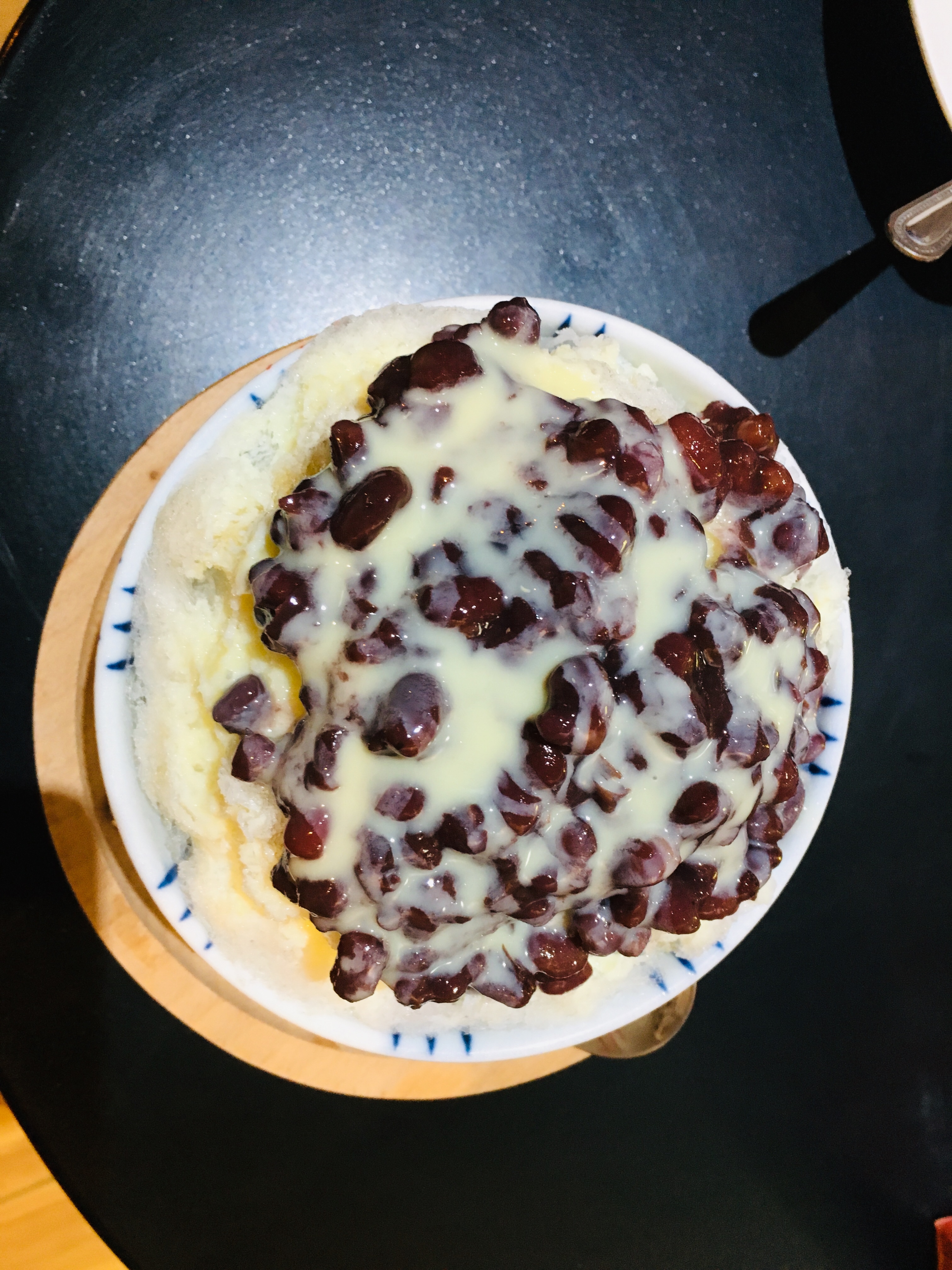
Bao Bing or shaved ice dessert in this case with red beans (because .. why not)
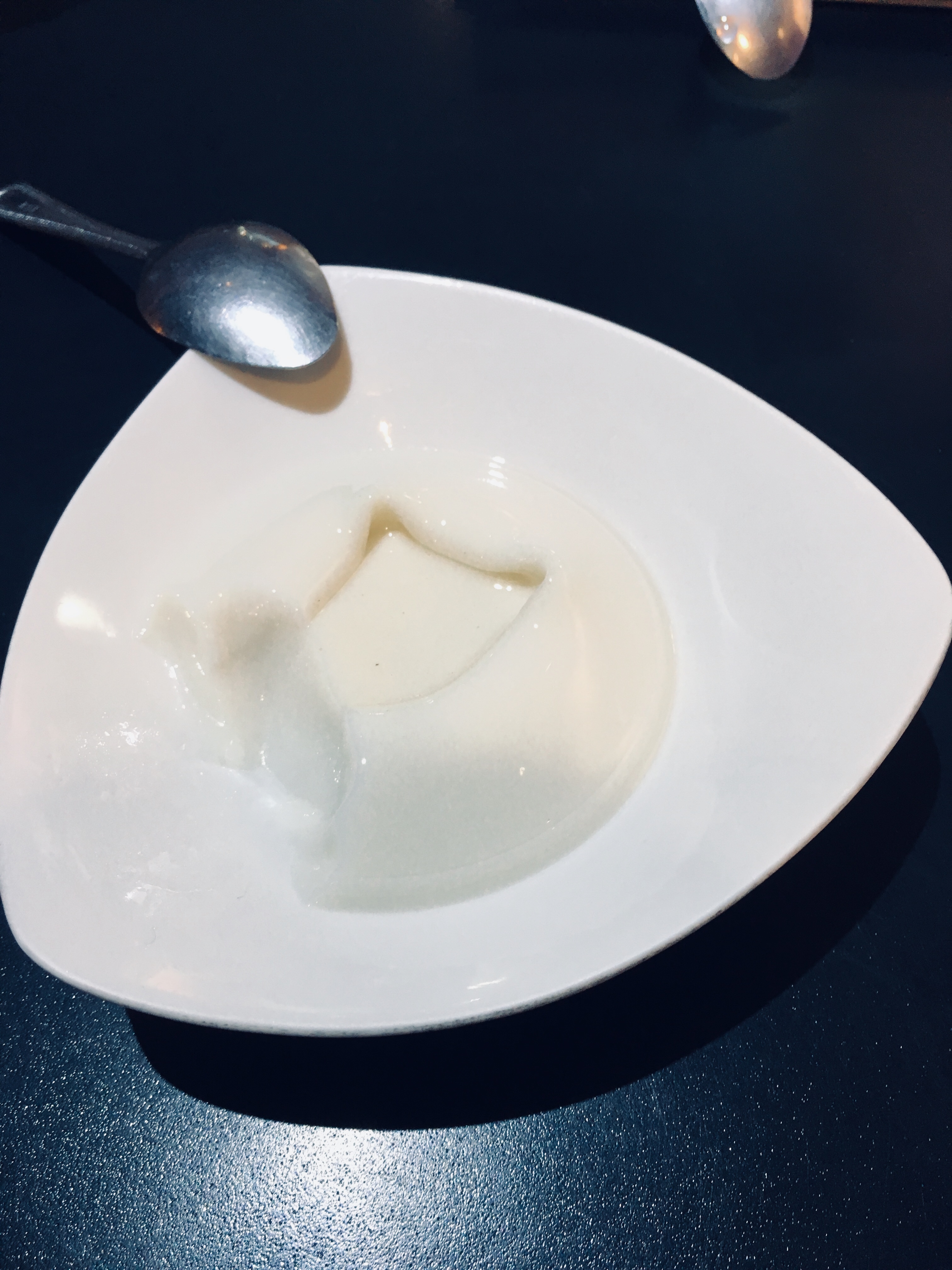
Almond tofu cheese (Tainan)
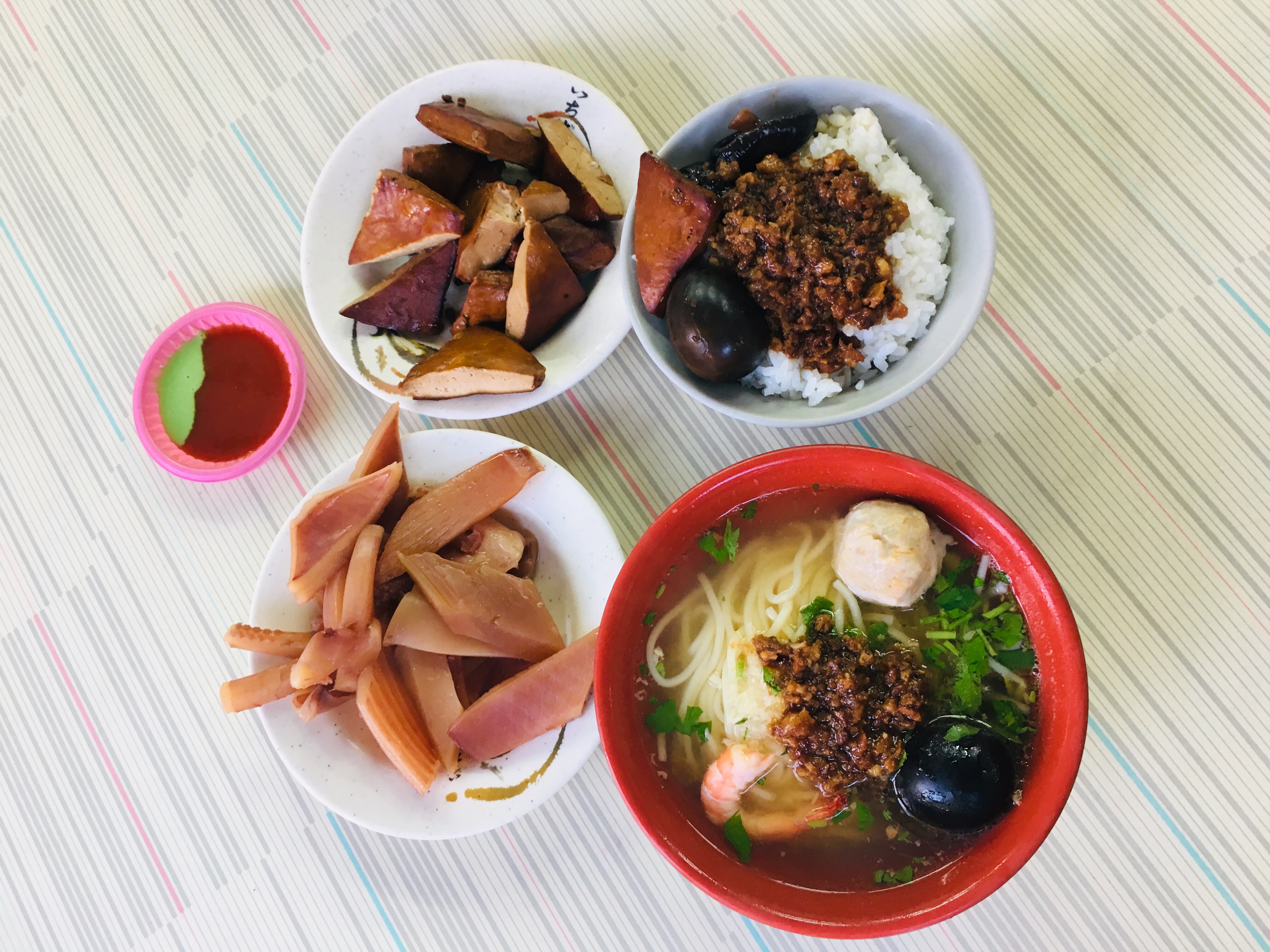
 Dan tsu (dry) noodles plus dry sofu and wasabi in Tainan – the dish on the lower right side of the photo; the rest is octopus, dry tofu and of course rise with braised pork
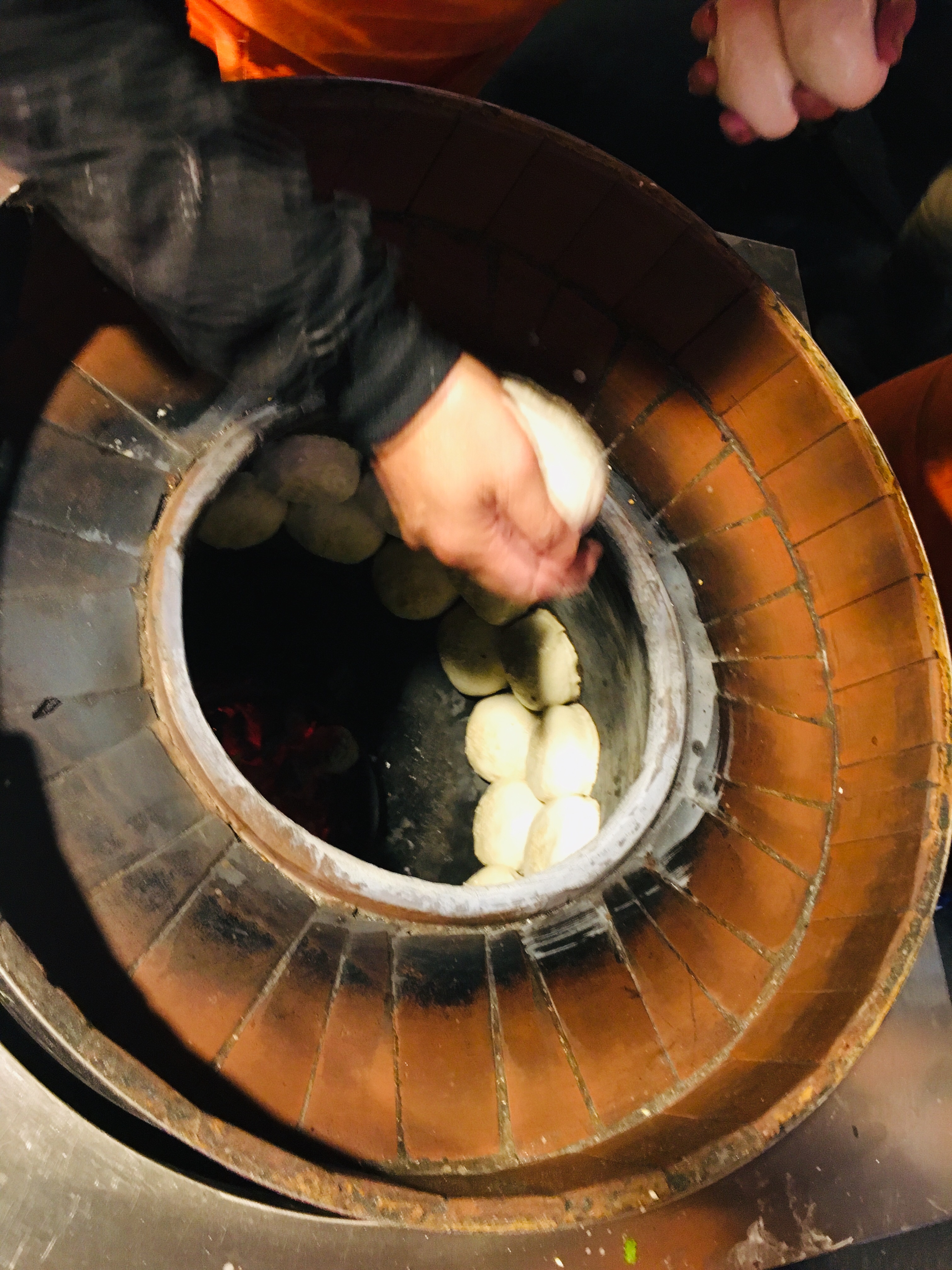
 Beef noodlesWe didn’t take a picture.. noooo. Now you just need to trust us 🙂Pepper chilli bisket (or something like that)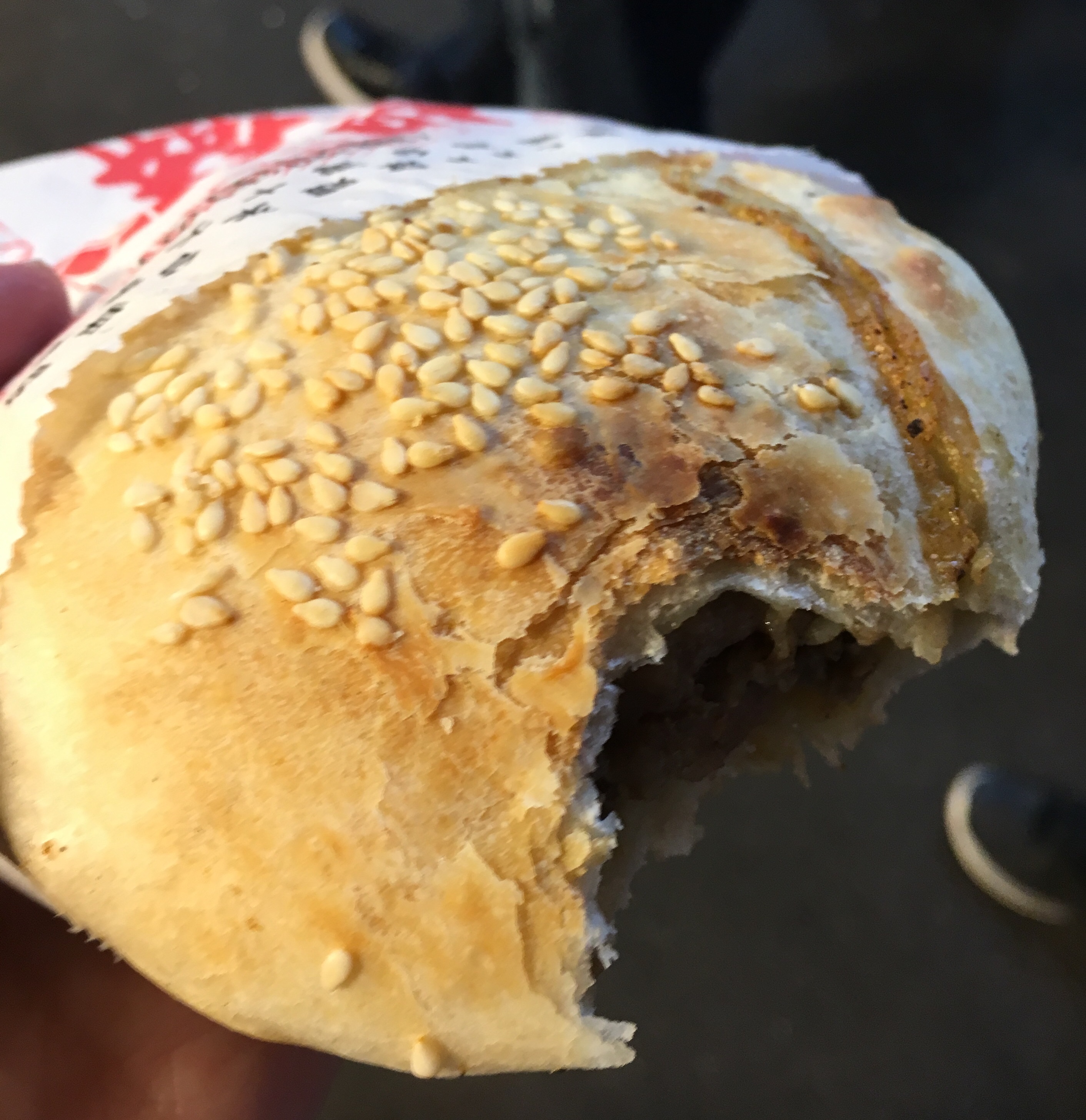
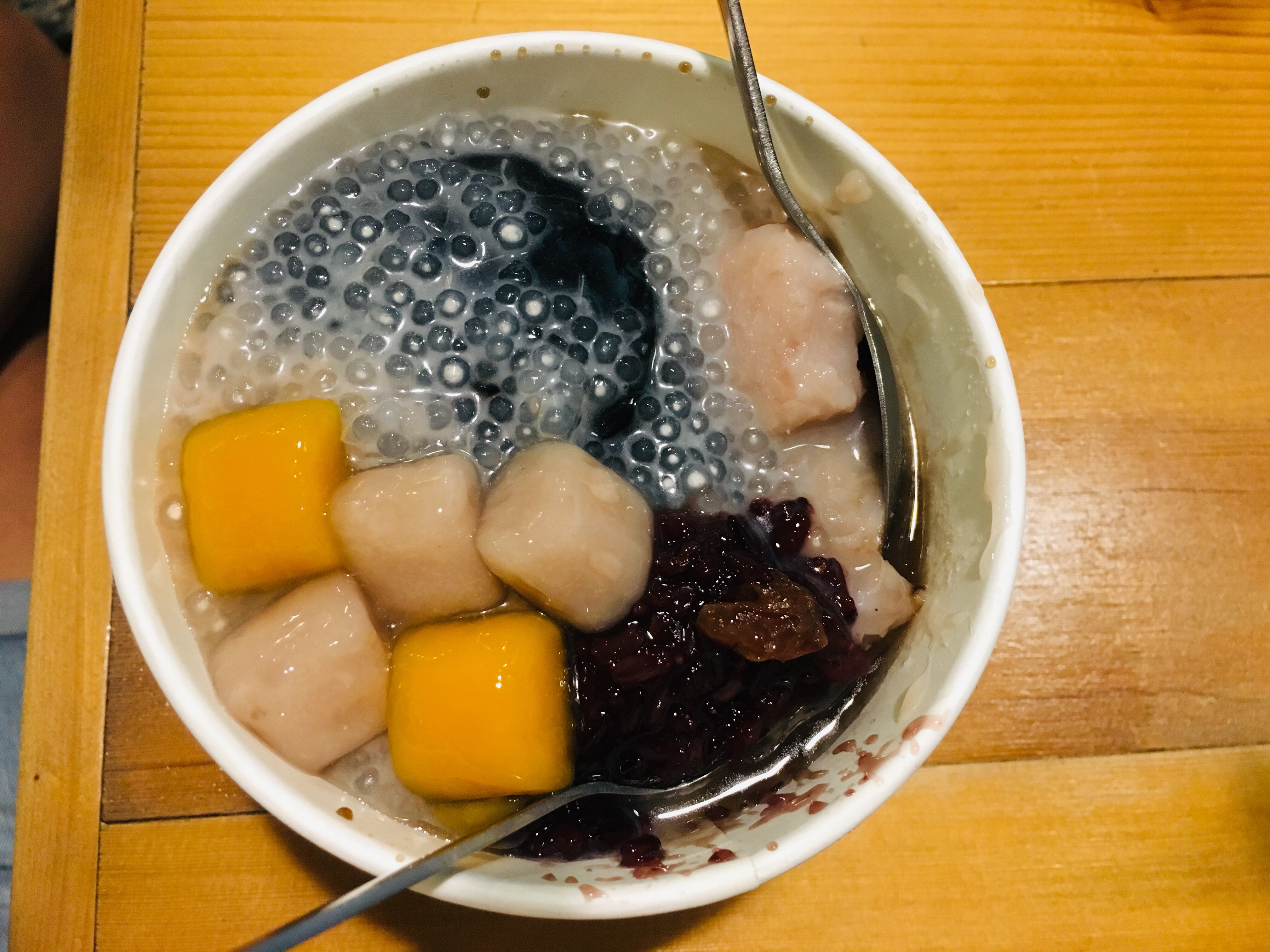
 Sweet soup with grass jelly, purple rice, taro, sweet potato and more (didn’t love it)
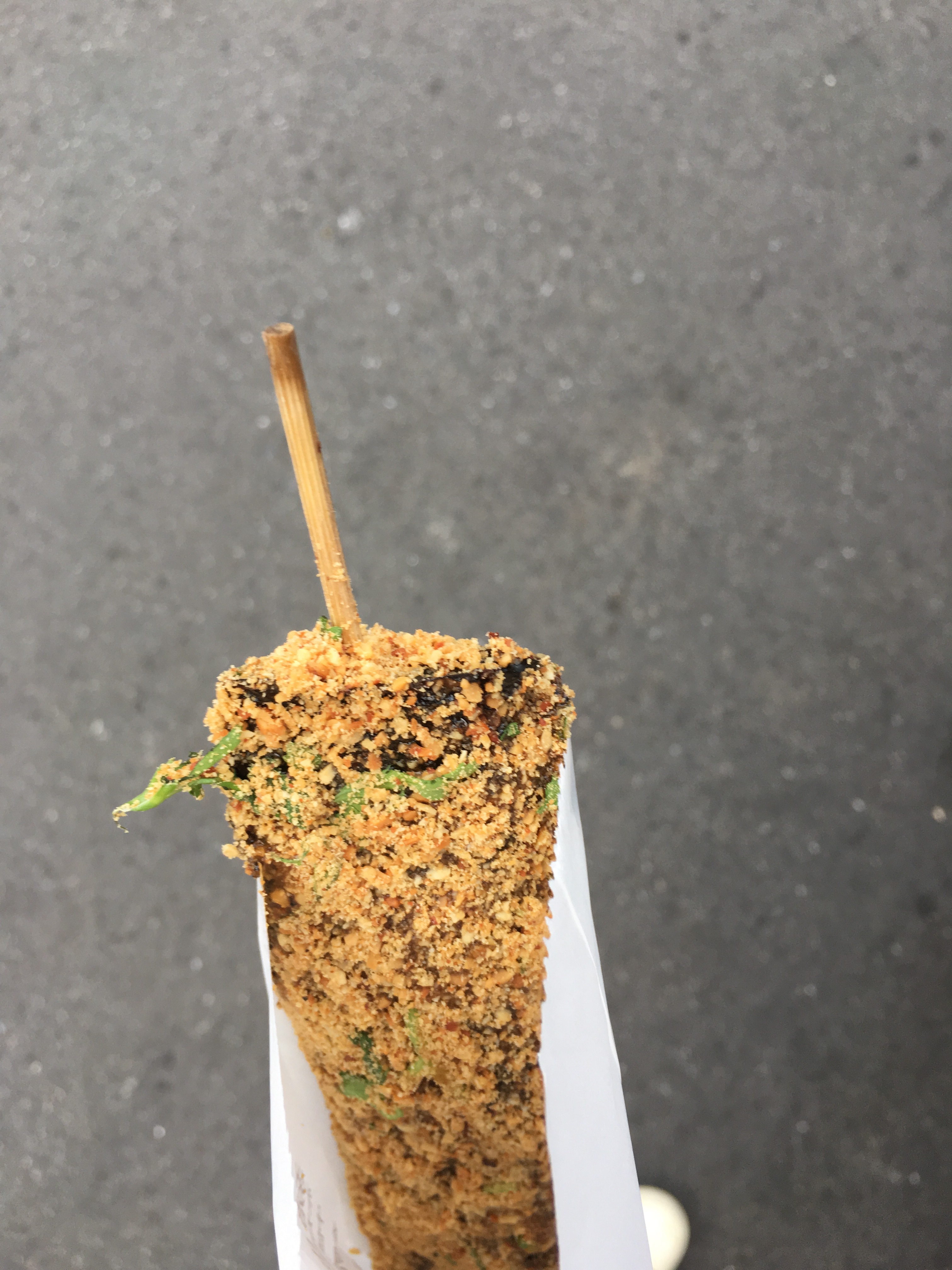
 Pig blood’s cake (trying it was an experience in itself; you don’t feel the blood taste but it’s hard to forget what you’re eating so we didn’t finish it; it’s covered in peanuts so that helps a bit with the taste)
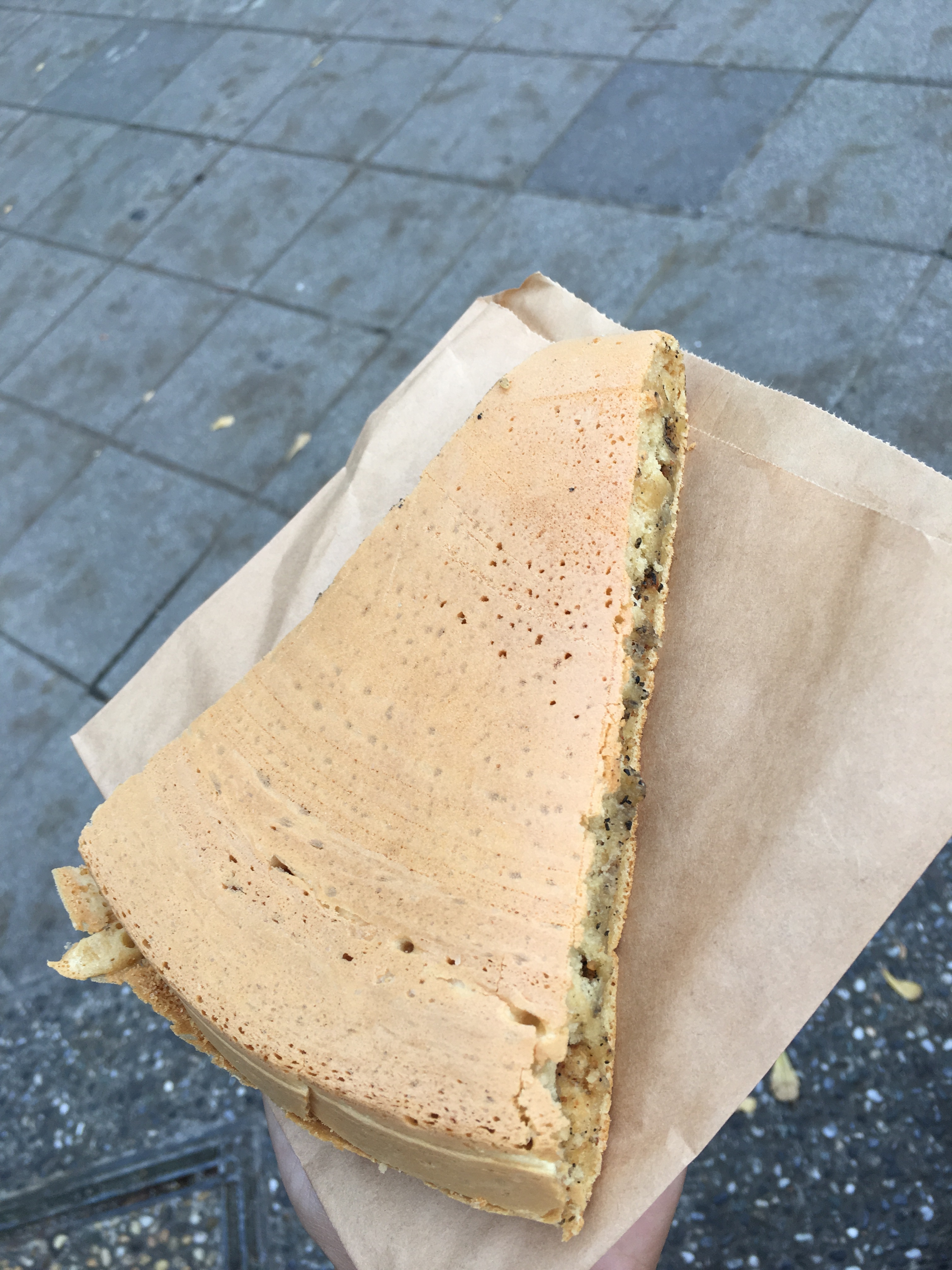
 Traditional pancake (this one was with peanut butter, quite nice flavour)
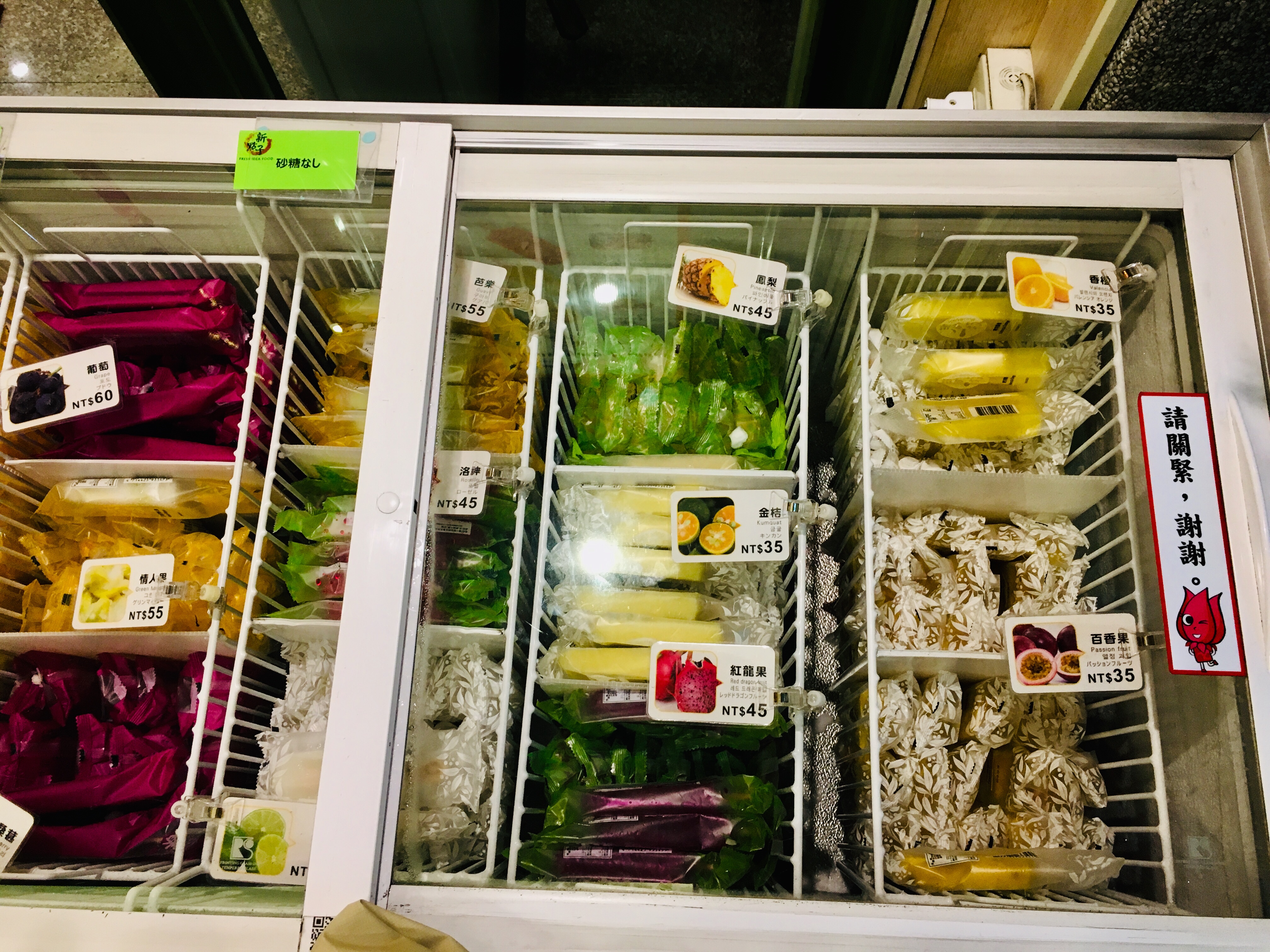
 Frozen fruits / real fruits ice cream
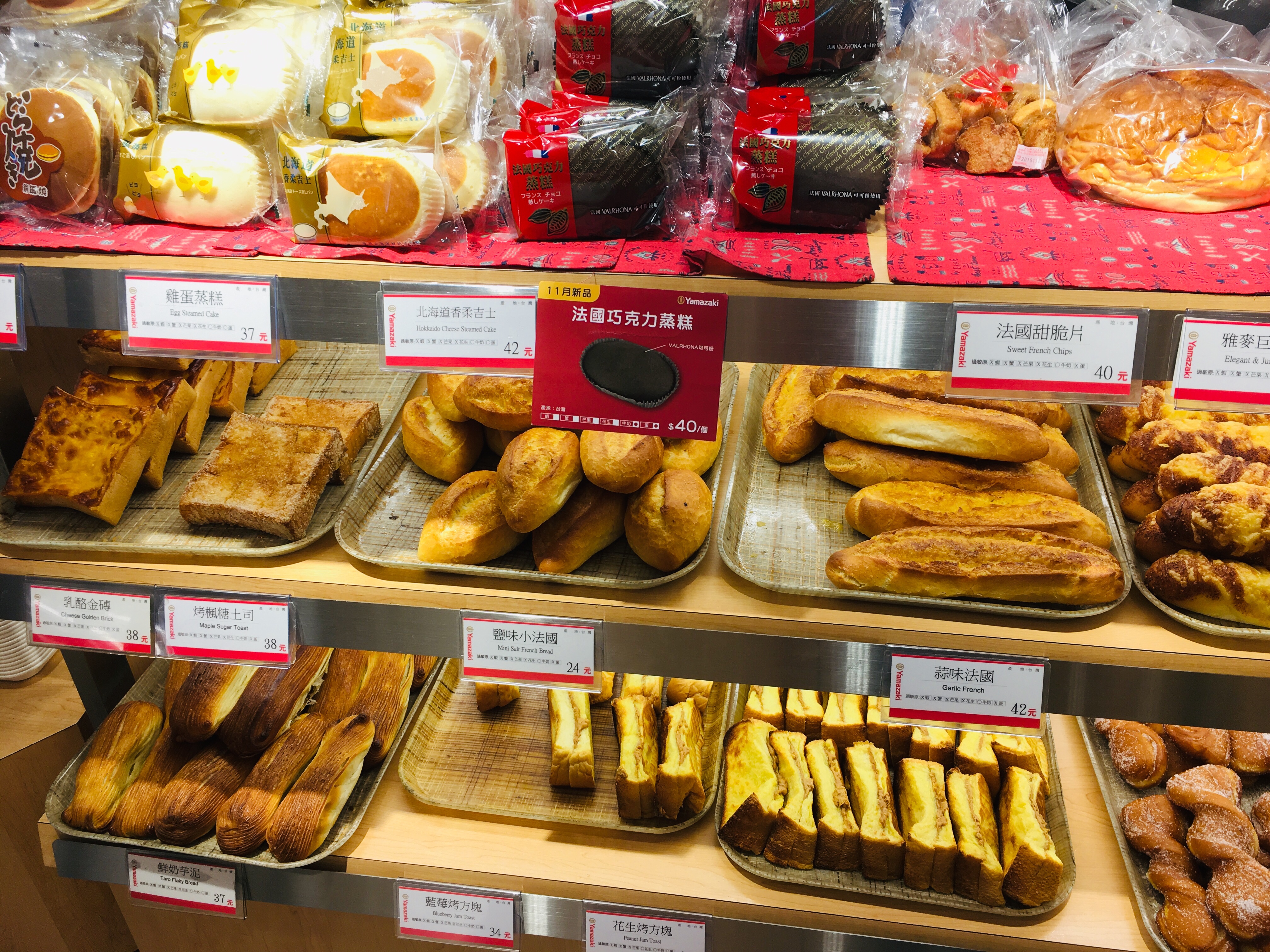
 To our surprise, it turned out that there are great bakeries with really good bread – some of the best we’ve ever had!
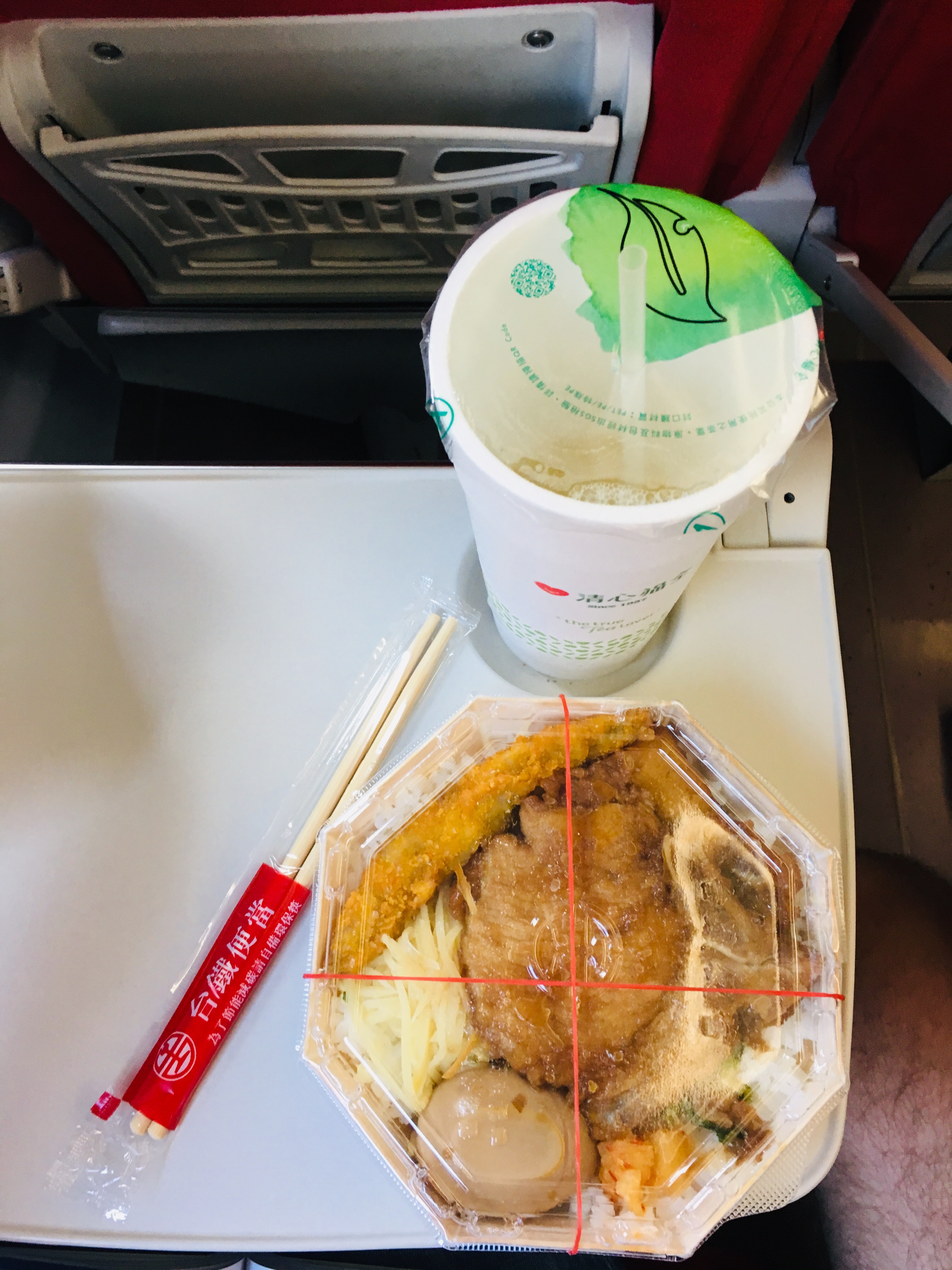
 Also a typical lunch option is the so-called lunch box (here accompanied by cold tea and eaten in the train)
 Some more desserts of which i didn’t take photos and which were nice: Custard egg roll in Tainan, moon cake, pineapple cake, local ice cream such as taro ice cream or red bean ice creamDrinksBubble tea is the king and queen of drinks here! Don’t order at full sugar, already 20-30% is quite sugary. It’s advised to drink it every day because .. again why not 🙂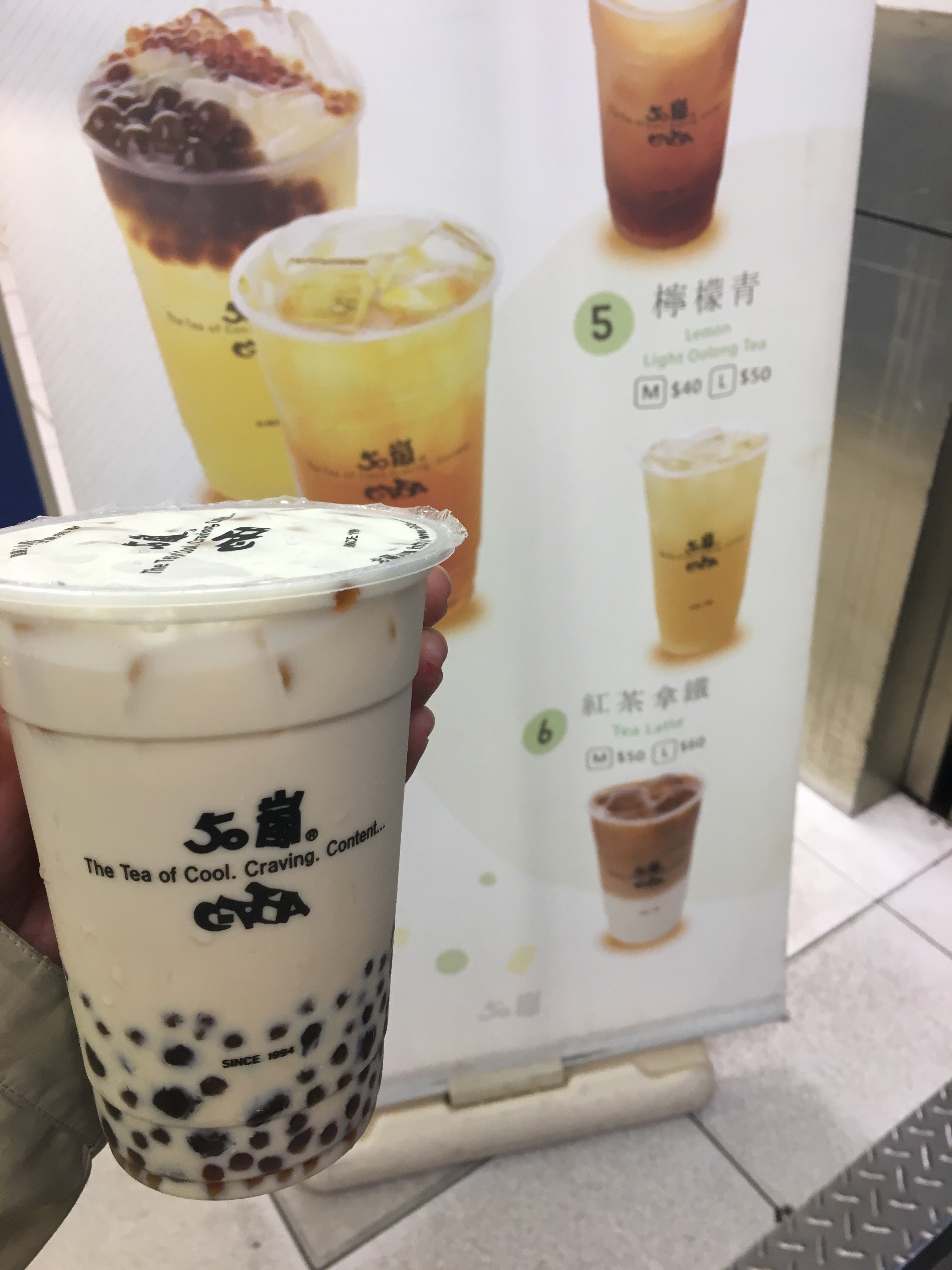
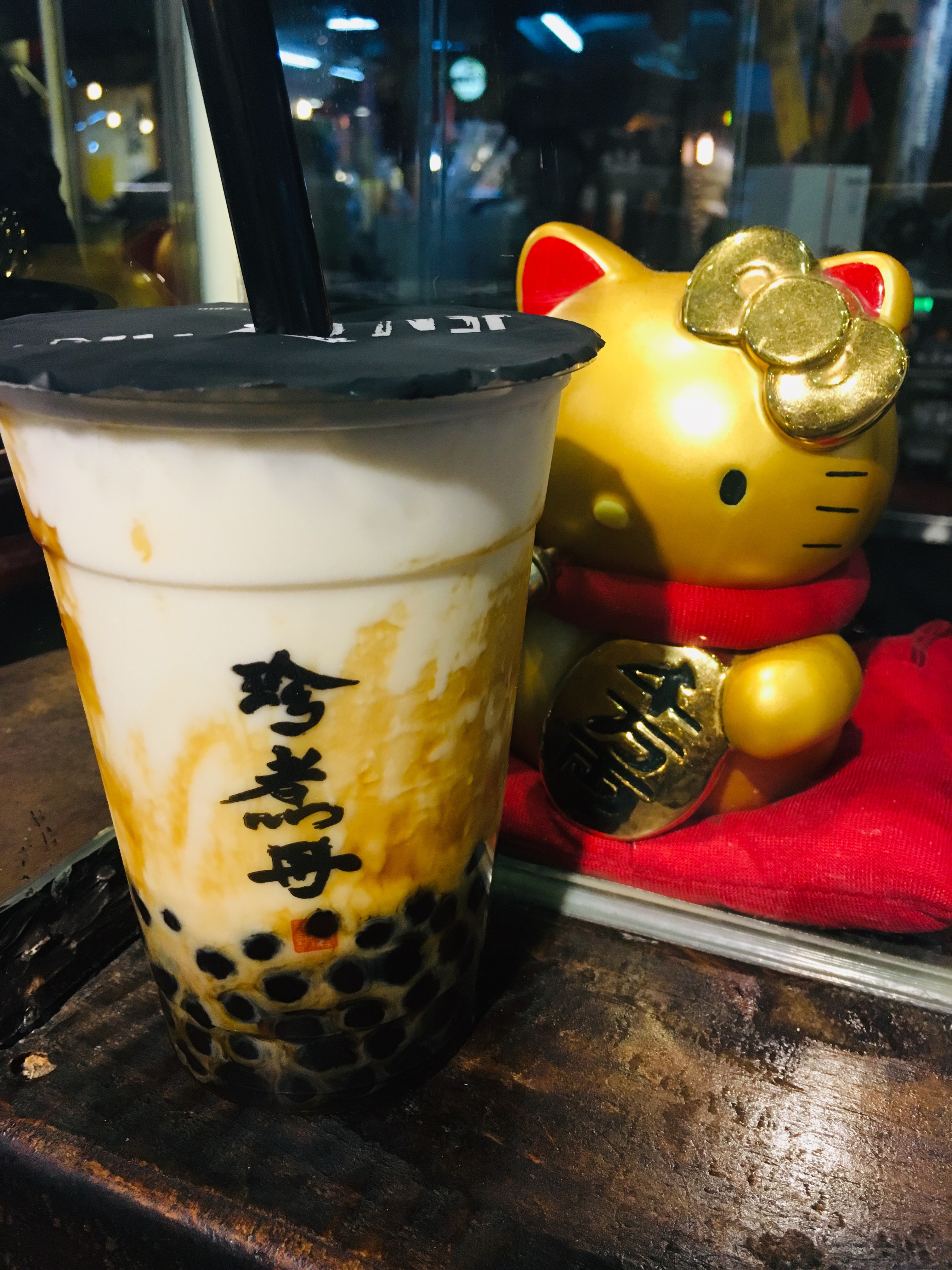 Normal tea is also to be found at every corner, be it green, black or oolong, warm or with ice, with or without sugar. We had simple ice tea with no sugar on multiple occasions
Delicious dragon fruit ice drink – this one is worth mentioning! The fruit can be any sort, the one we tried was dragon fruit but options are ample (mango seemed quite popular). They essentially mix some fruit with ice run it through a blender making for the perfect drink in the warm weather
Coffee – good coffee was actually not hard to find and we even stumbled upon a coffee shop with a very passionate about coffee owner (and a really fluffy cat). He brew some special Taiwanese-grown coffee for us and showed us how the taste can be very different dependent on the cup in which it is served (and thus the difference in temperature)
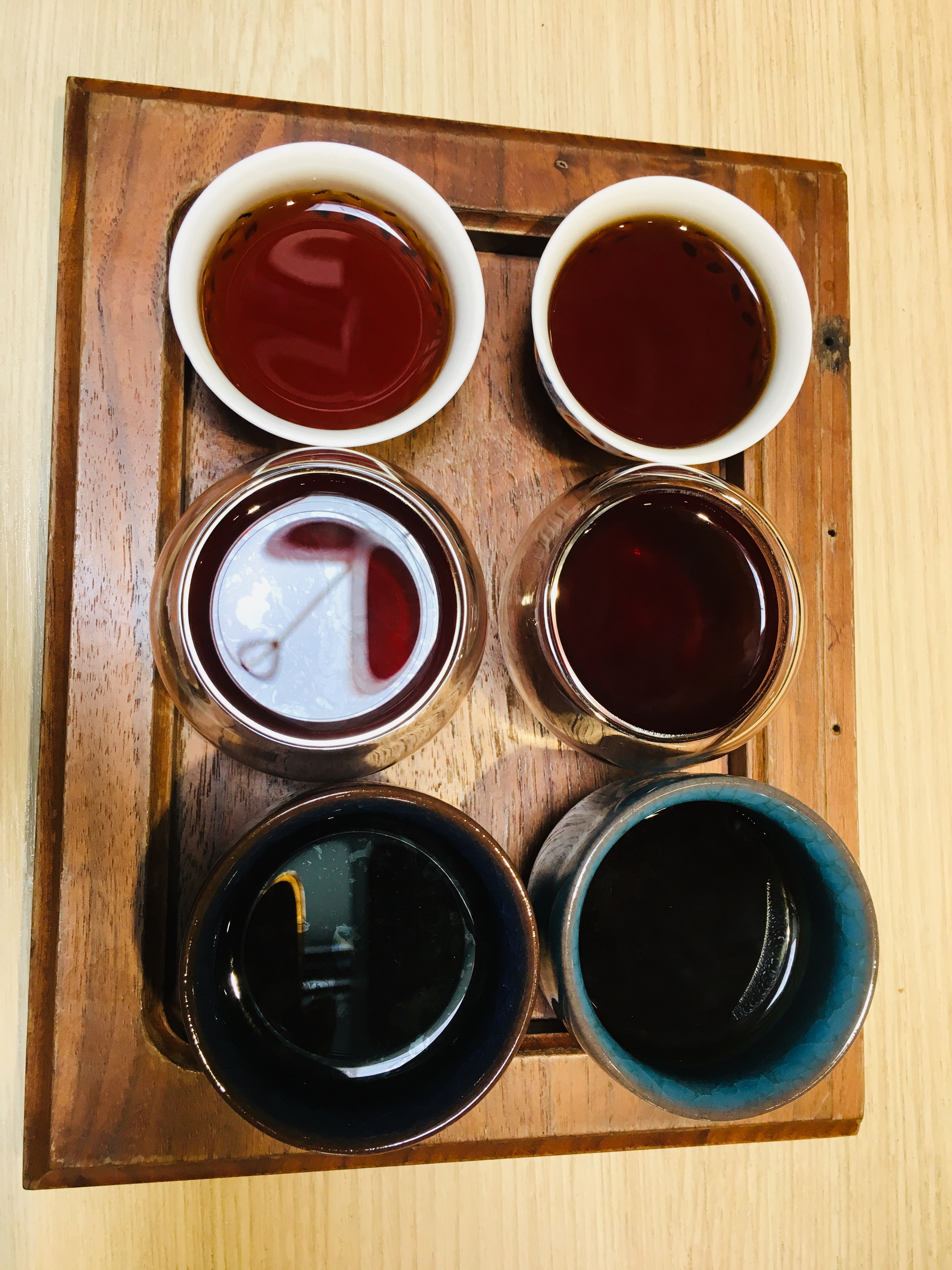
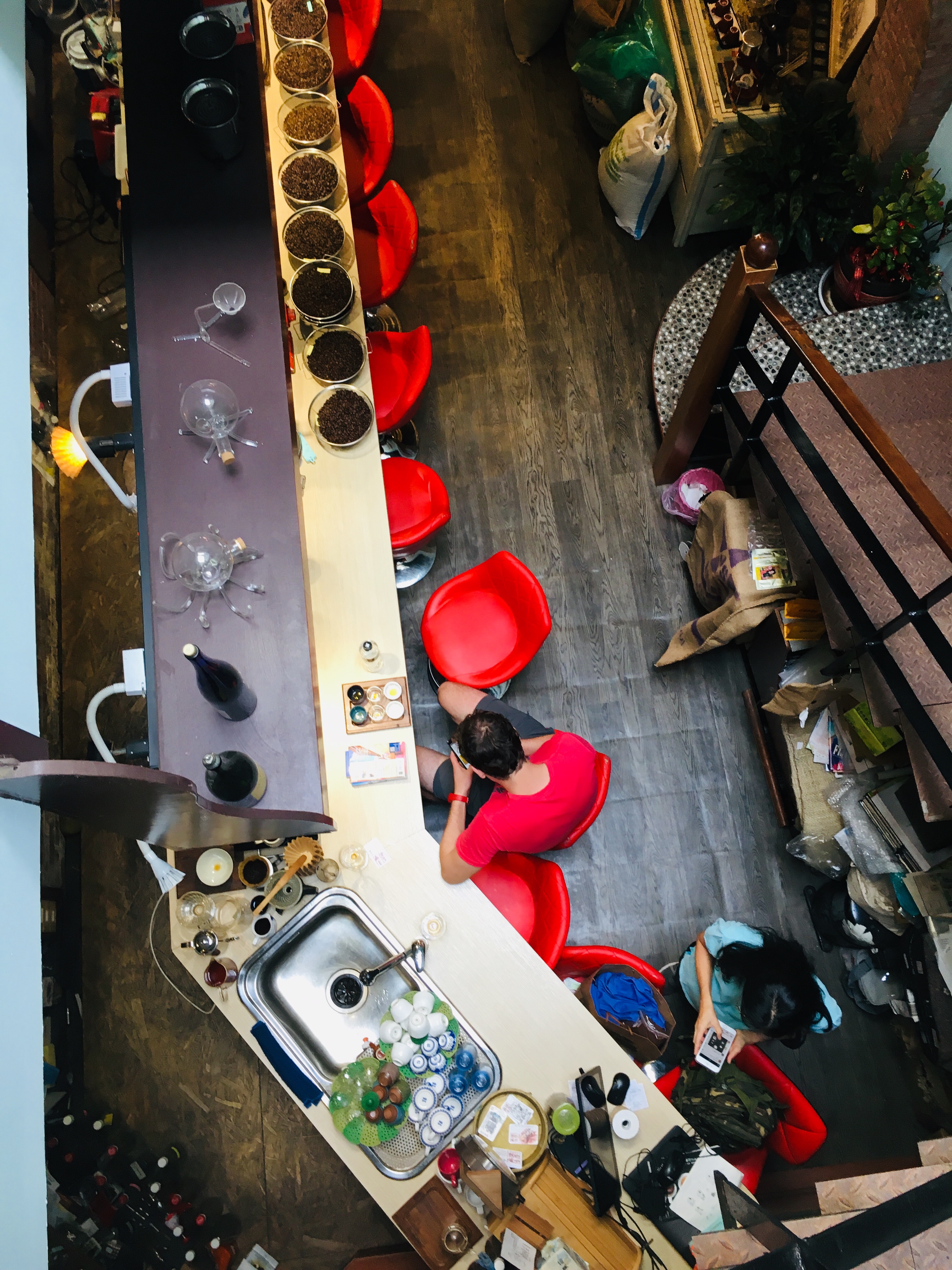
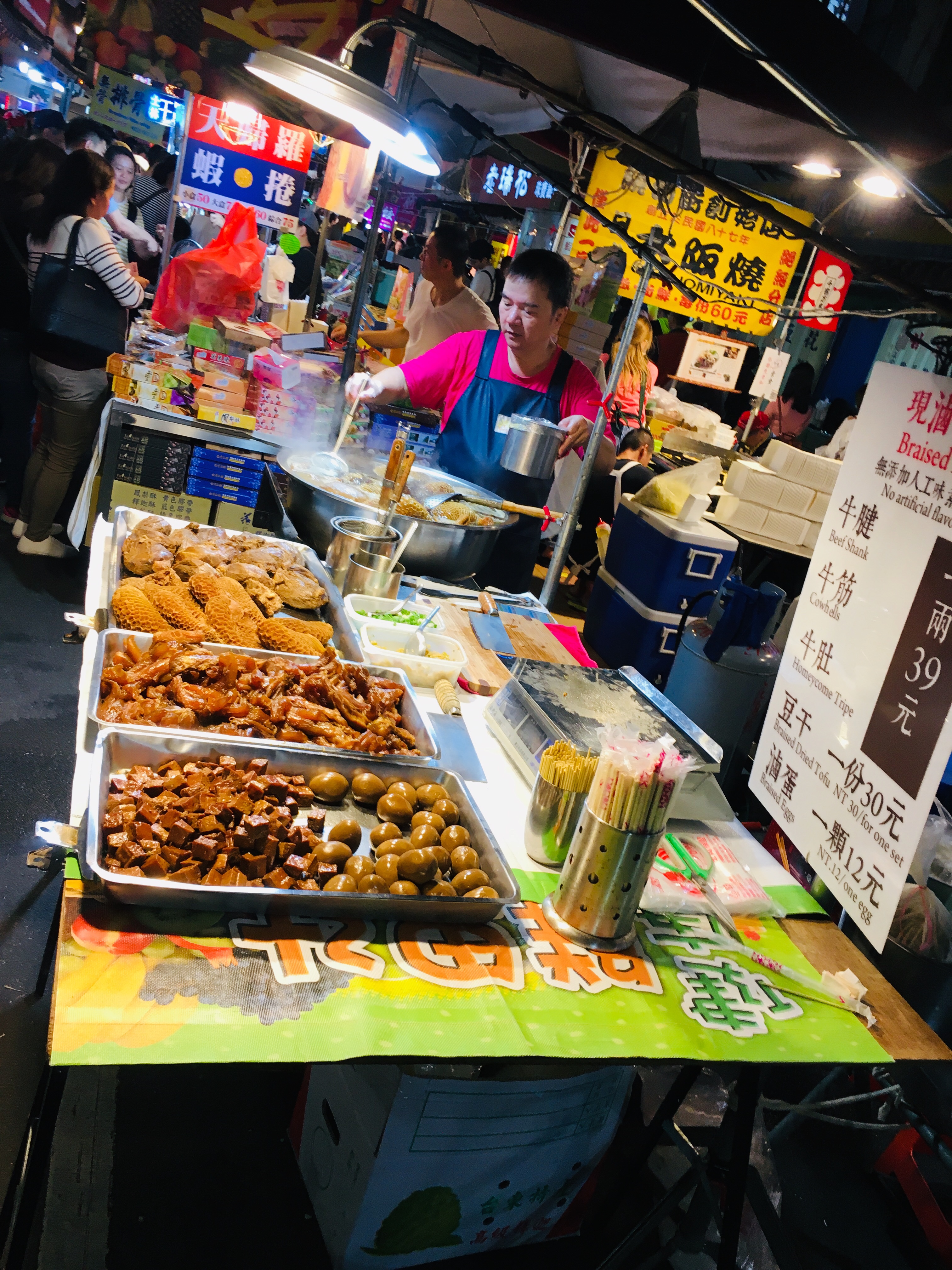
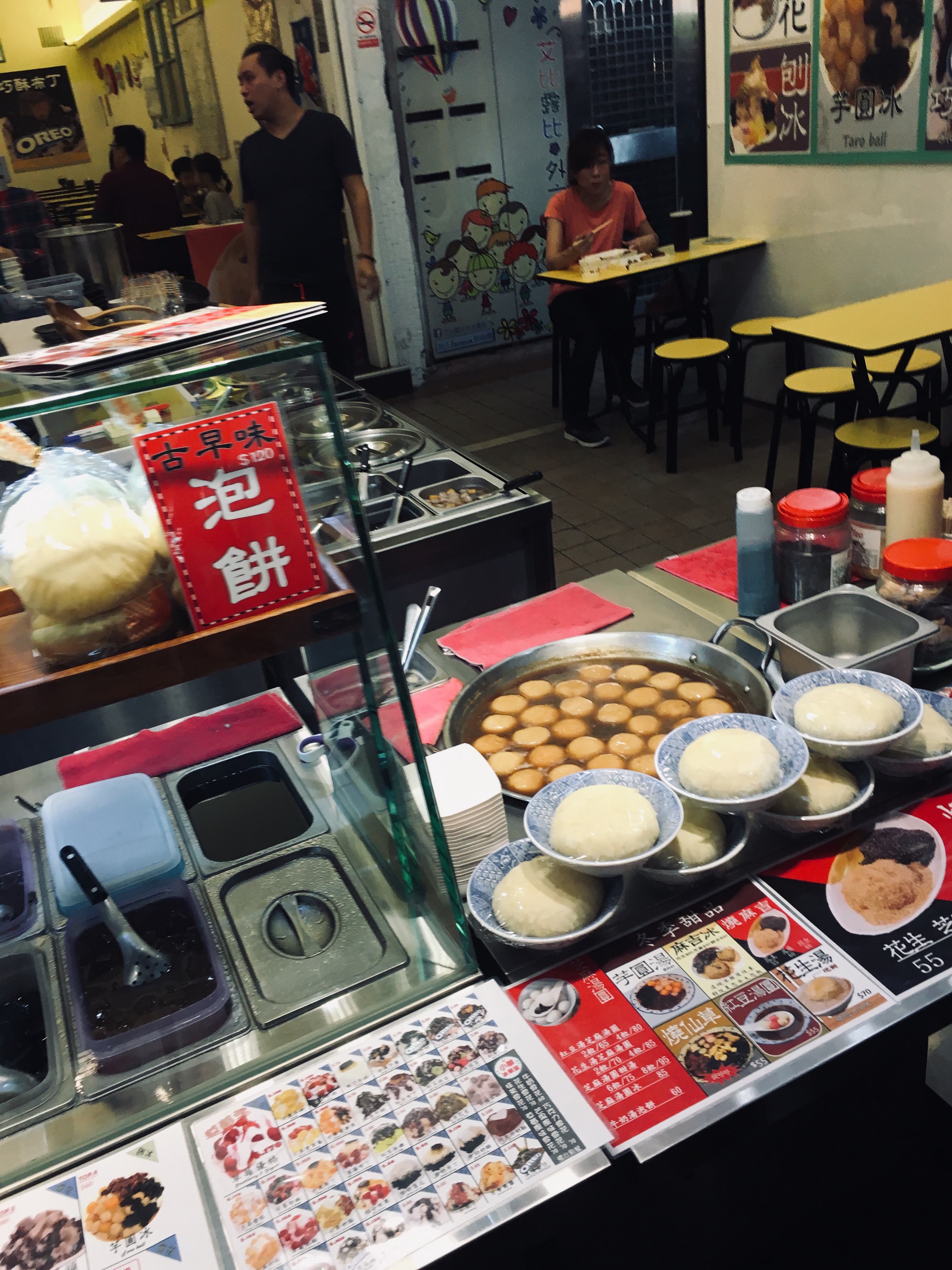
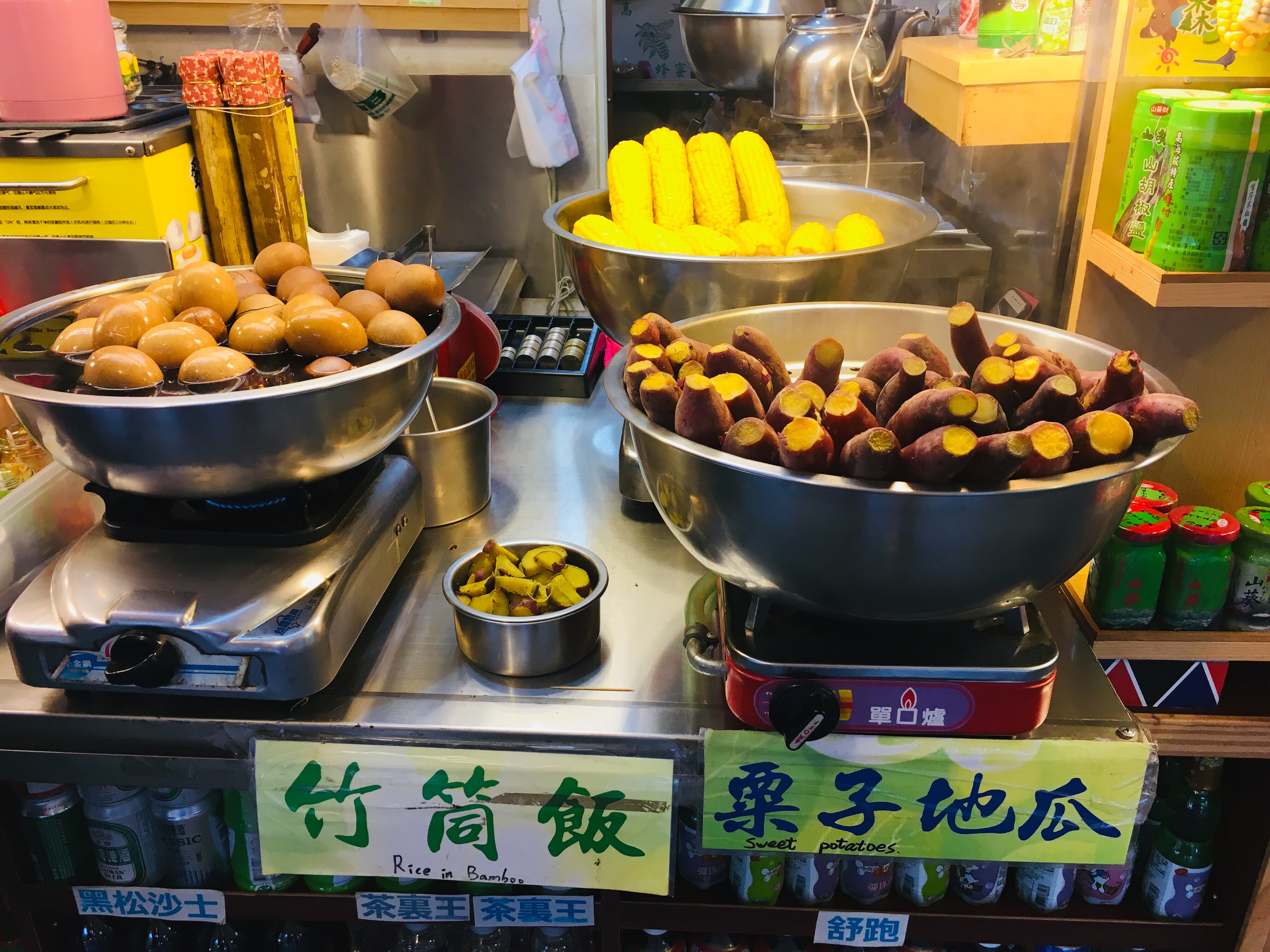
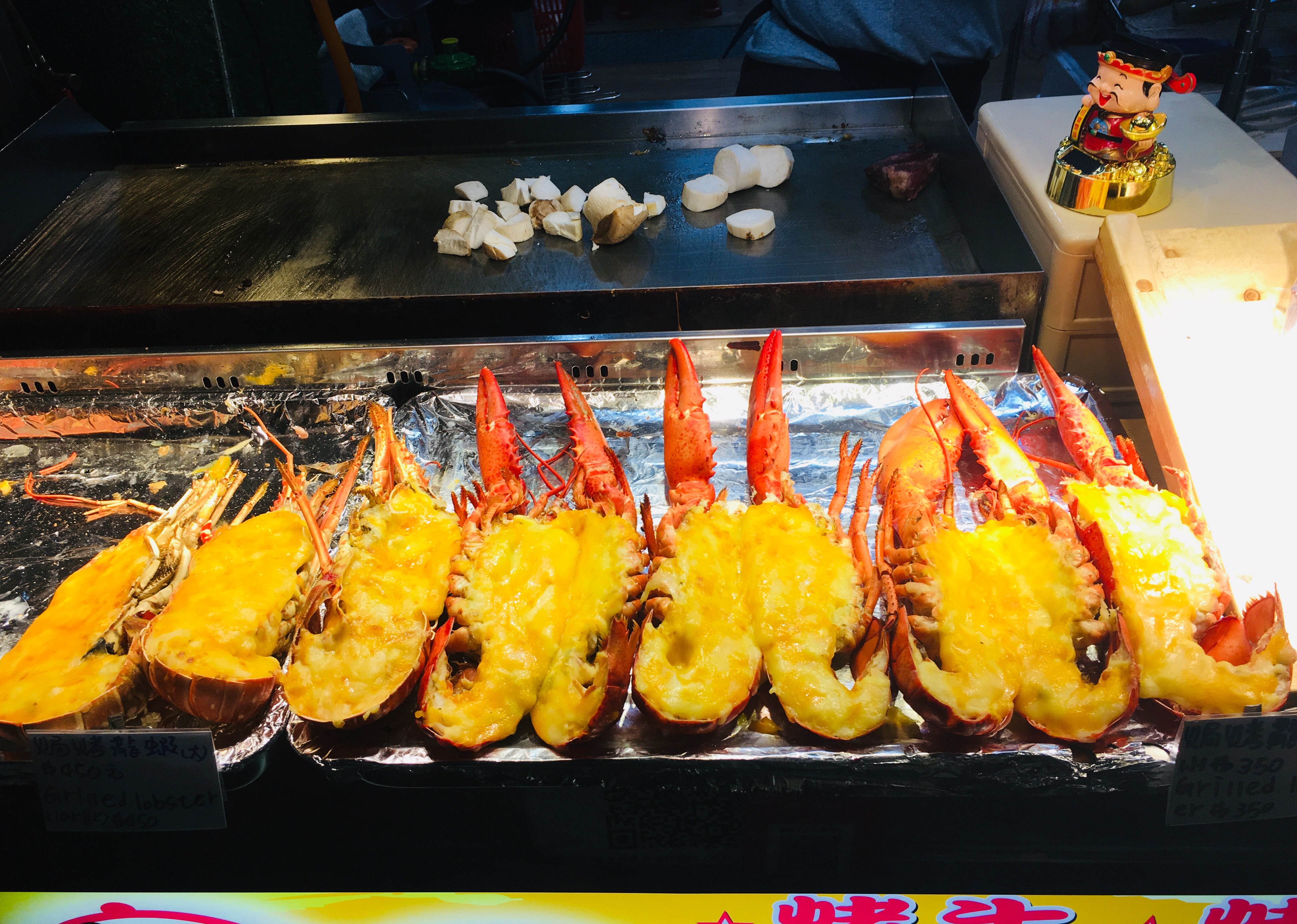
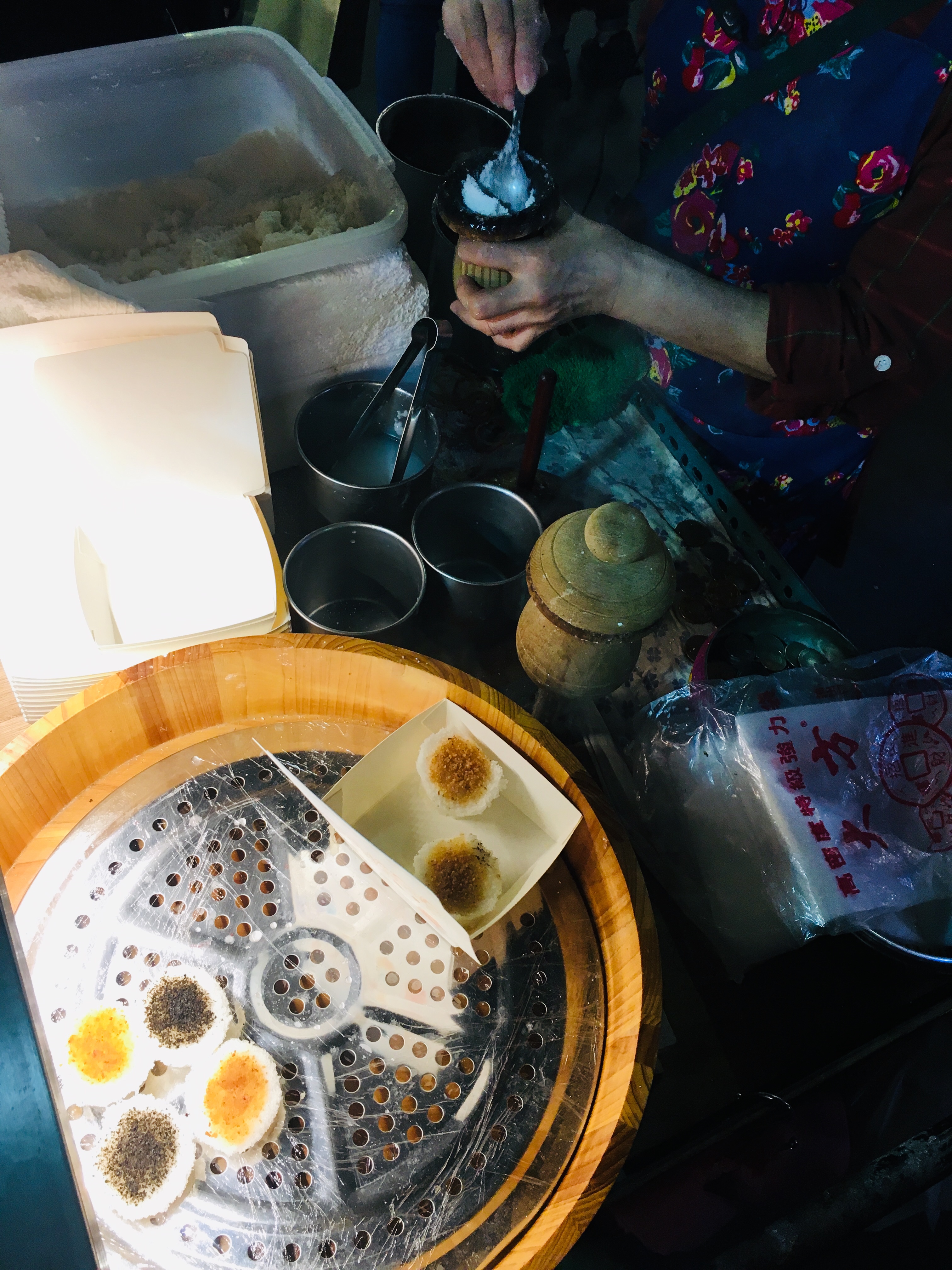
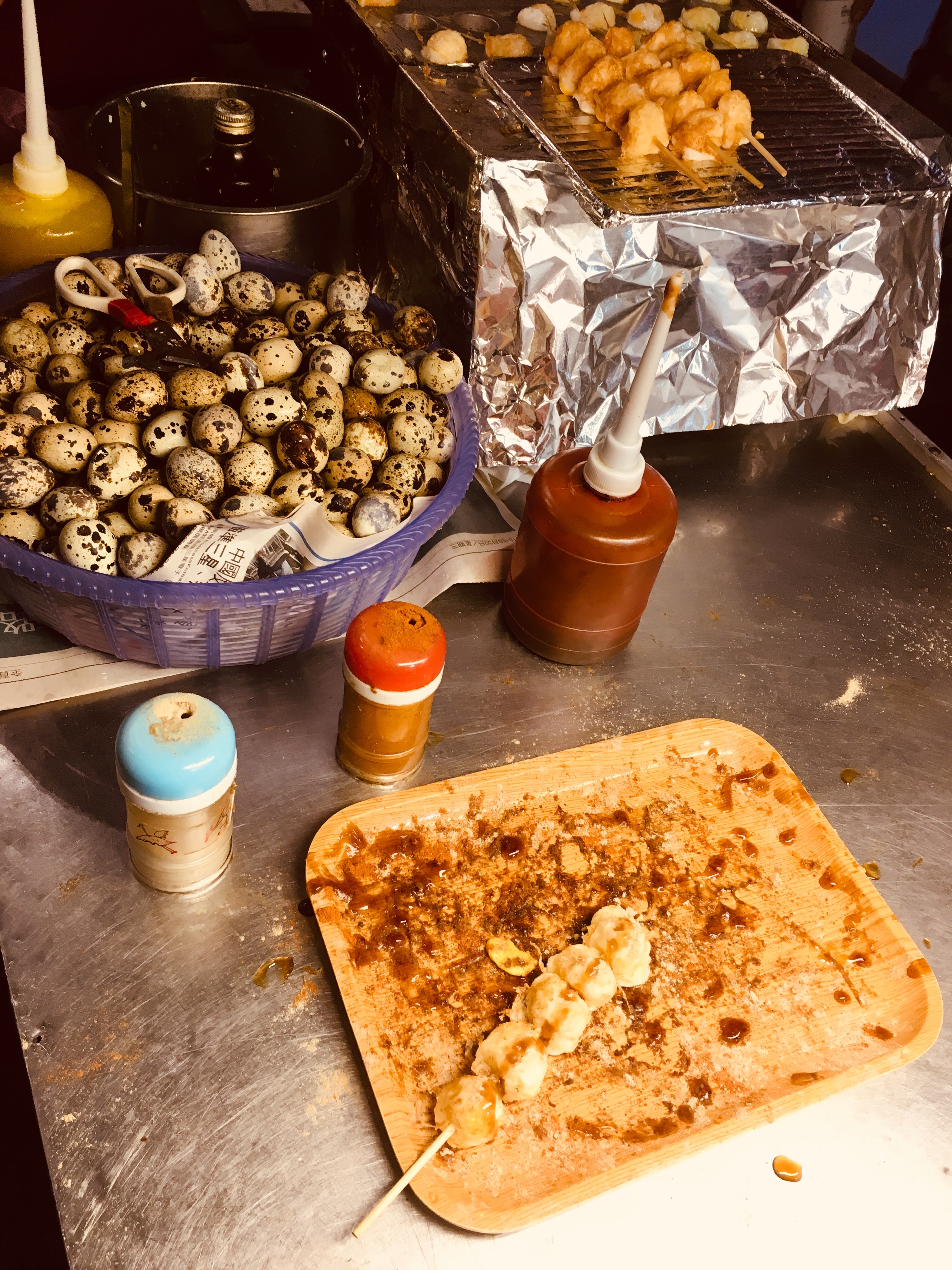
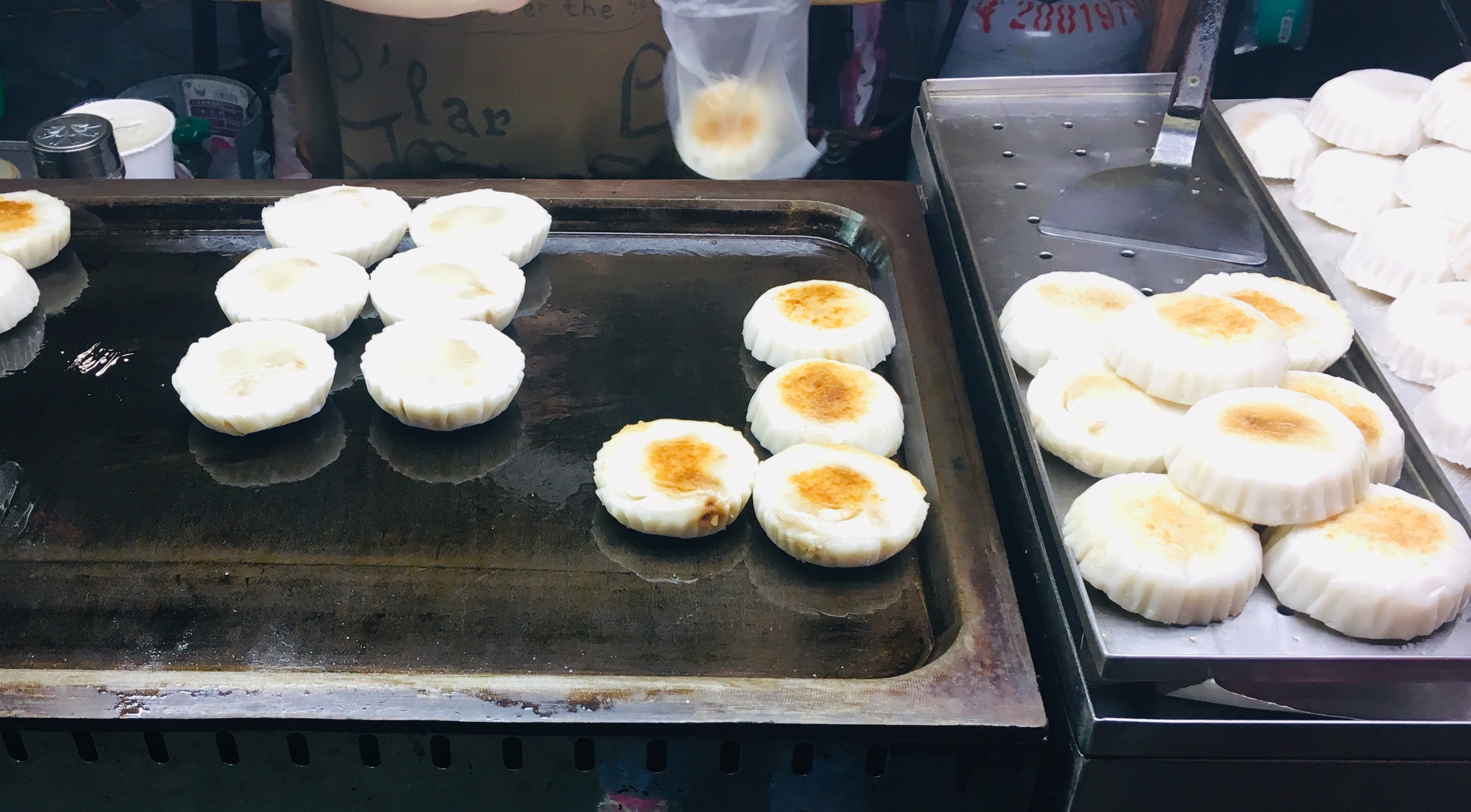
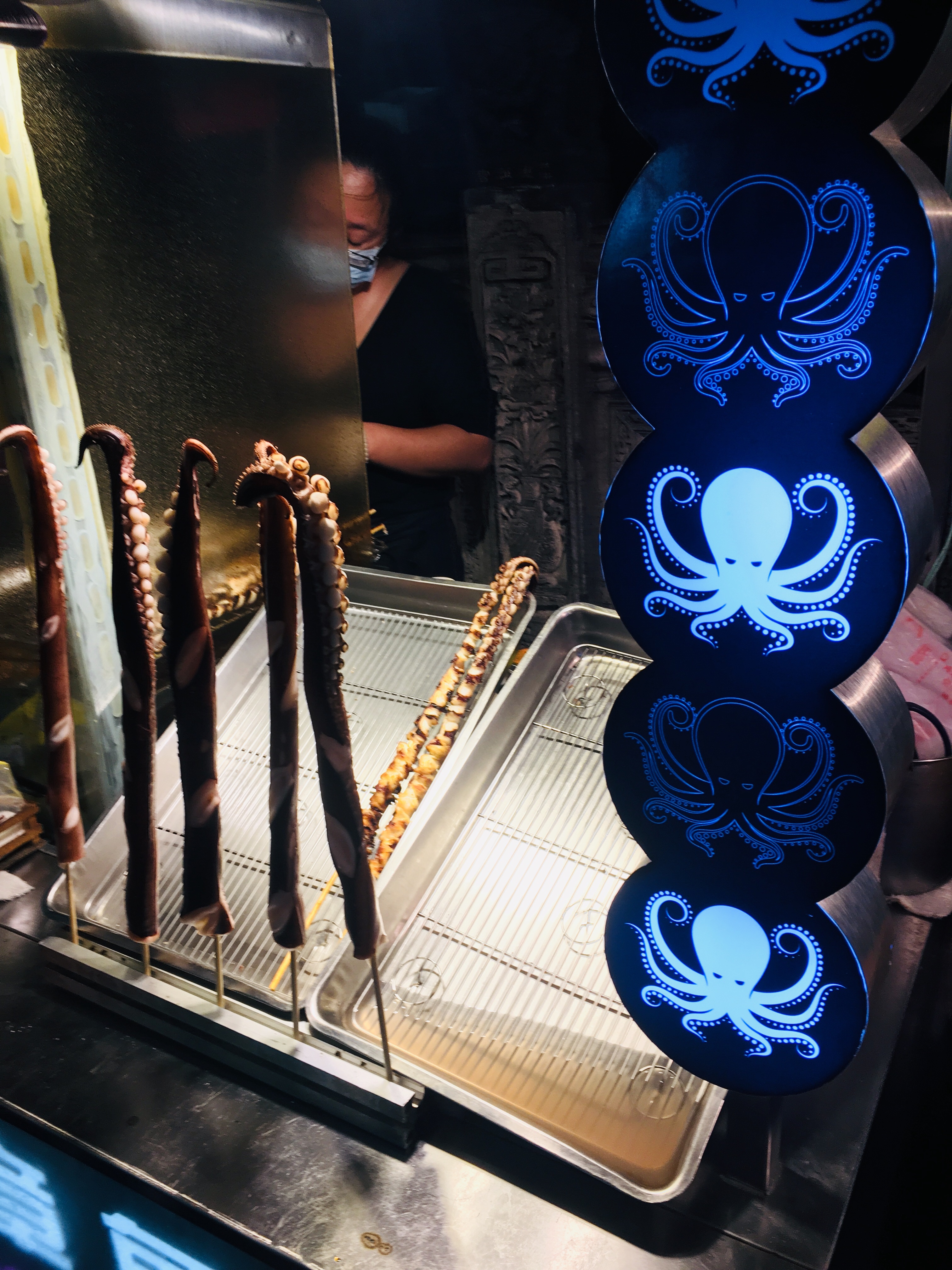
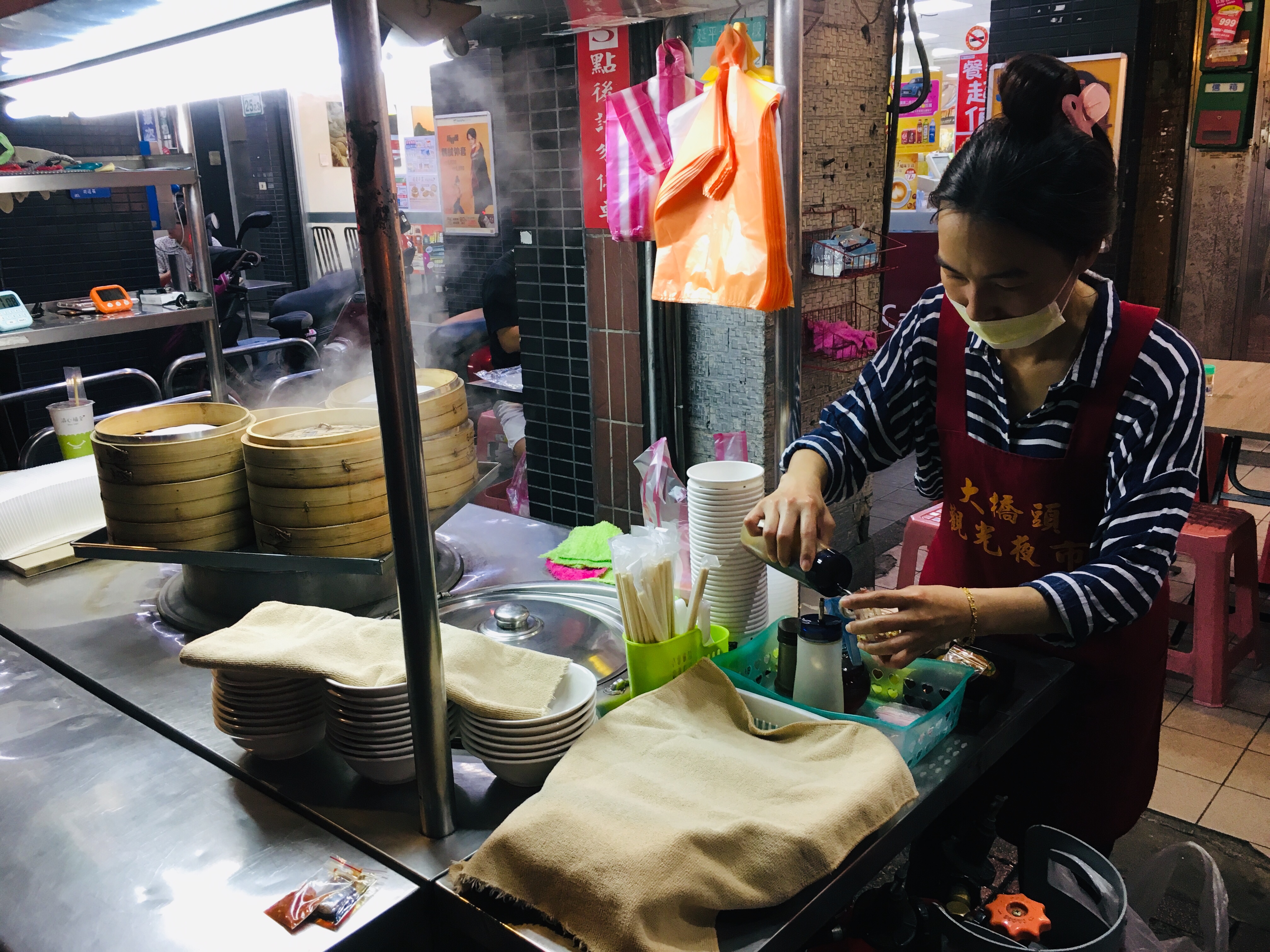
And here some more pictures of food:
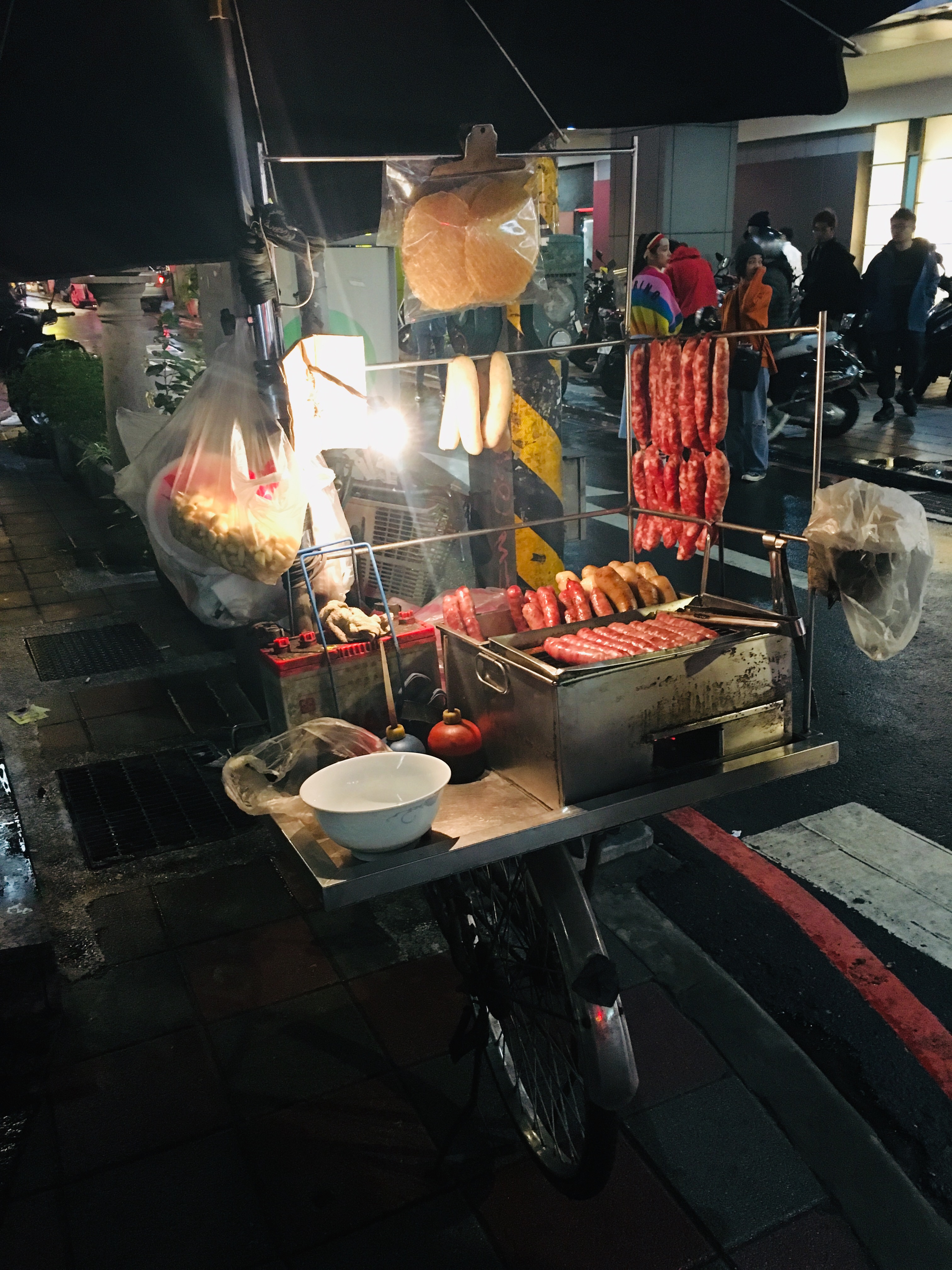
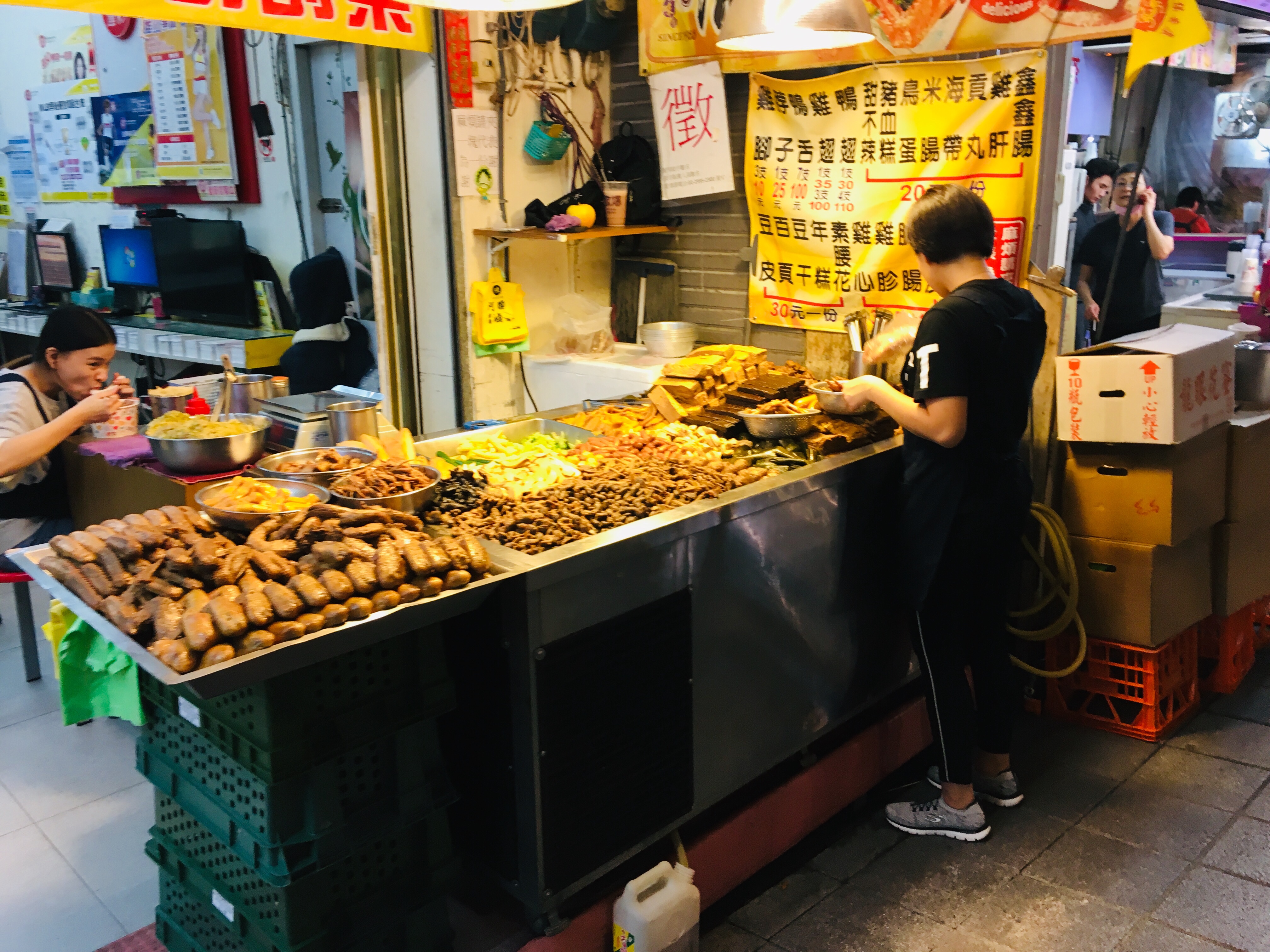
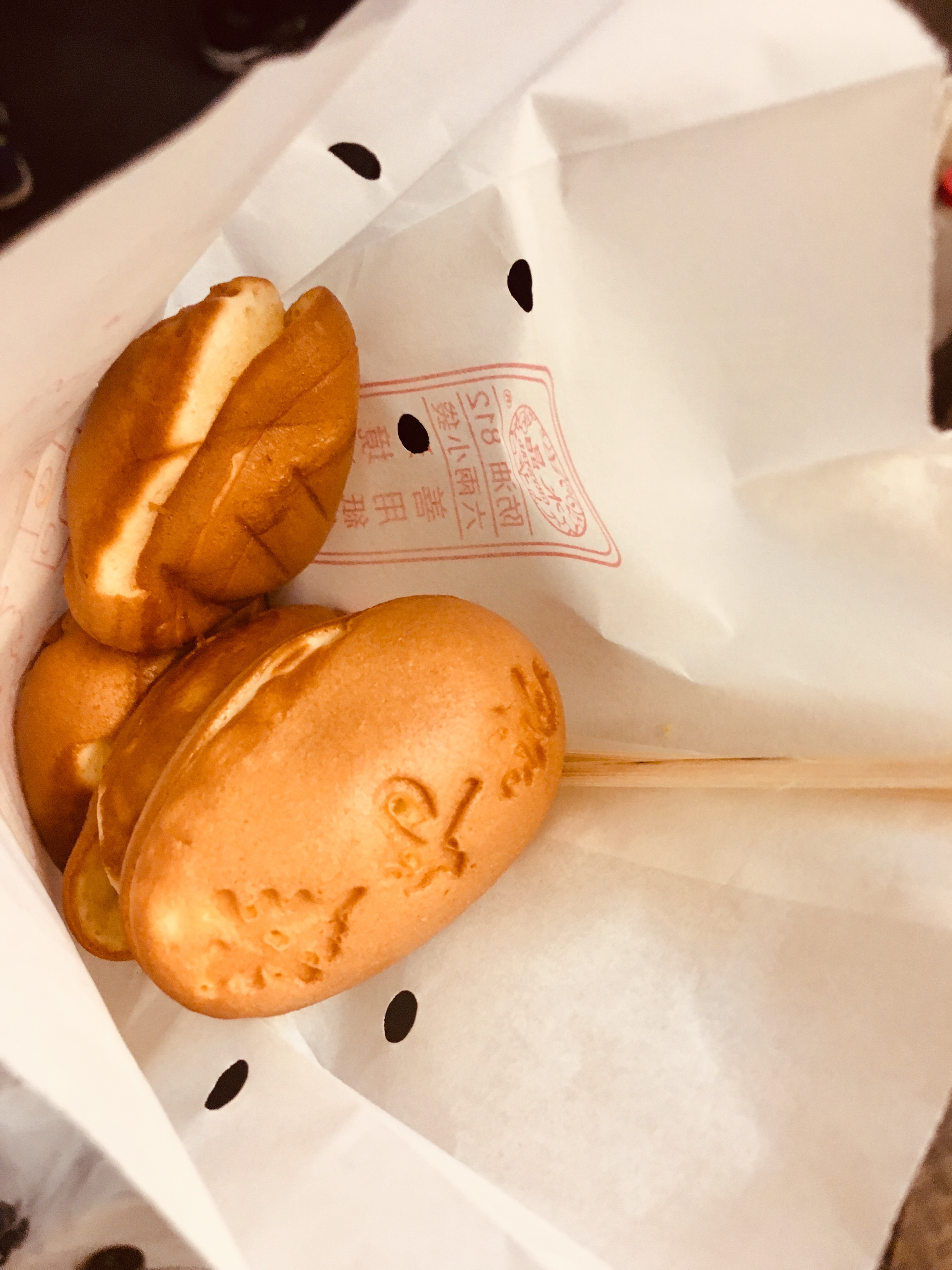
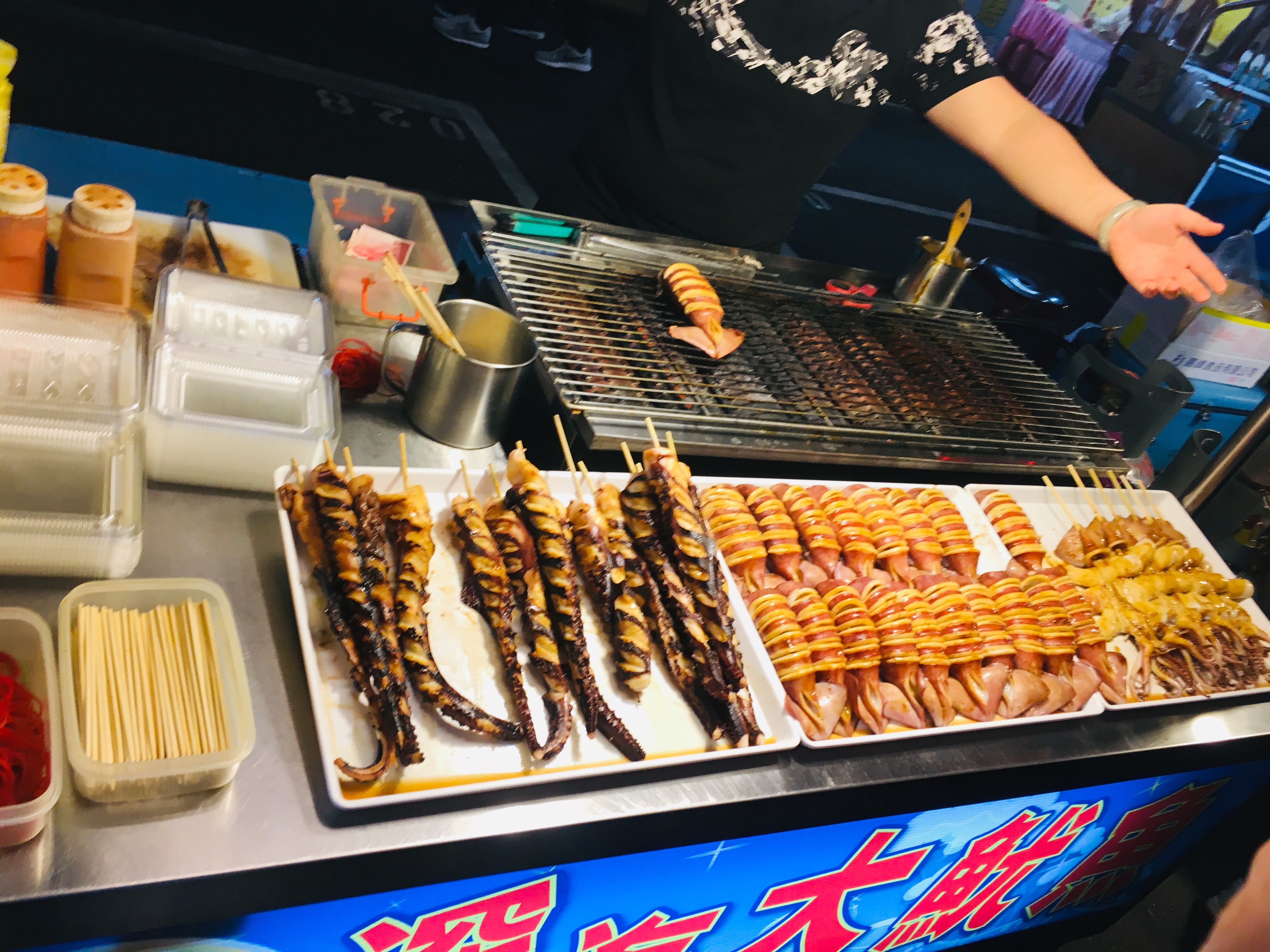
Observations / things we found interesting / AOB:
- Only 17 countries recognize Taiwan, down from 20 a year ago. This leads to a lot of complications. Please read and talk to locals as much as you can on this topic and the topic on independence – this was an eyeopening experience and now I feel I have more questions than answers
- If we had more time, the things we would have loved to do next are: Taroko National Park on the east side, Kenting national park in the south, go to a hot spring, Sun Moon Lake, bike next to the east coast line, visit Jiufen (we actually did the last one but it was very rainy so we went back to Taipei)
- Also there appear to be multiple festivals that are really worth seeing (eg Matsu pilgrimage)
- Birth rate is very low (1.05 was what our tour guide said)
- Baseball is a national sport here (we didn’t expect that)
- Other ‘national sports’ are apparently protesting and lining up. We saw both at several occasions (the lining up pretty much all the time) and both say a lot about the culture
- LGBT rights are progressive here and the largest gay pride in Asia is held in Taipei. The country will hold a referendum on gay marriages later this year
- Temples may mix several religions in one in the same way Taiwanese people combine them. For example Longshan temple is a Buddhist temple but there are more than 100 other gods and goddess worshipped there
- Taiwan was under martial law for a very long time (between 1948 and 1987; a period also called White Terror)
- Although they have a 200 bill for the Taiwanese dollar, we never saw it in circulation and mostly 100, 500 and 1000 bills are used. Locals link it to the face on the bill namely that of Chiang Kai-shek (ruler during the ‘white terror’ period)
-
Hong Kong #CityLoveAffair
Hong Kong
Hong Kong had me at the first day. Its buzzing atmosphere and rich culture is a rare combination worth exploring! Only after leaving the city we realized the full extend of how lively, full and energetic this city is. Any other place on earth just looks quiet and tranquil in comparison!In terms of typical sightseeing spots Hong Kong has some to offer but the main thing is just feeling the city, walking through the different neighbourhoods and mingling with the locals. Take a ding ding double decker tram or the star ferry to cross the river; eat some dimsum or noodles at one of the thousands local spots or get lost in one of the many night markets.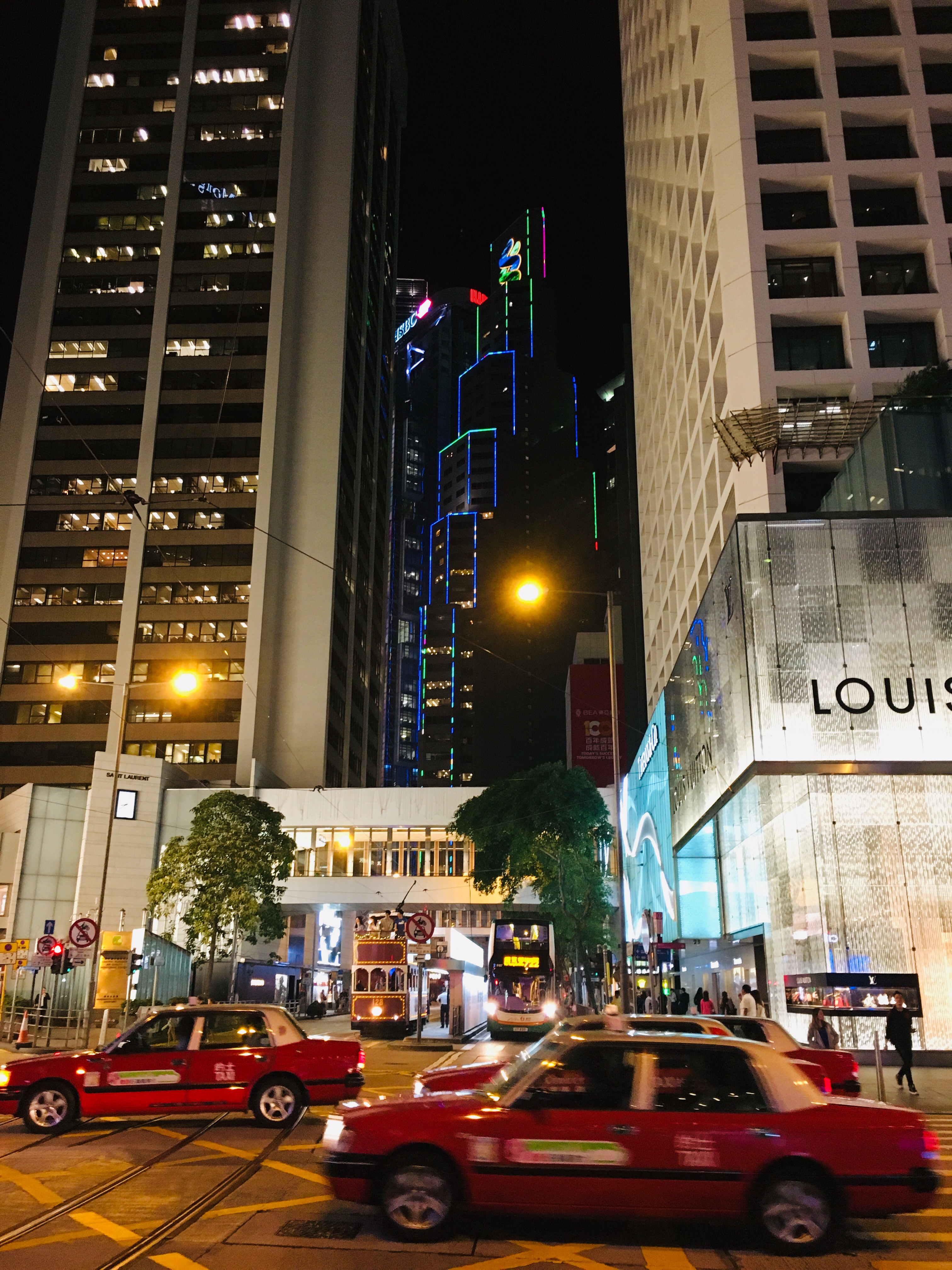
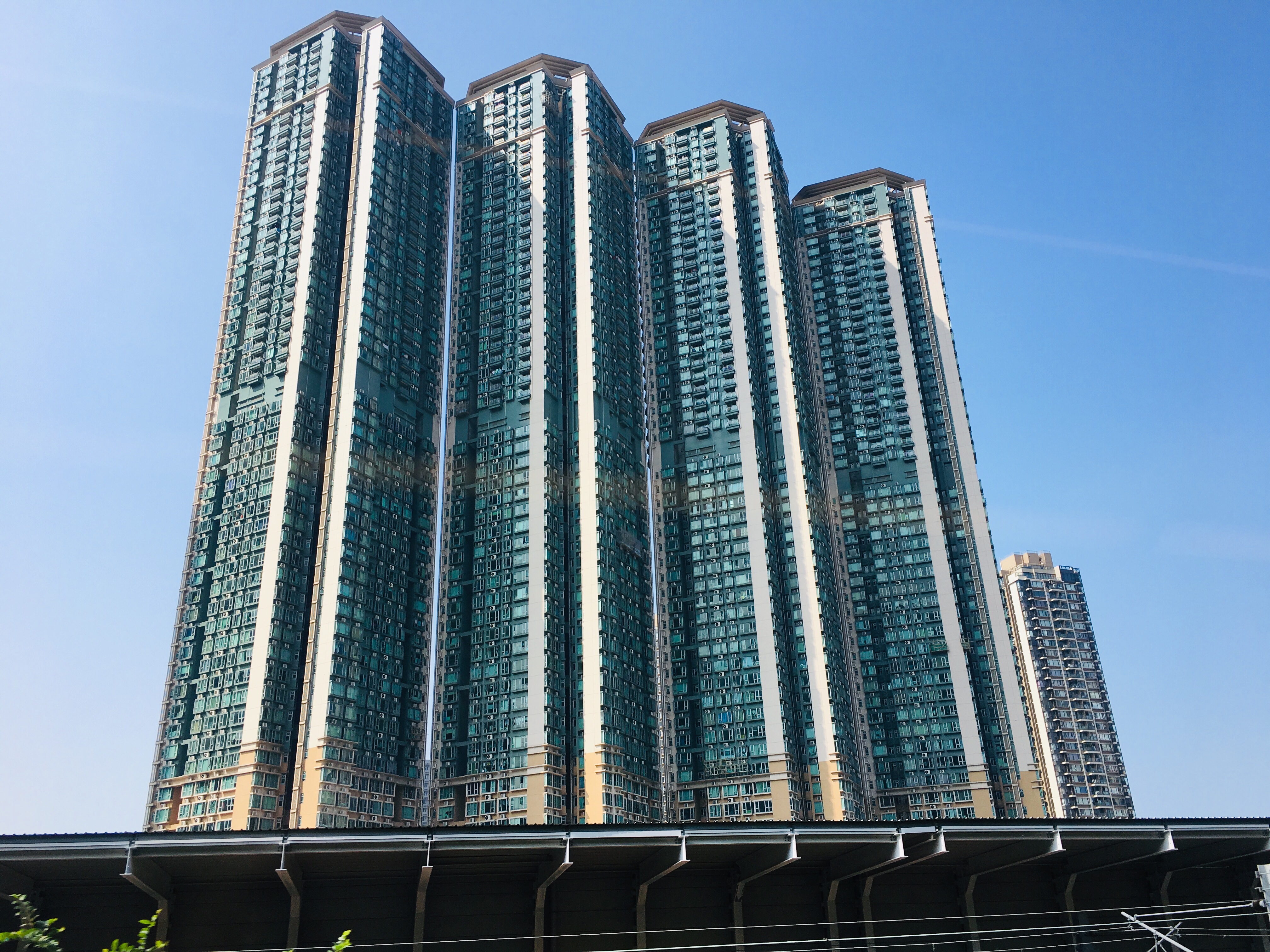
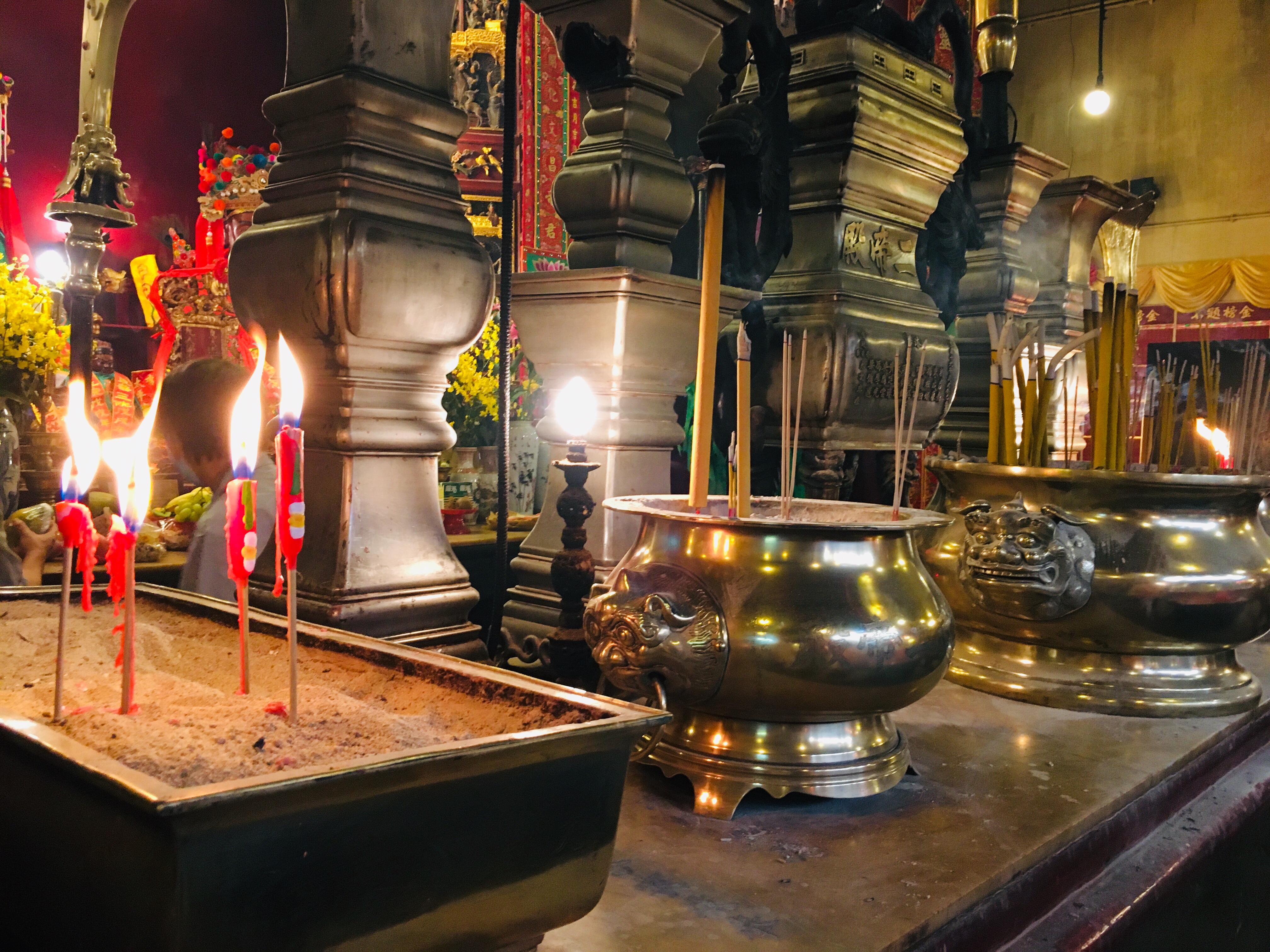
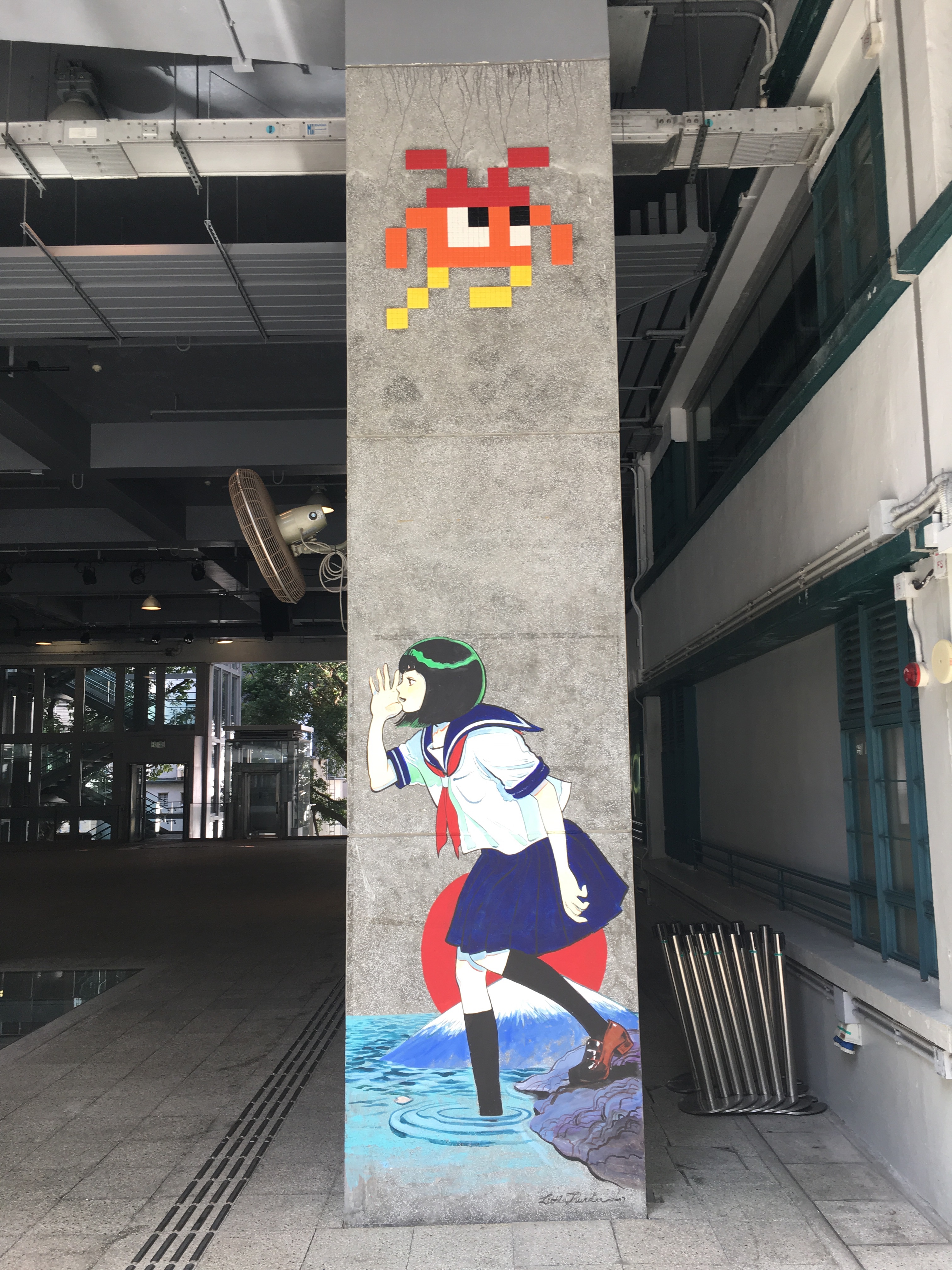
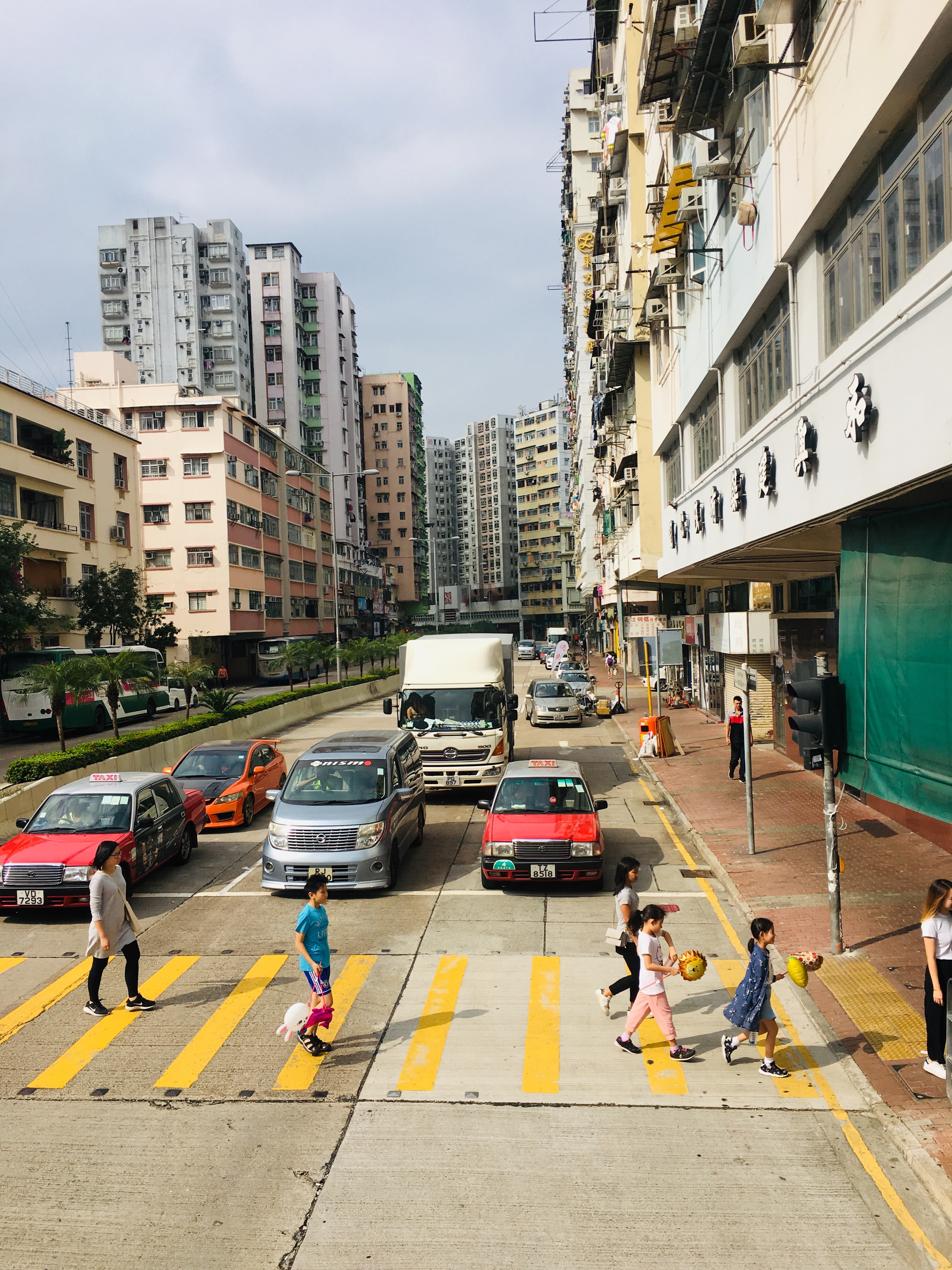 We first visited Hong Kong Central (which is on the island) on a Sunday which ended up being a great coincidence. While the part of the city was still full of people, it had nothing to do with the Monday morning crowd. We got to explore the neighbourhood and ride the double decker dingding trams without getting stuck in traffic. The area has some sightseeing spots to offer such as the Man Mo Taoism temple or the PMQ station (old police station now turned into arts area), but the majority of the charm comes from just walking around and absorbing the energy of the city. Seeing the longest elevator that takes around 30 minutes to get to the top (and which btw in the mornings until 10am runs only downwards to ensure all locals get on time to work) or grabbing food at one of the markets is just pure fun.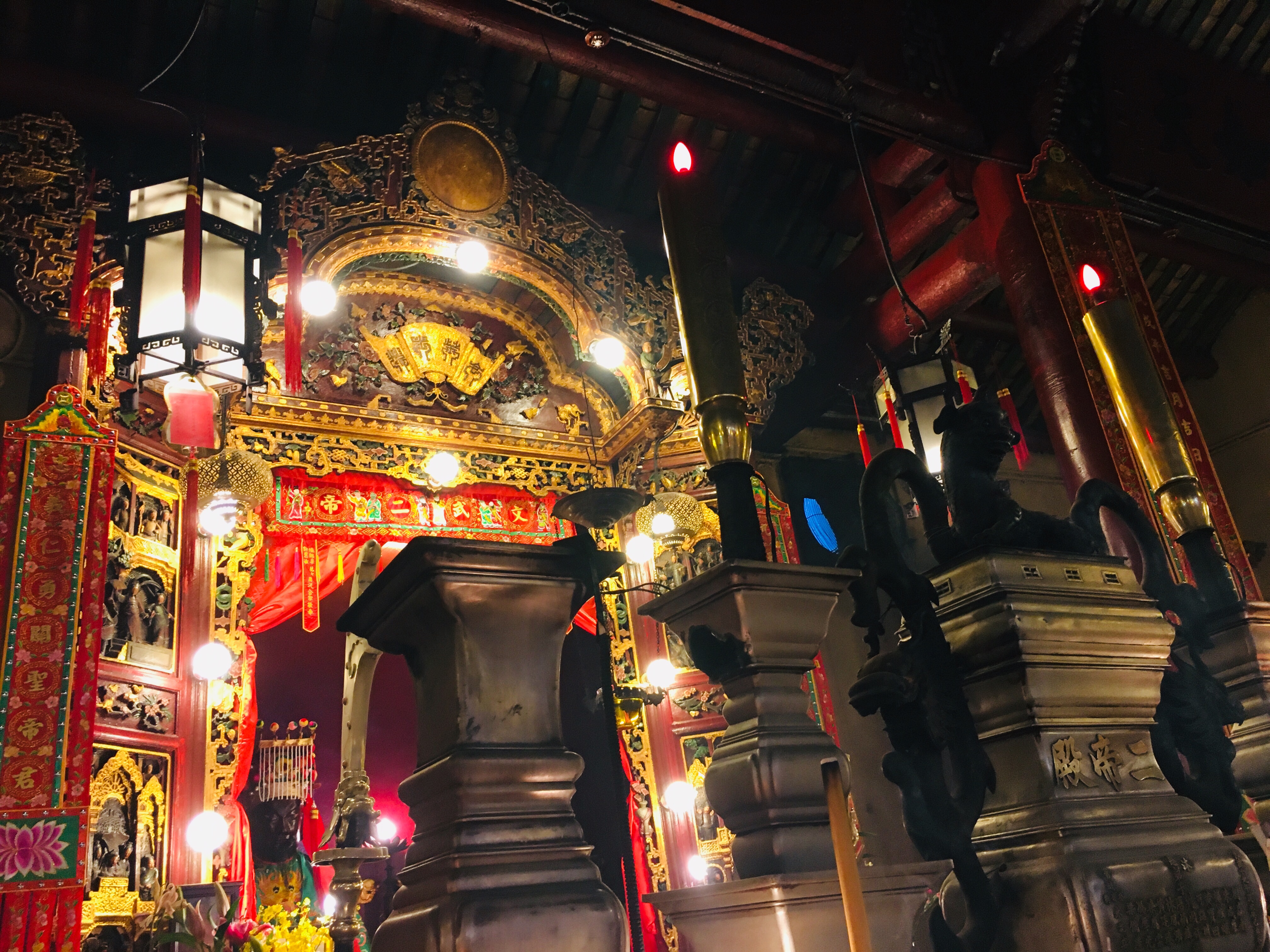
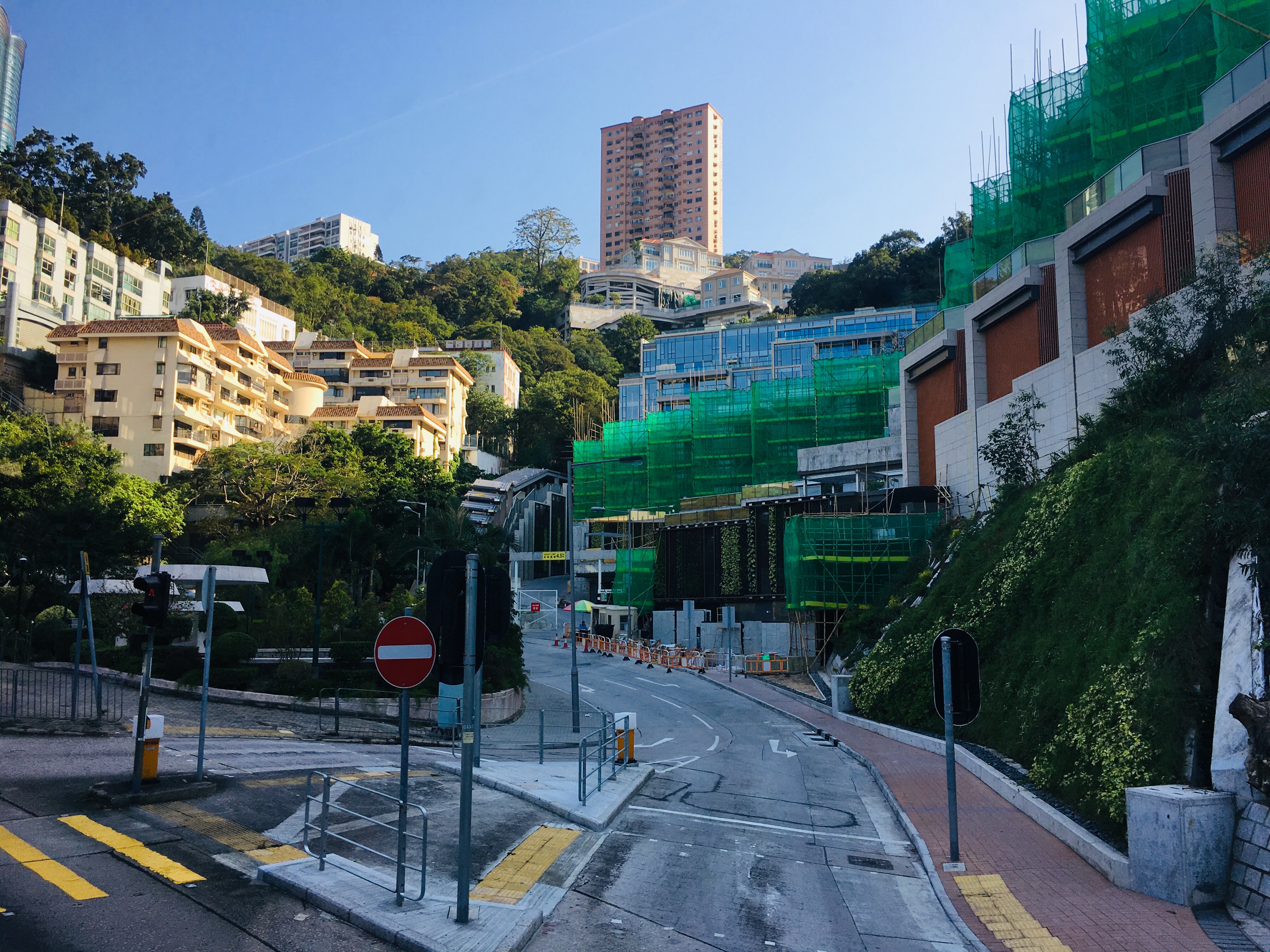
 The peak offers some beautiful views of the city and the bus tour to get there a great opportunity to see where the really wealthy people live. Housing is quite a topic in Hong Kong and especially the lack of affordable options. To our surprise, it seems most of the government budget is funded by taxes on properties or transfer taxes, which is how they balance the books and compensate for the lack of VAT tax (shopping!) and low incomes taxes.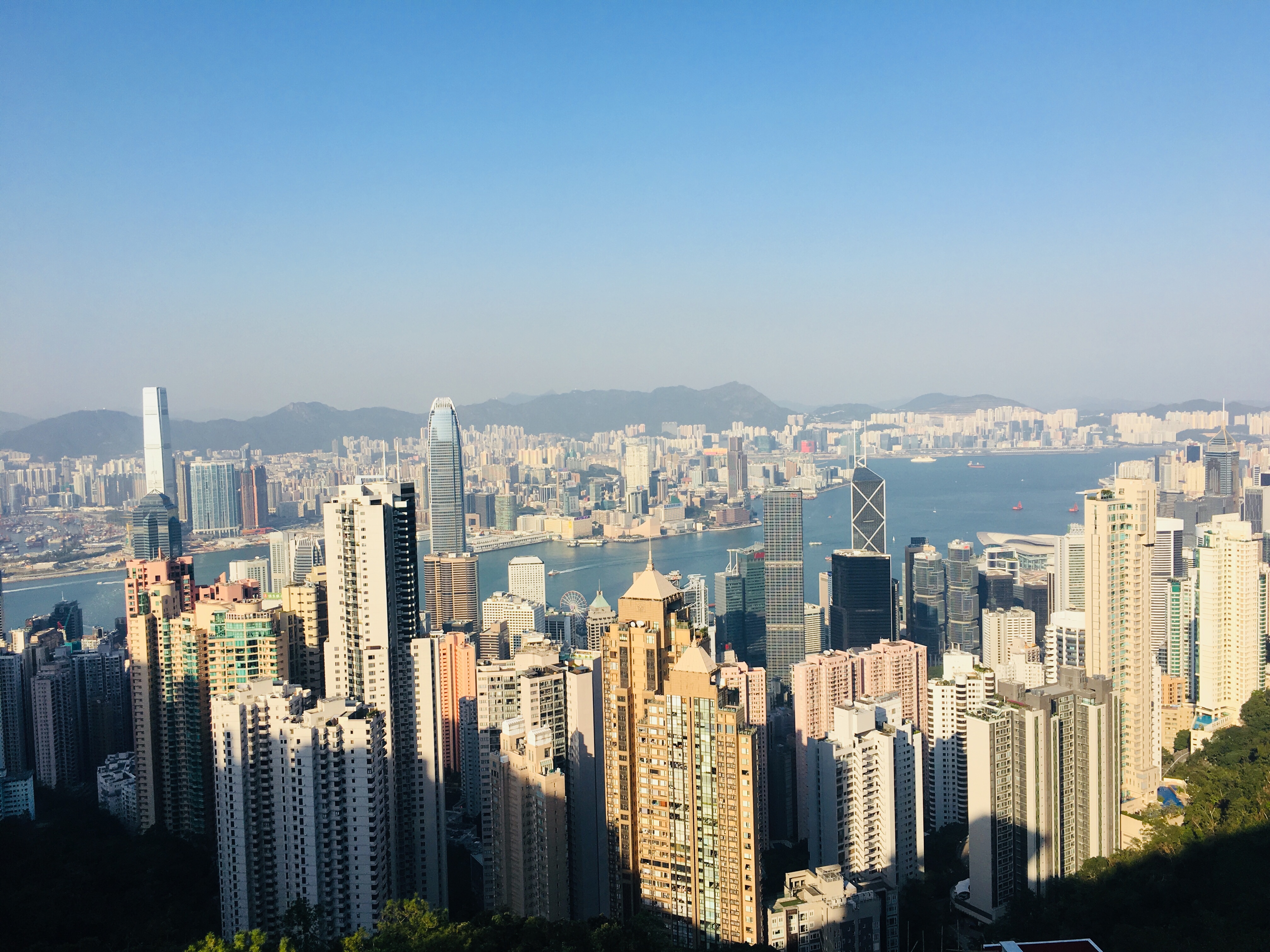
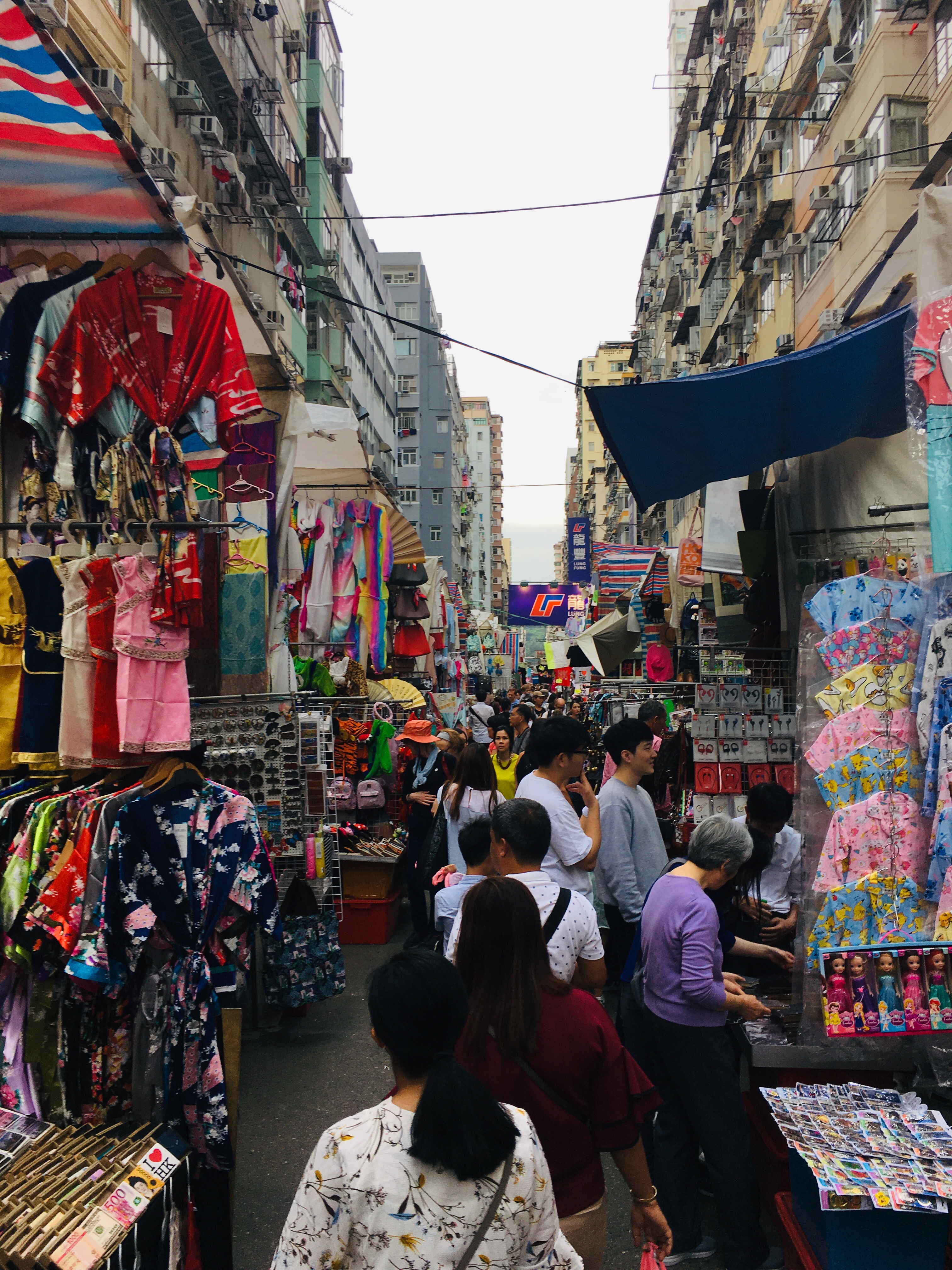
 Hong Kong is also a great shopping destination with something for everyone (trust me, this is not an overstatement)! We saw here every brand we know and stores / markets at every price range imaginable. Going through the local (night) markets is an experience in itself.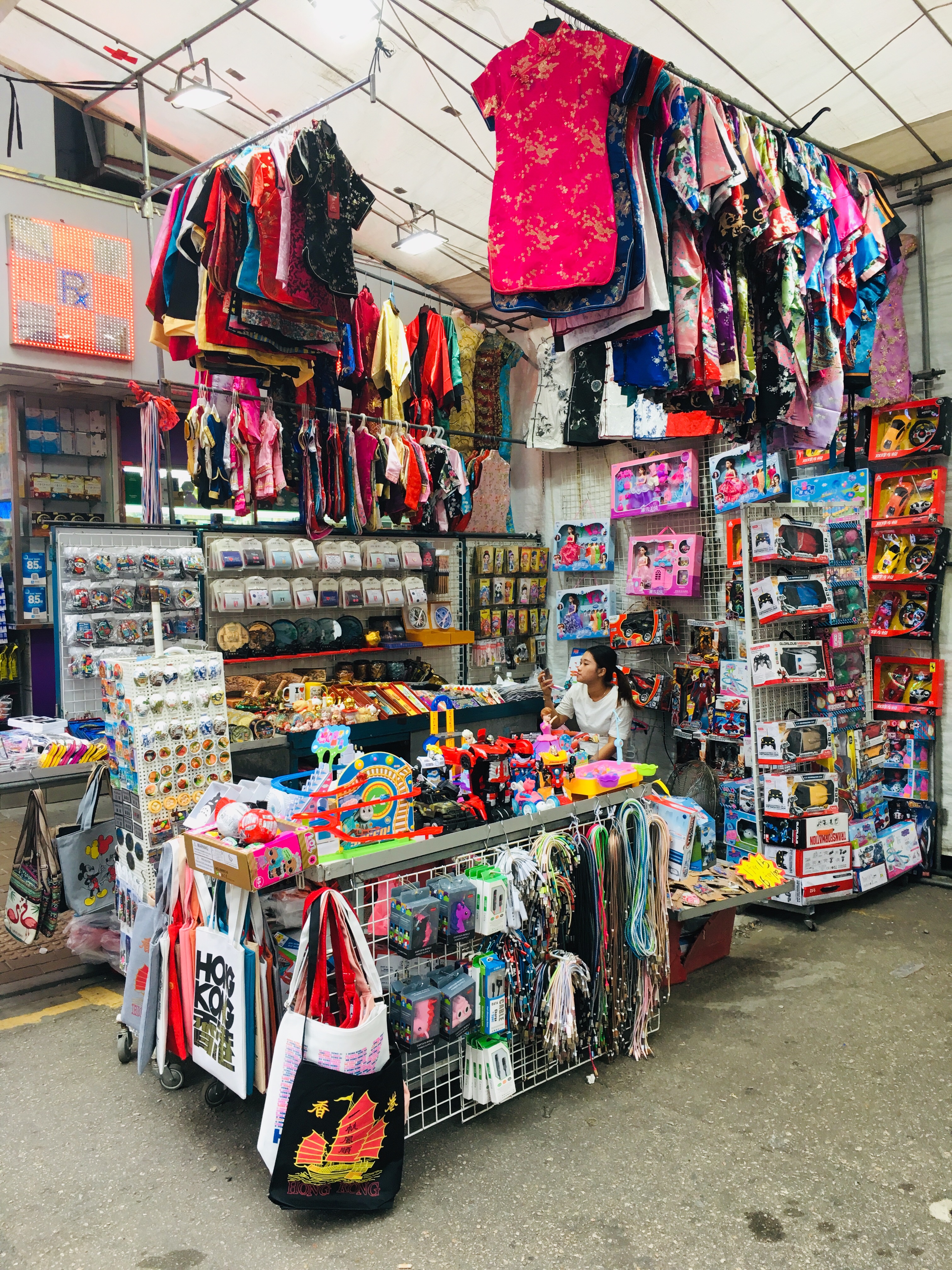
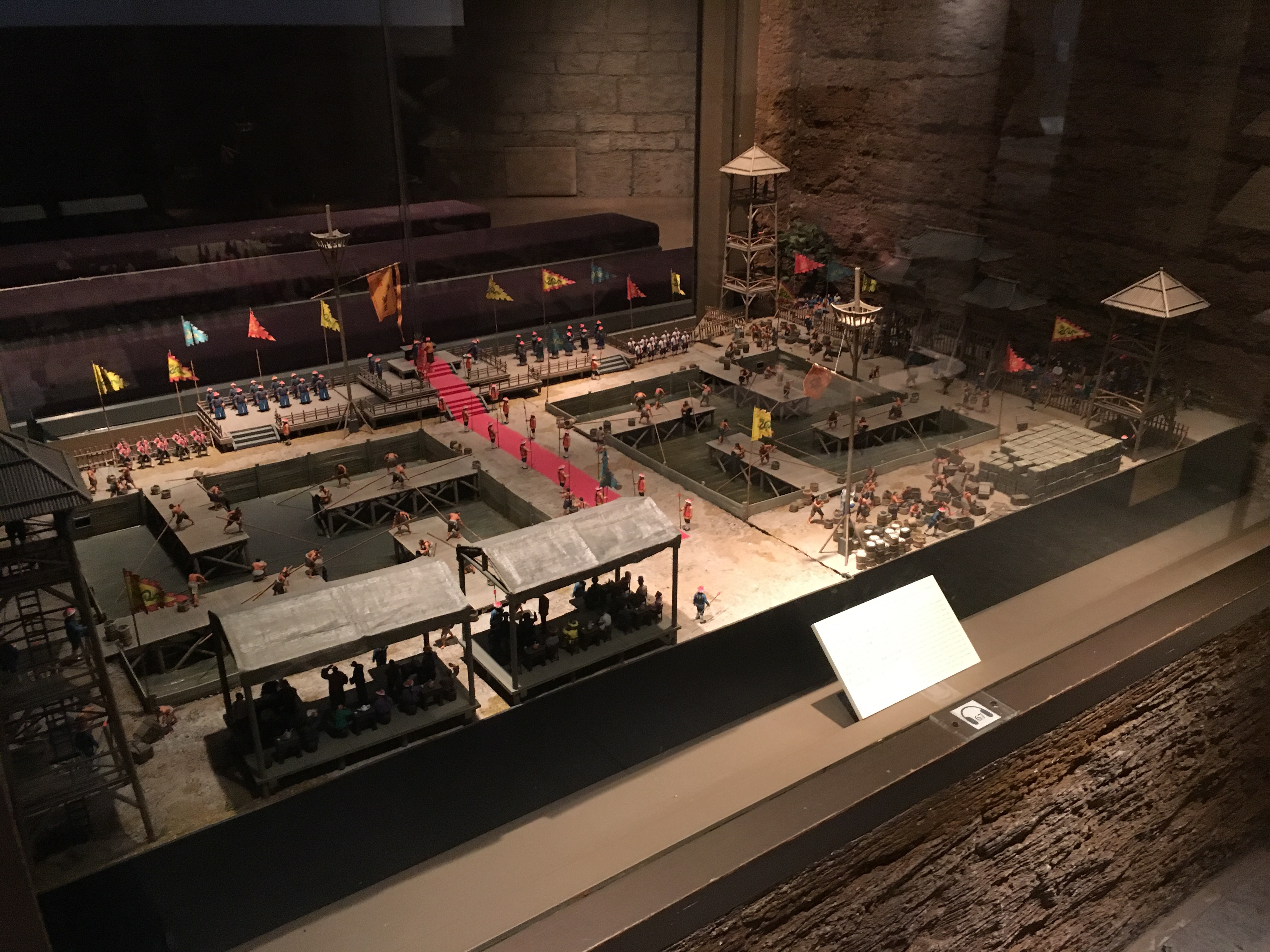
 Mainland Hong Kong offers a different type of craziness. This area feels more traditional than the business/modern feel of Hong Kong island. I would definitely recommend the Hong Kong history museum (free!), which offers a great intro into the rich history of the country as well as its folk culture.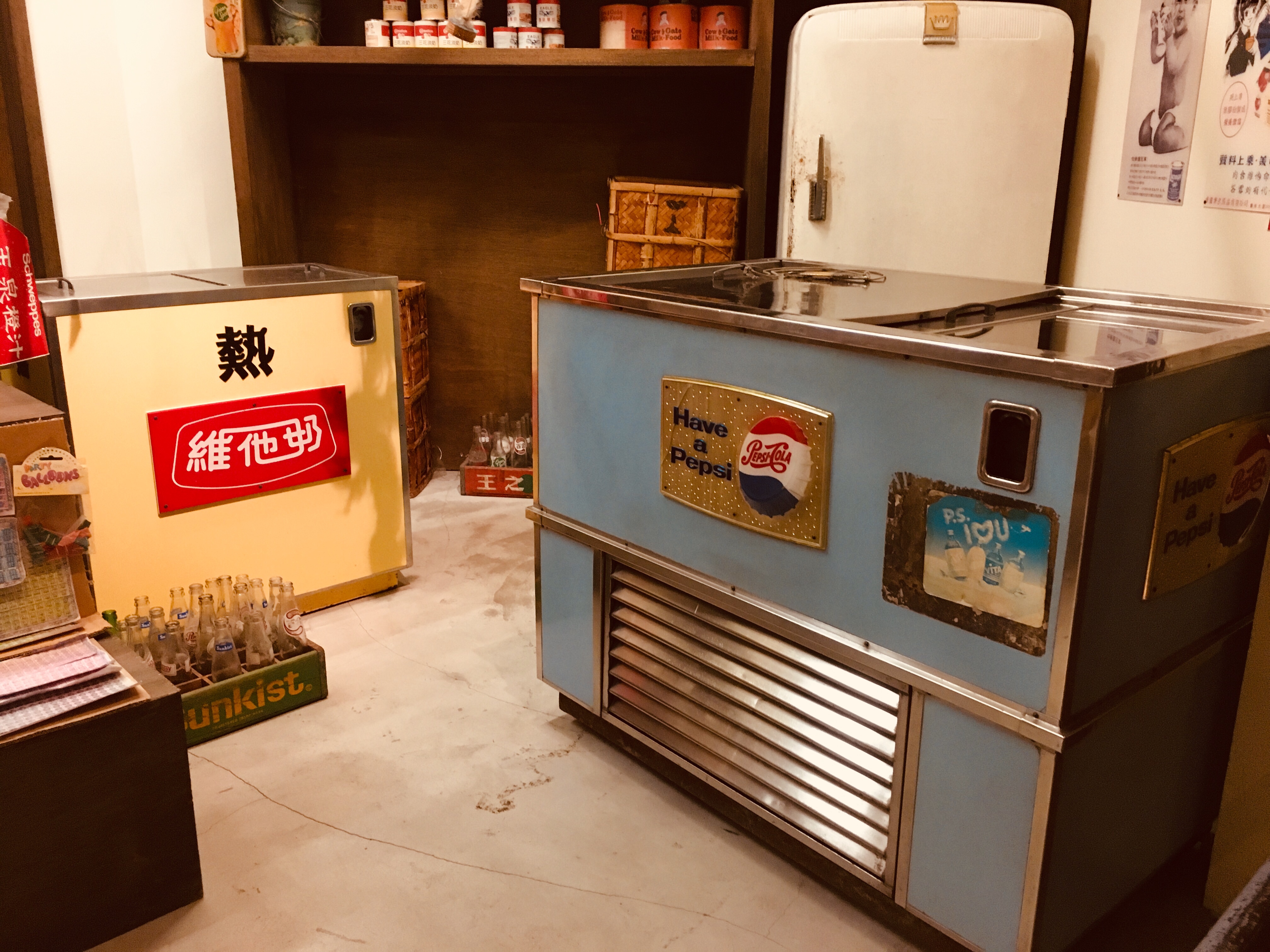
Food!
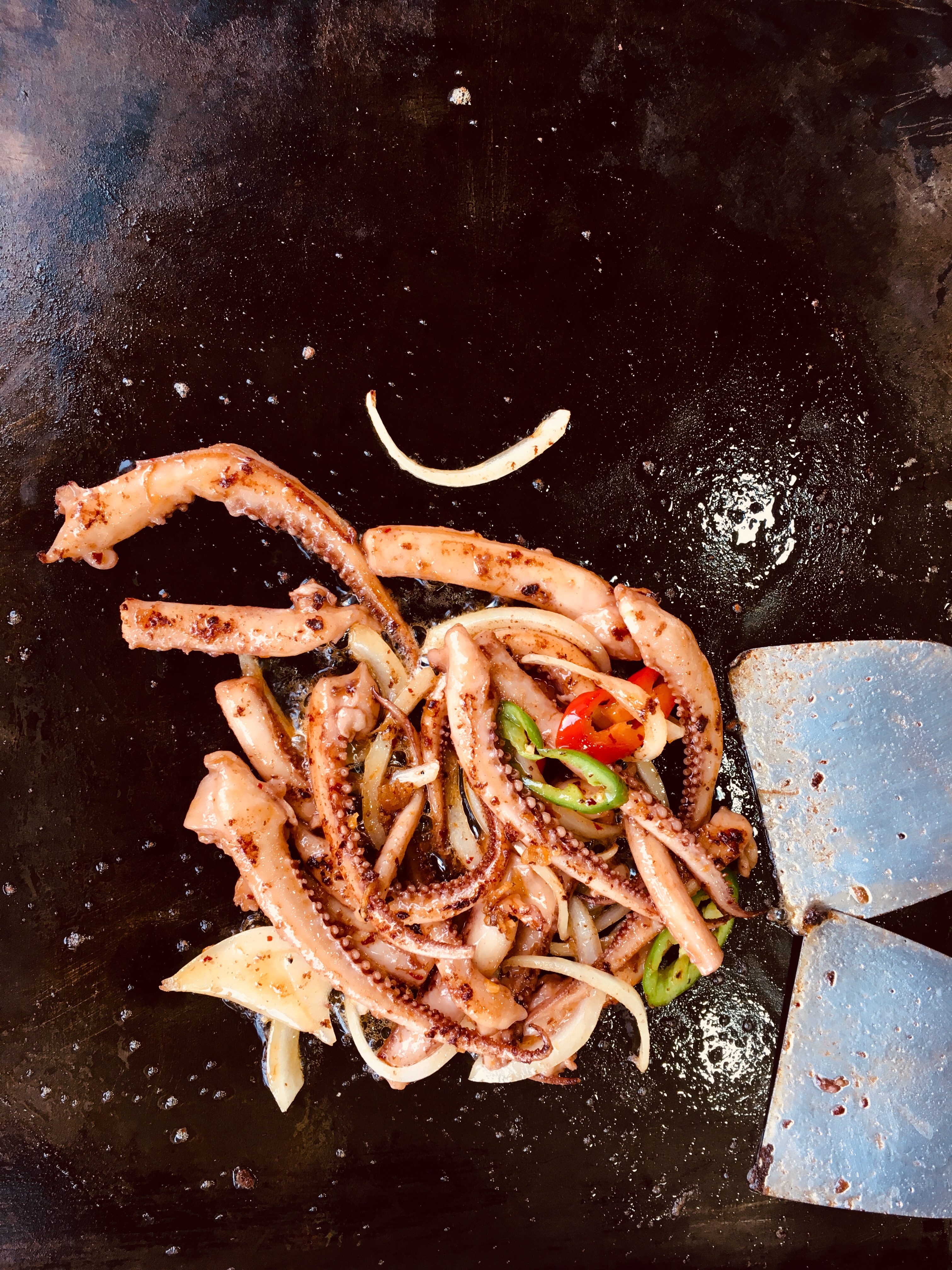
For me food is an important part of being a tourist and experiencing the culture and well.. the taste of a country. And Hong Kong had so much to offer!! Including Michelin star dim sum places at cheap prices (try the baked bun with bbq pork at Tim Ho Wan) or the inspired by overseas bubble milk tea (by now at every corner), egg desserts, pineapple bread and lots of amazing octopus!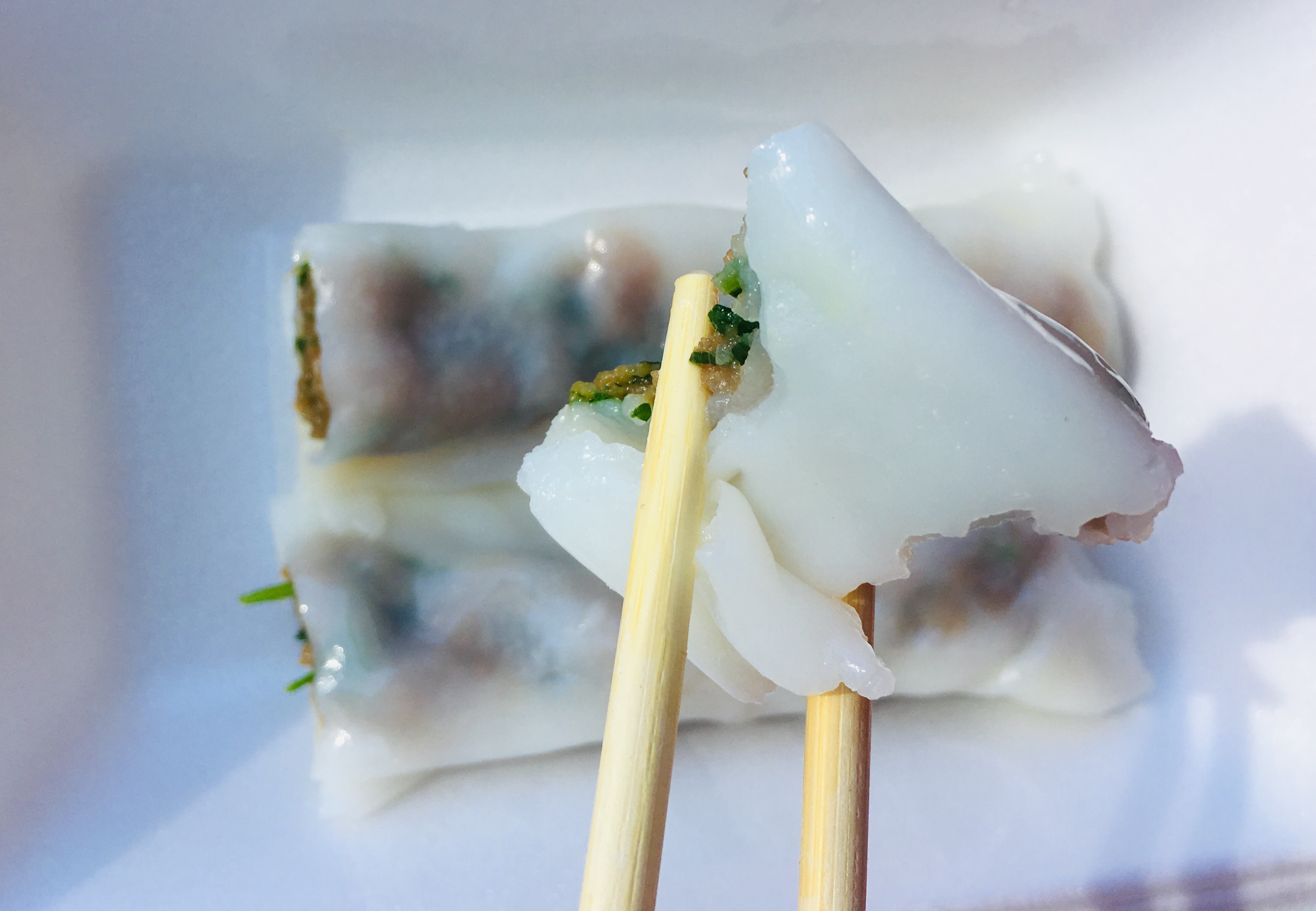
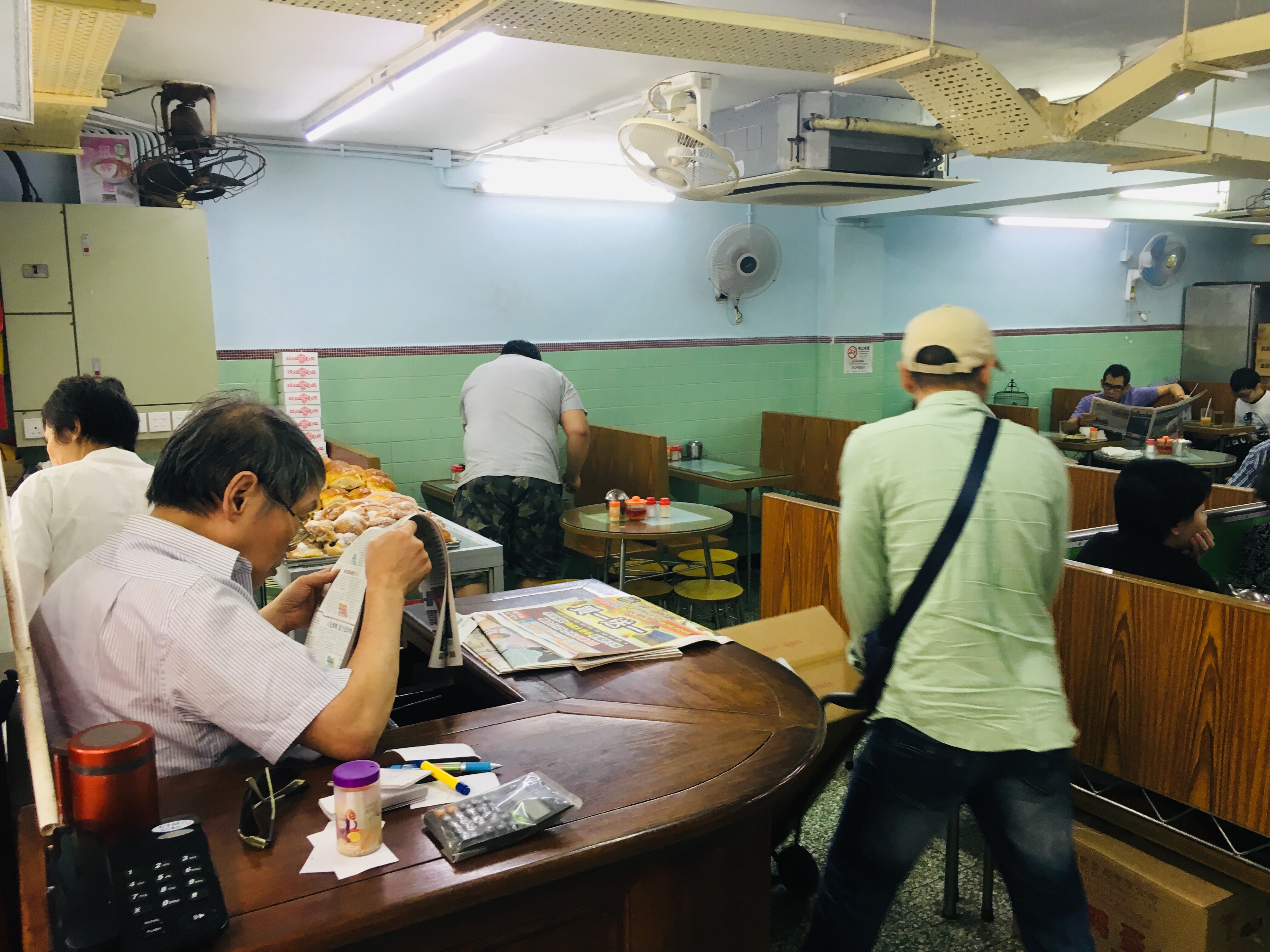
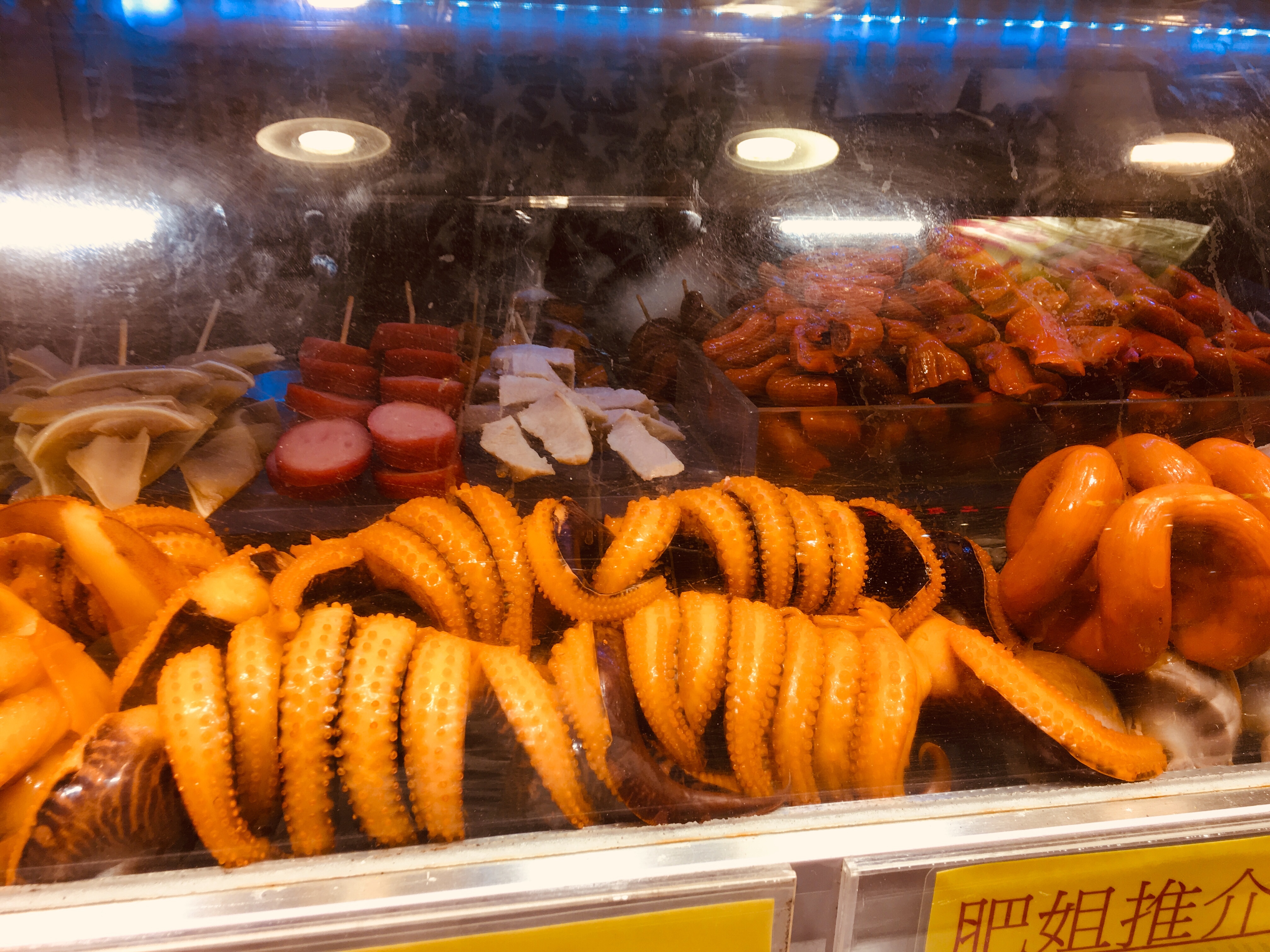
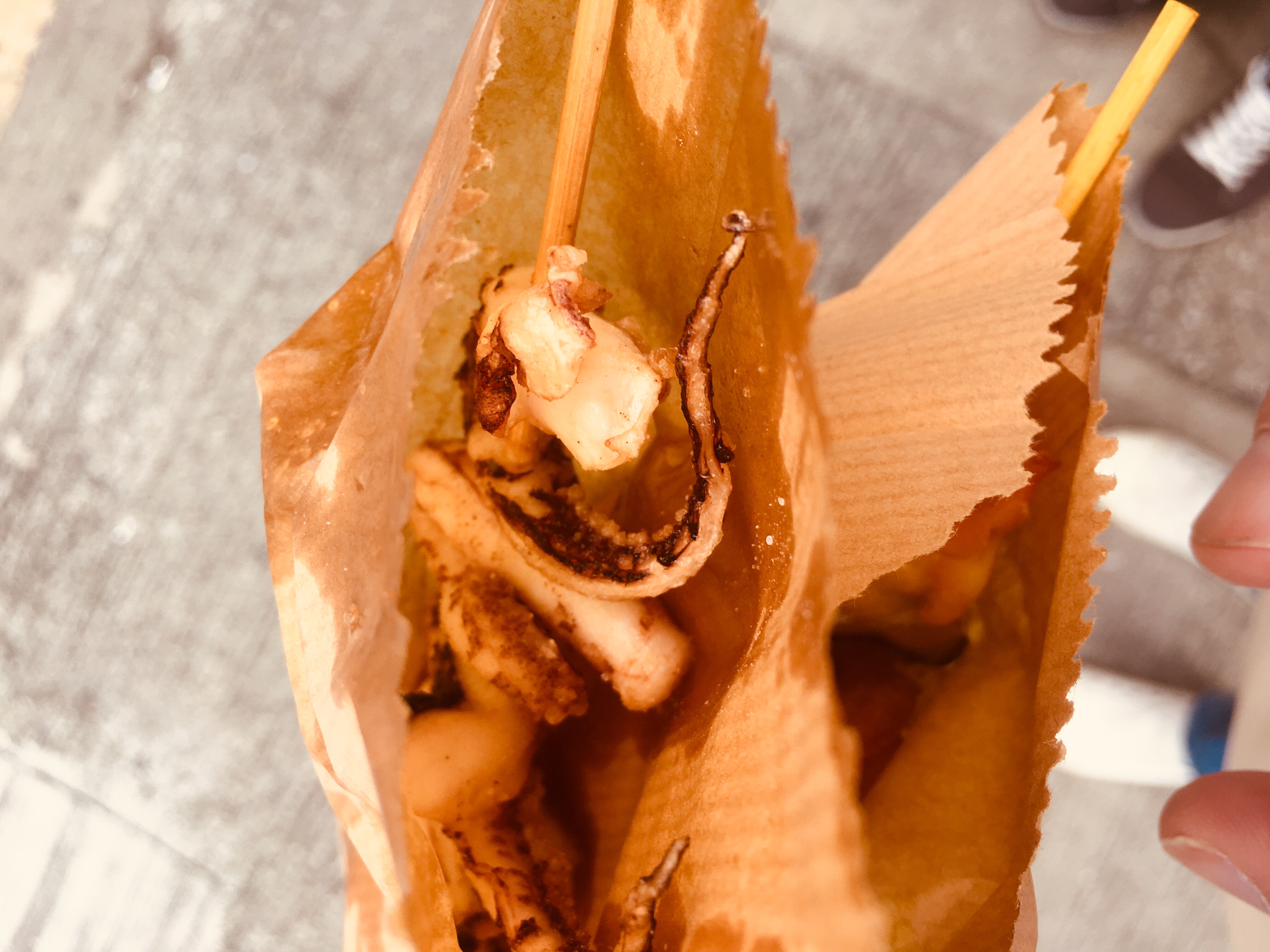
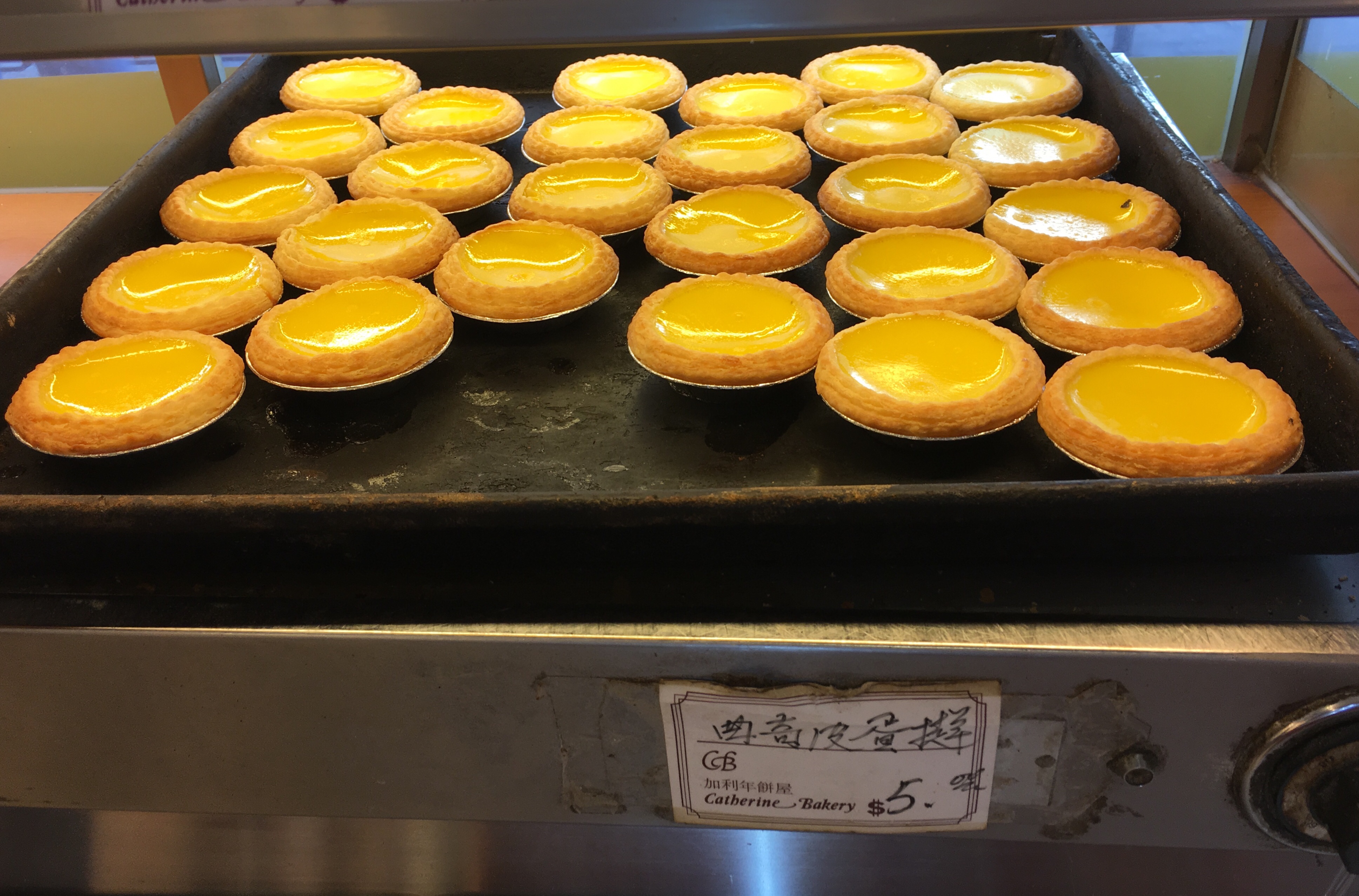 Some other things to consider:– horse races: unfortunately we didn’t make it to one of the big horse race events which typically take place twice a week (Wednesday and Saturday/Sunday)– judo classes: I understand that this might be quite of a narrow target group, but just in case if you’re into judo there’s a very friendly class group named Kuma Dojo. They’ll even let you borrow a judo suit 🙂
Shen ZhenDuring our stay at Hong Kong, I had to do a short trip to Shen Zhen for work. The city pretty much didn’t exist 20 years ago, which you would find hard to believe once you’re there. By now the population is close to 20 million (though you’ll hear different numbers, some say it’s 12 million).
It is home to a massive high tech park compared to the Californian Silicon Valley. I could see the headquarters of Tencent from my hotel, the company behind a.o. WeChat and many others and which reached a market cap of usd 0.5 trillion! It is fascinating to see the speed with which China is growing.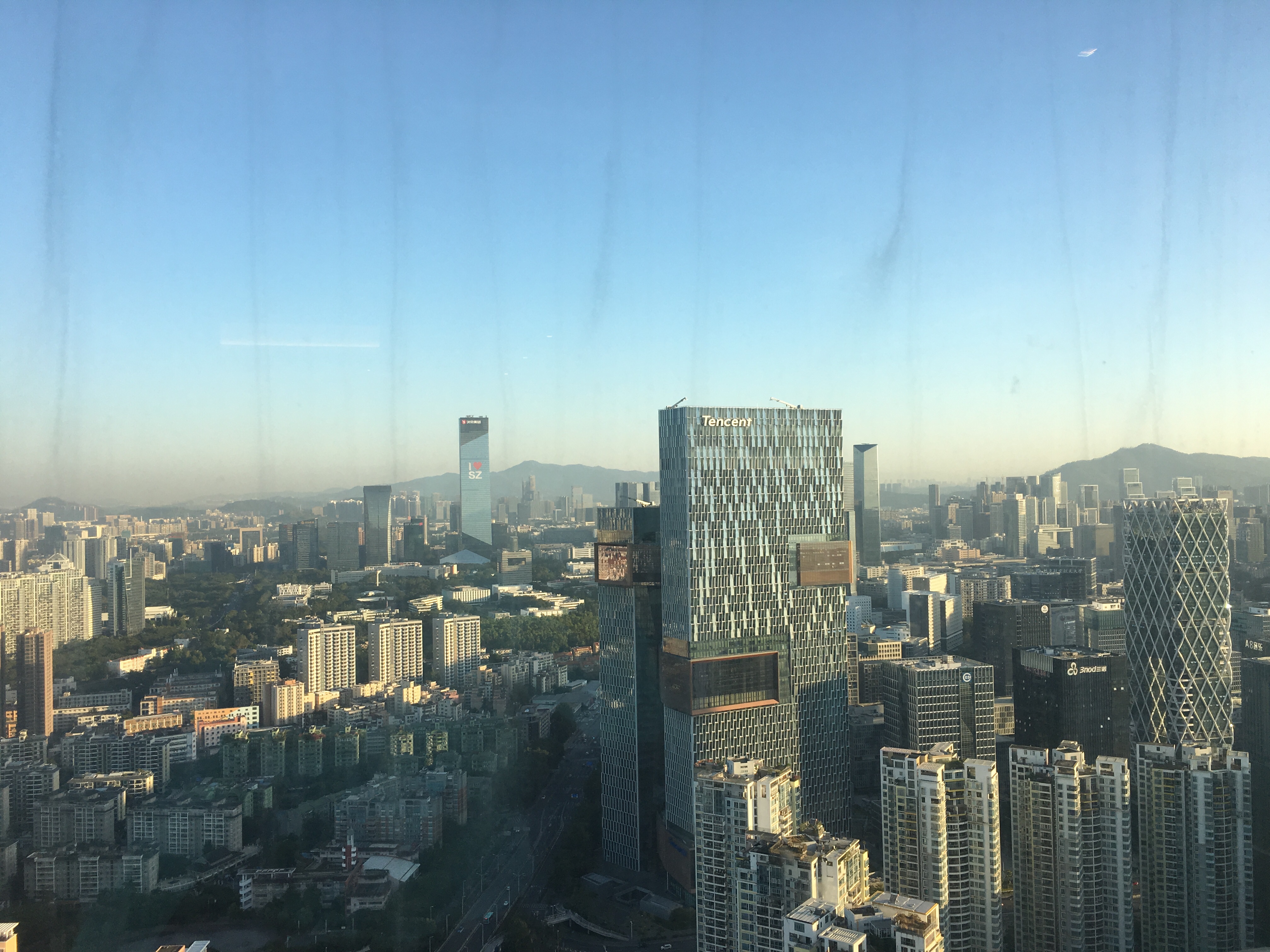
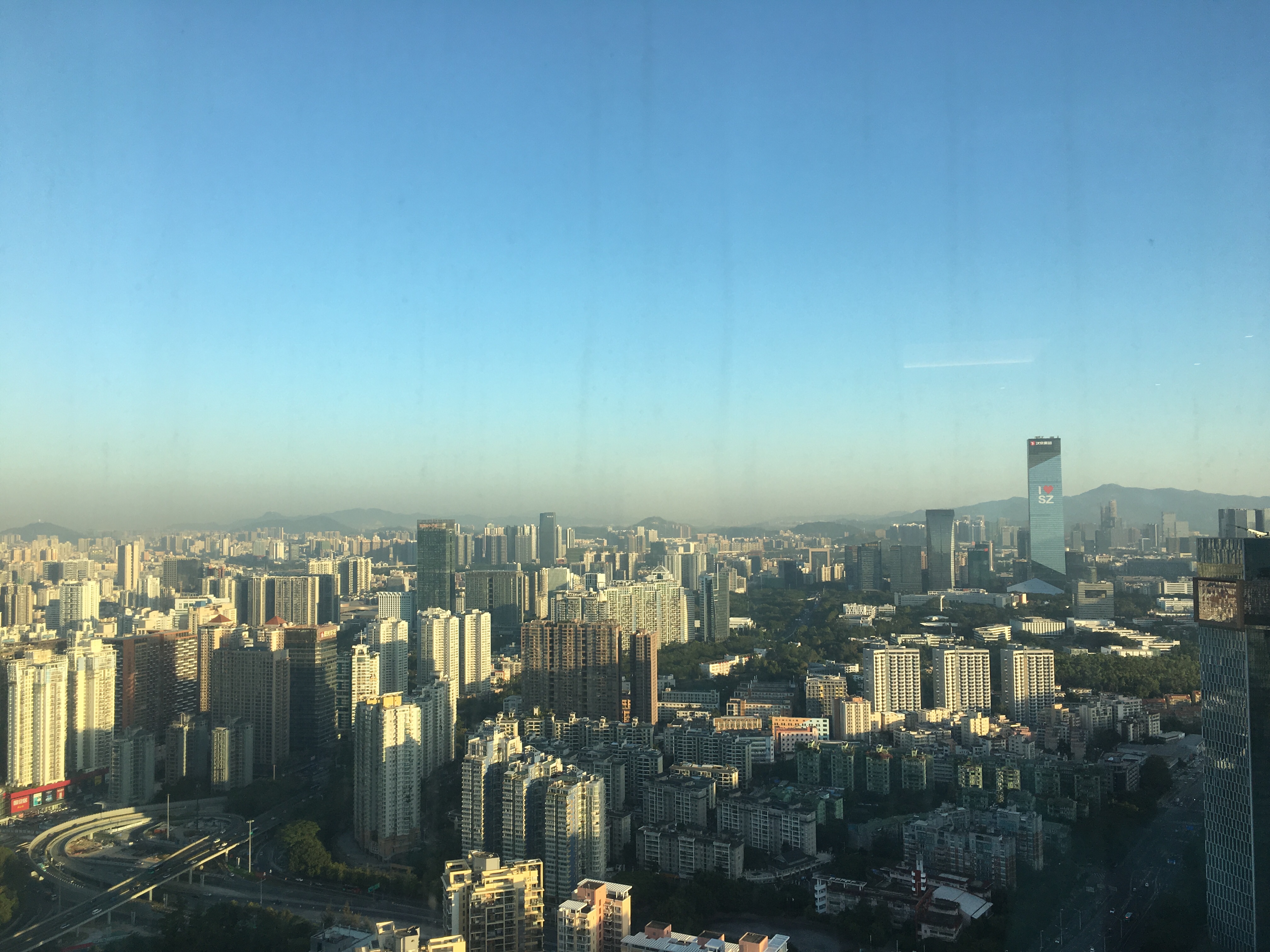
Macau
I know understand why people talk about food tourism (next to the casinos of course) when they mention Macau! Tasty!! And different! Where Asia meets Europe or in particular Portugal.Everything is written in Chinese characters but also in Portuguese.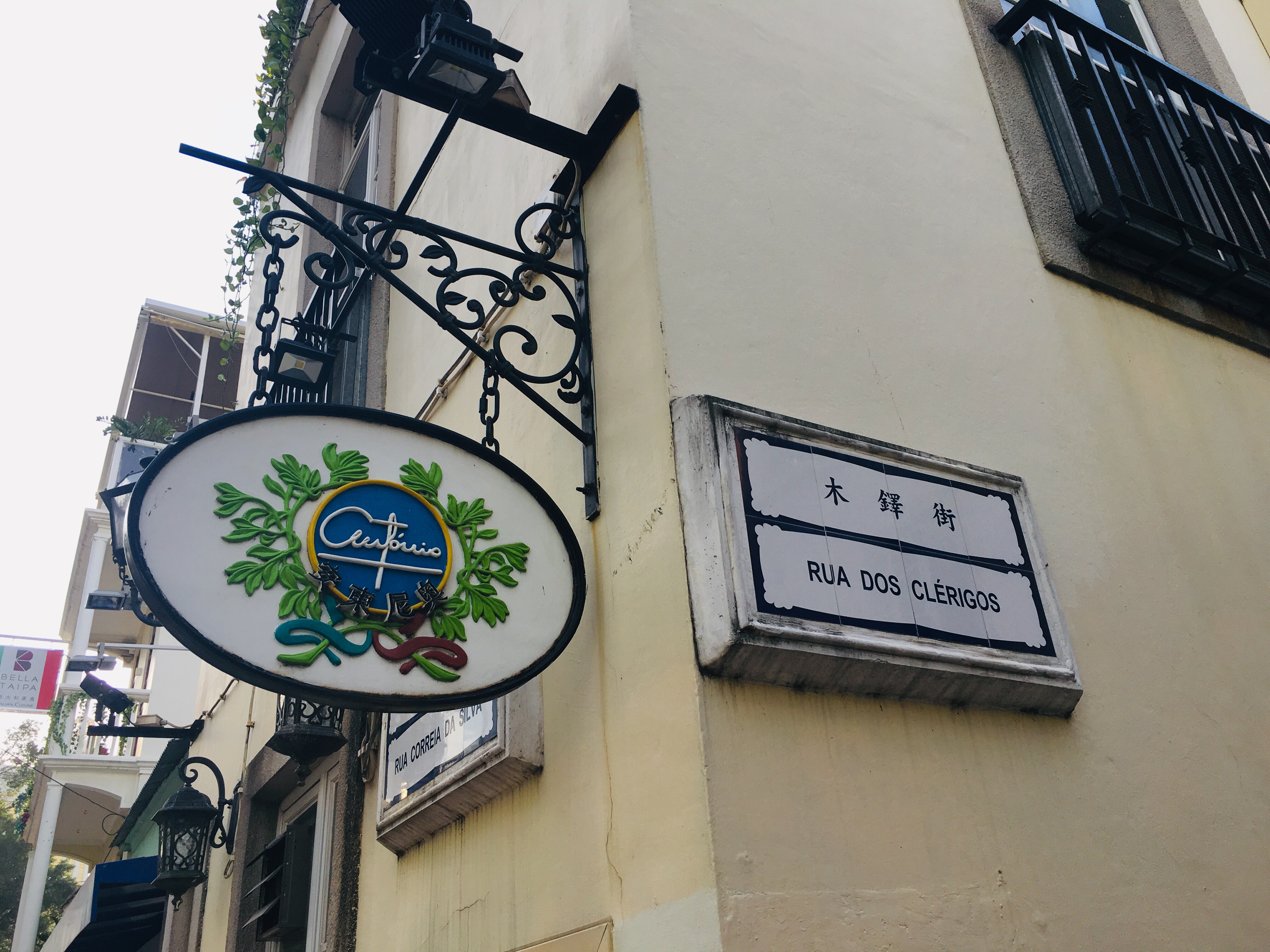
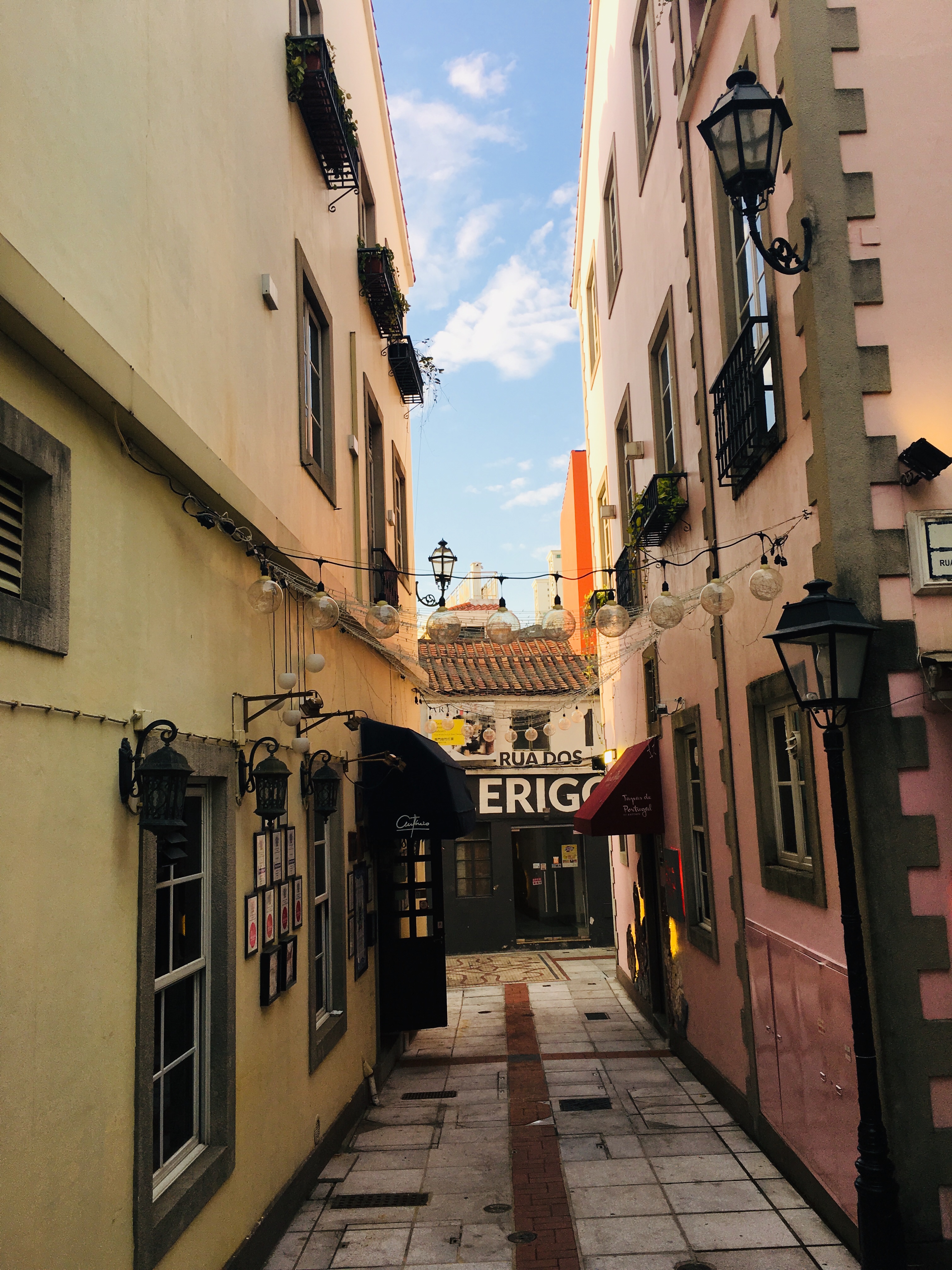 The more popular side of Macau, namely the casinos, were an interesting site. It is difficult not to make a comparison to Las Vegas. Macau has its own version to the Strip, namely Cotai where the largest casinos are. We read that the Venetian hotel has 3,000 rooms – its complex is definitely huge so that must be right. Contrary to Vegas the night life seemed to be much less (or just much less obvious) and the visitors were less explicit and flashy and simply focusing on the main purpose of a casino – gambling!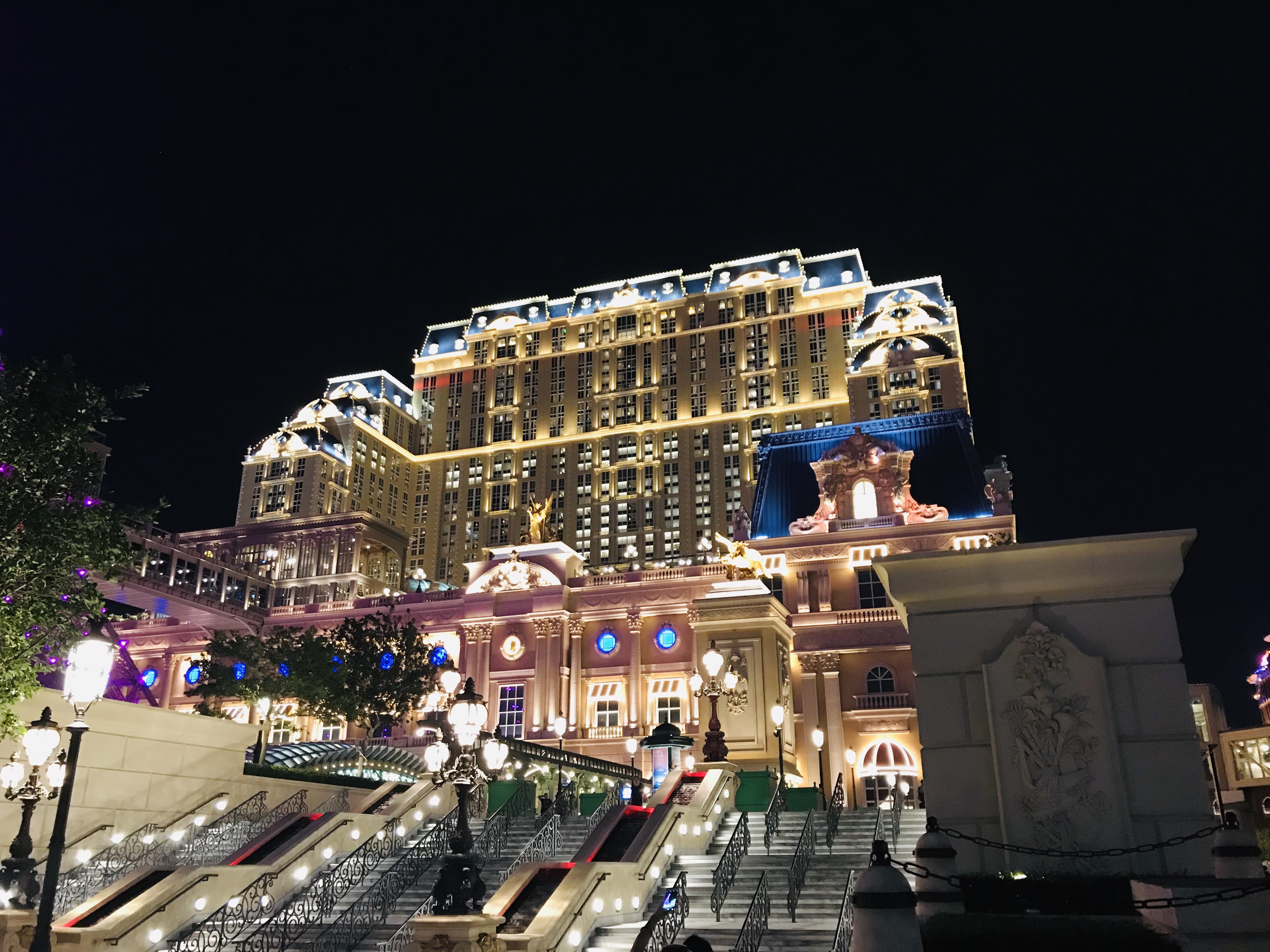
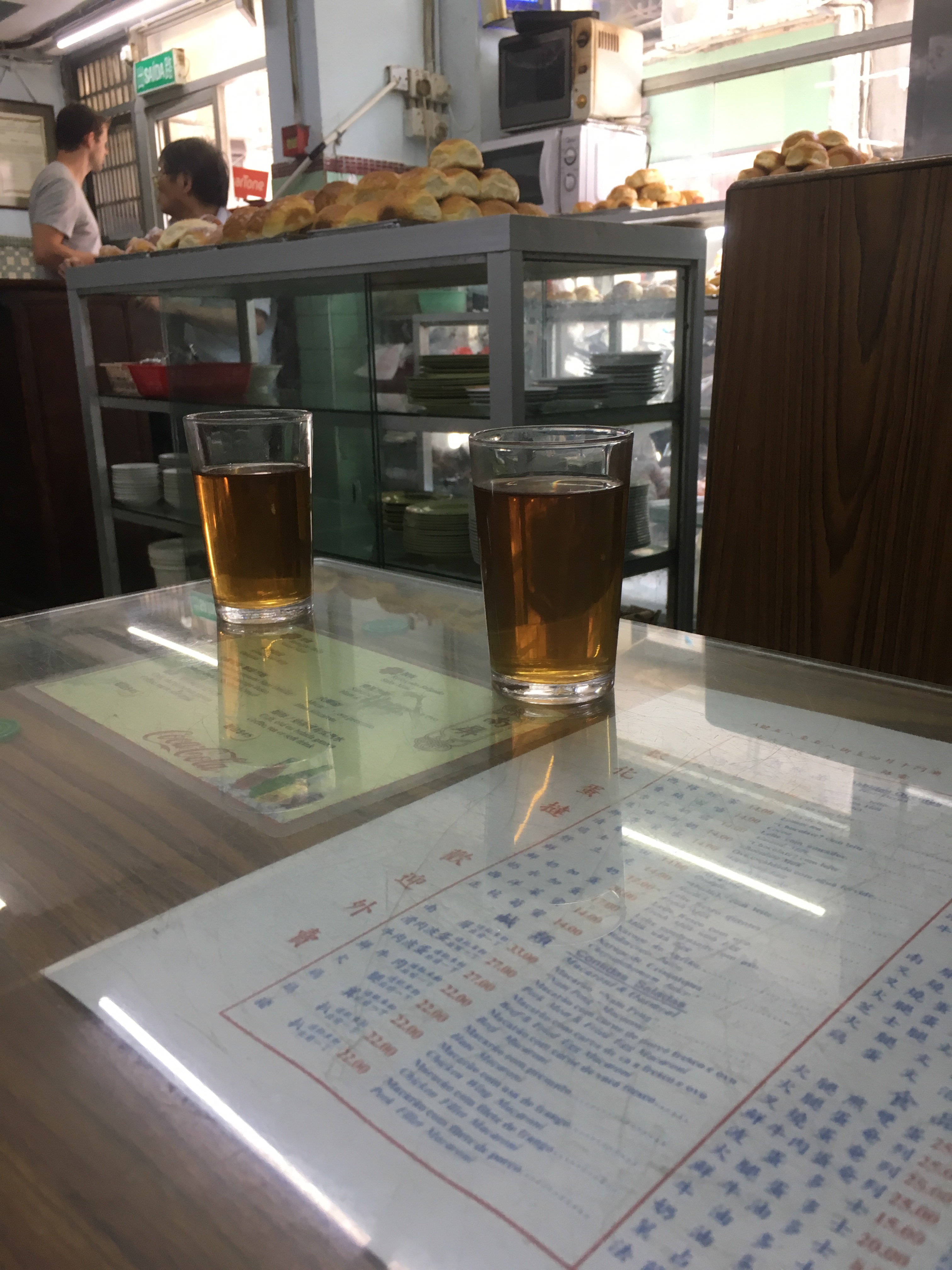
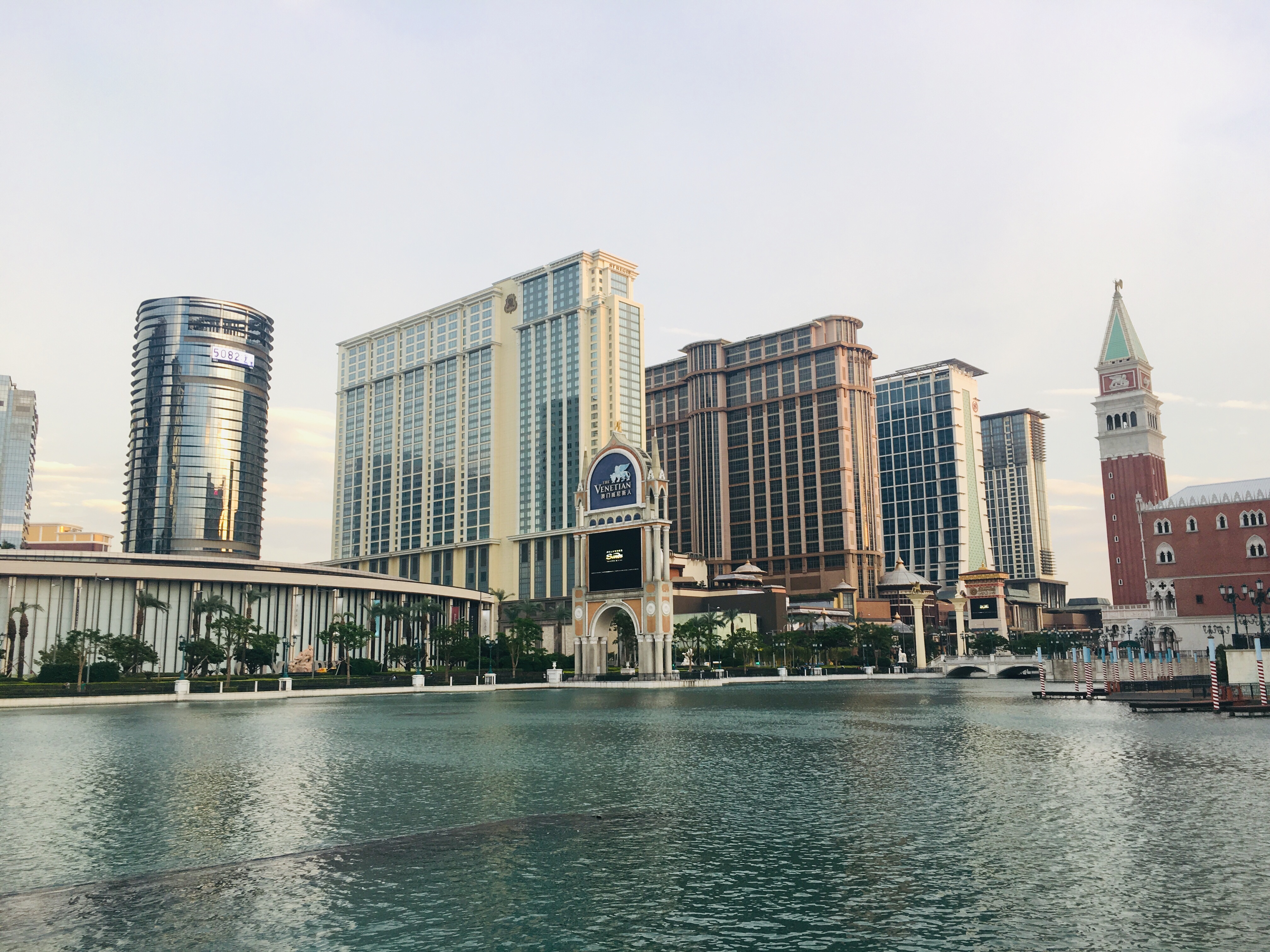
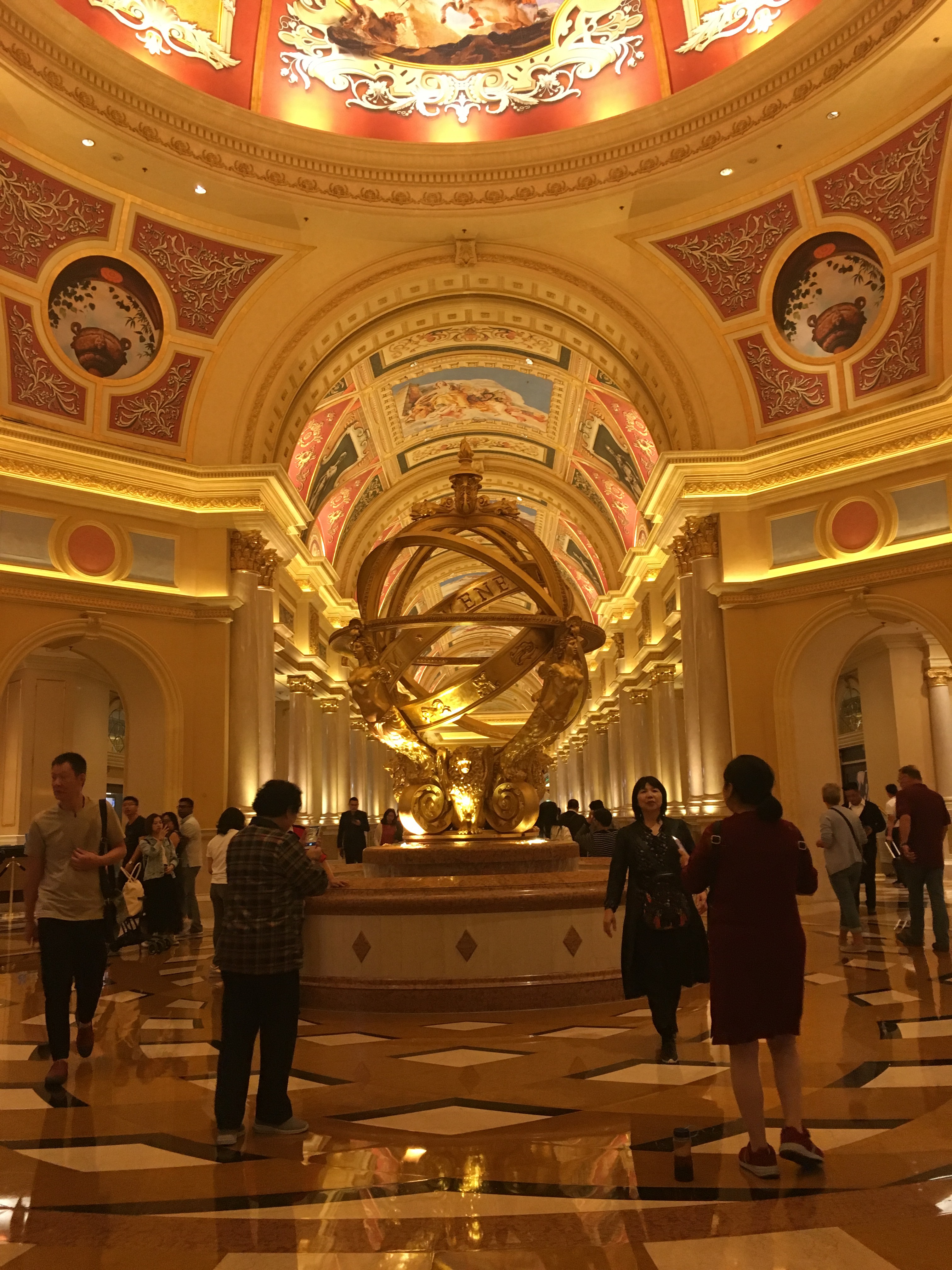 And to finish off, some more photos of Hong Kong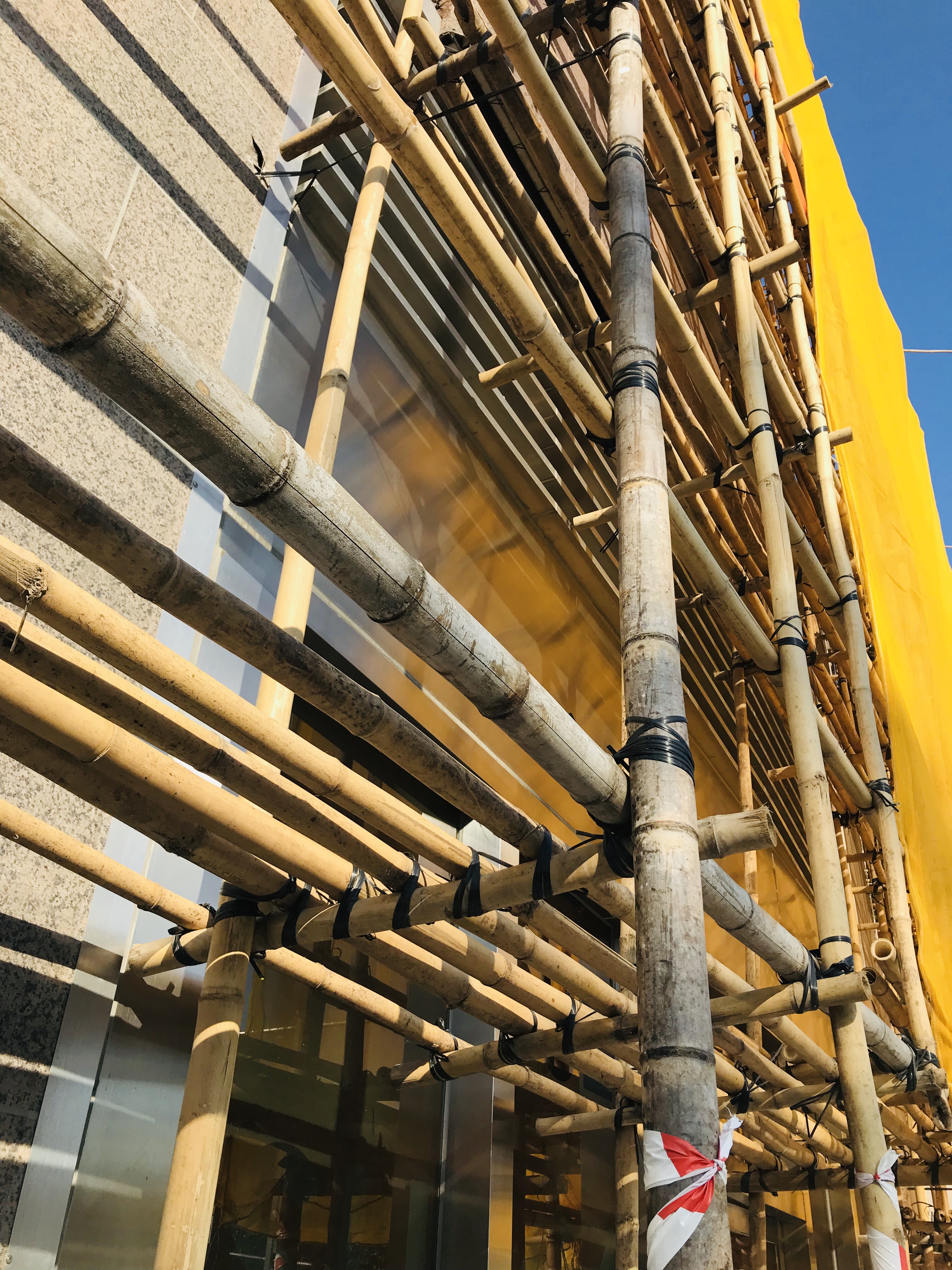
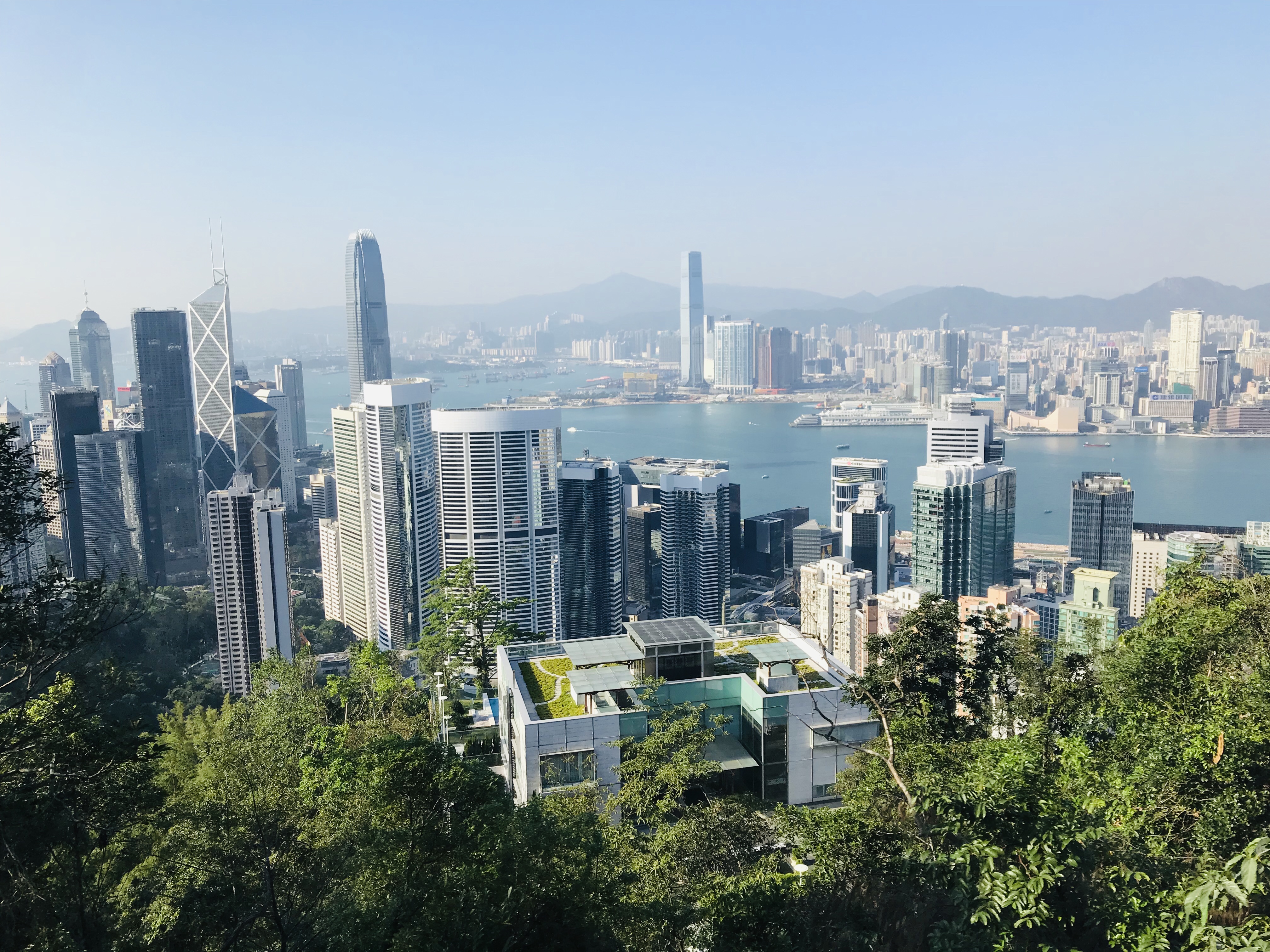
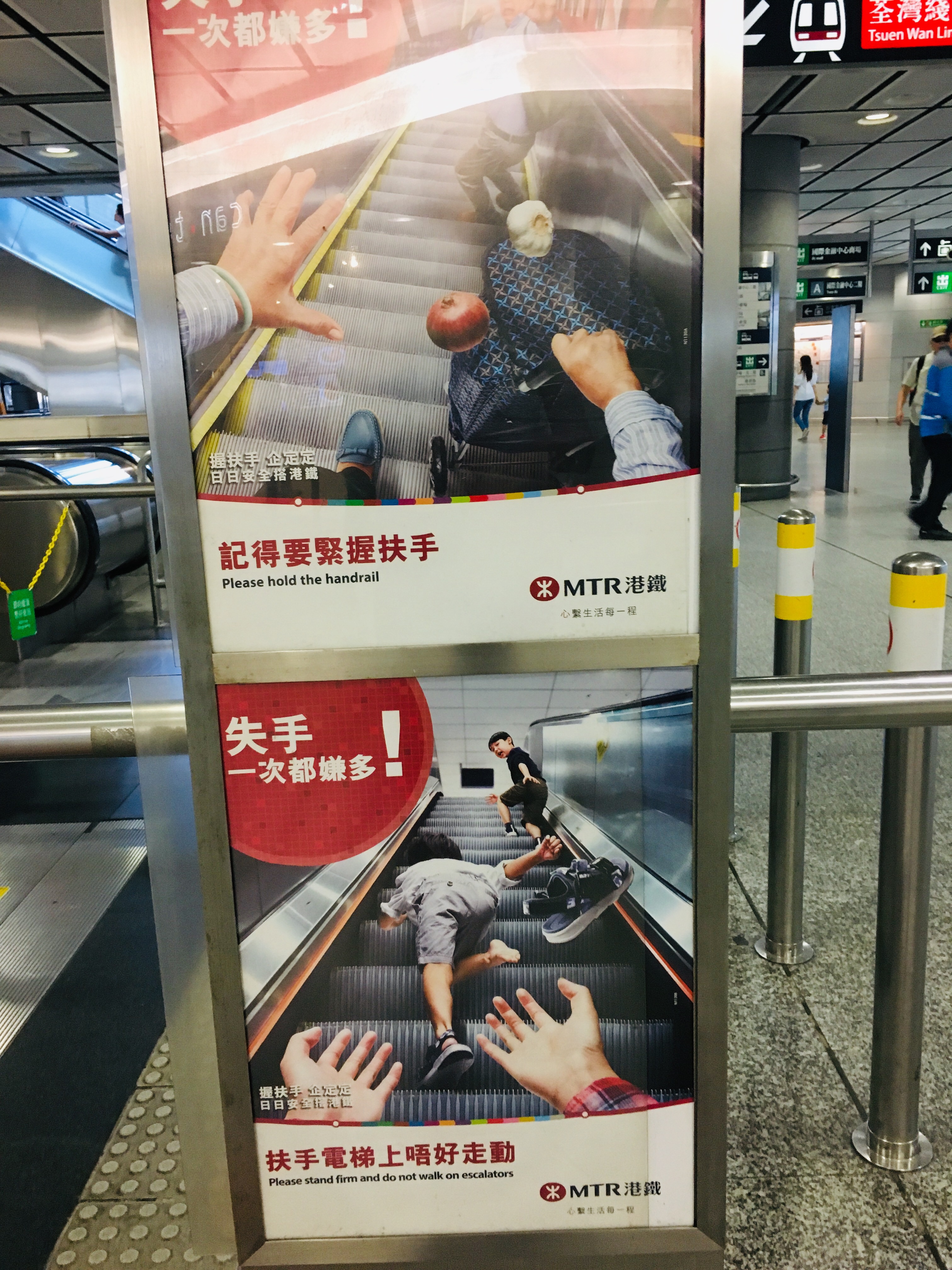
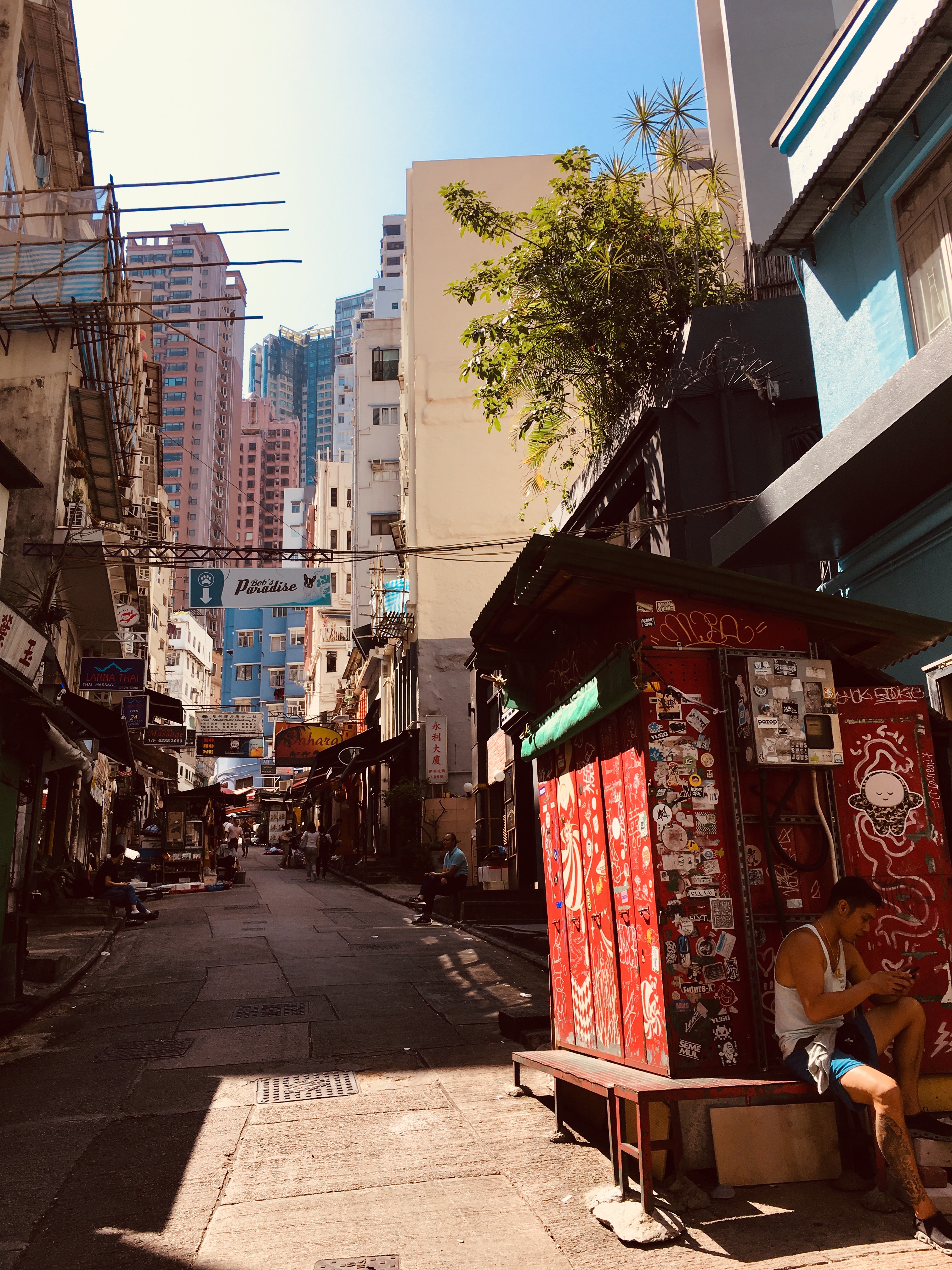
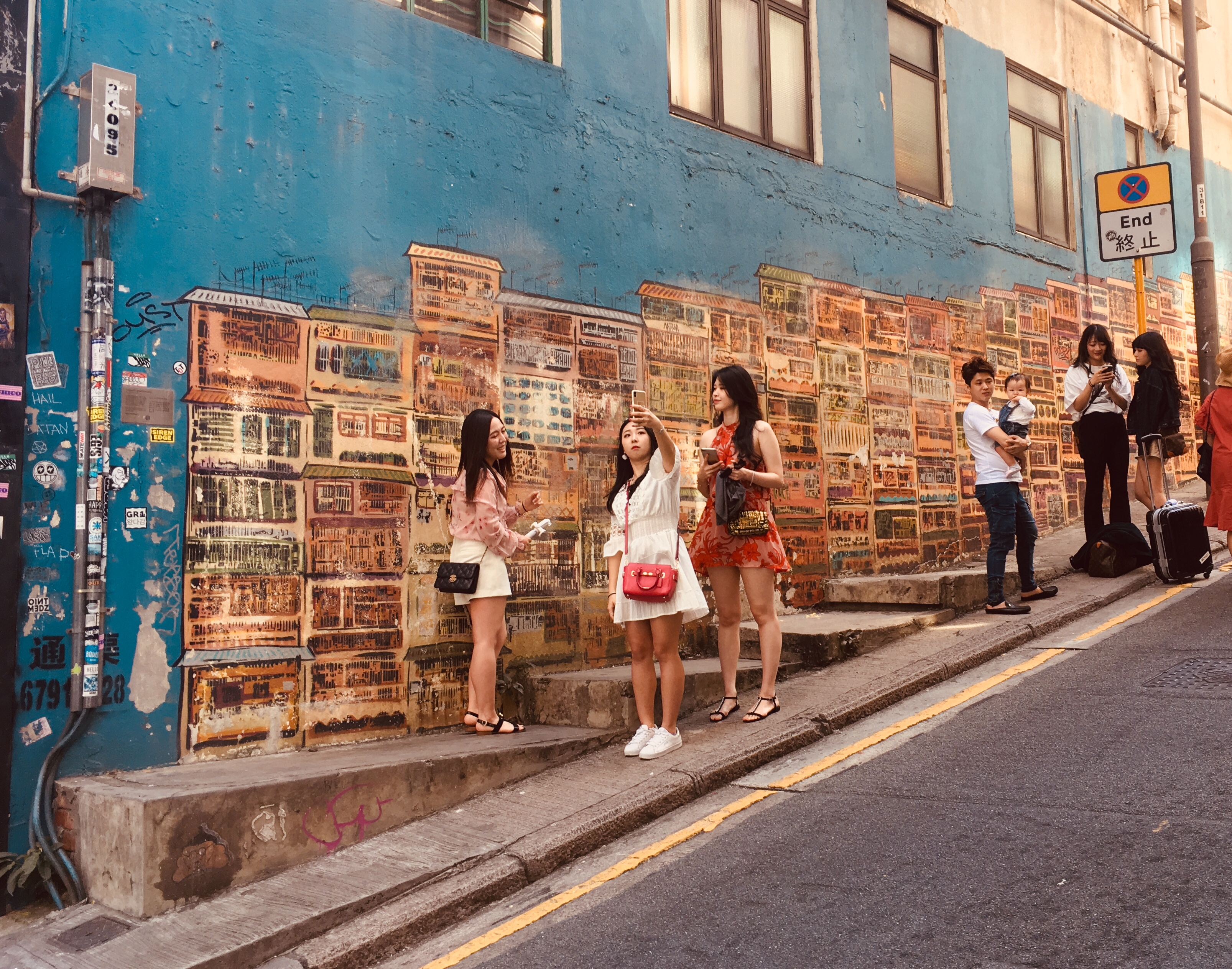
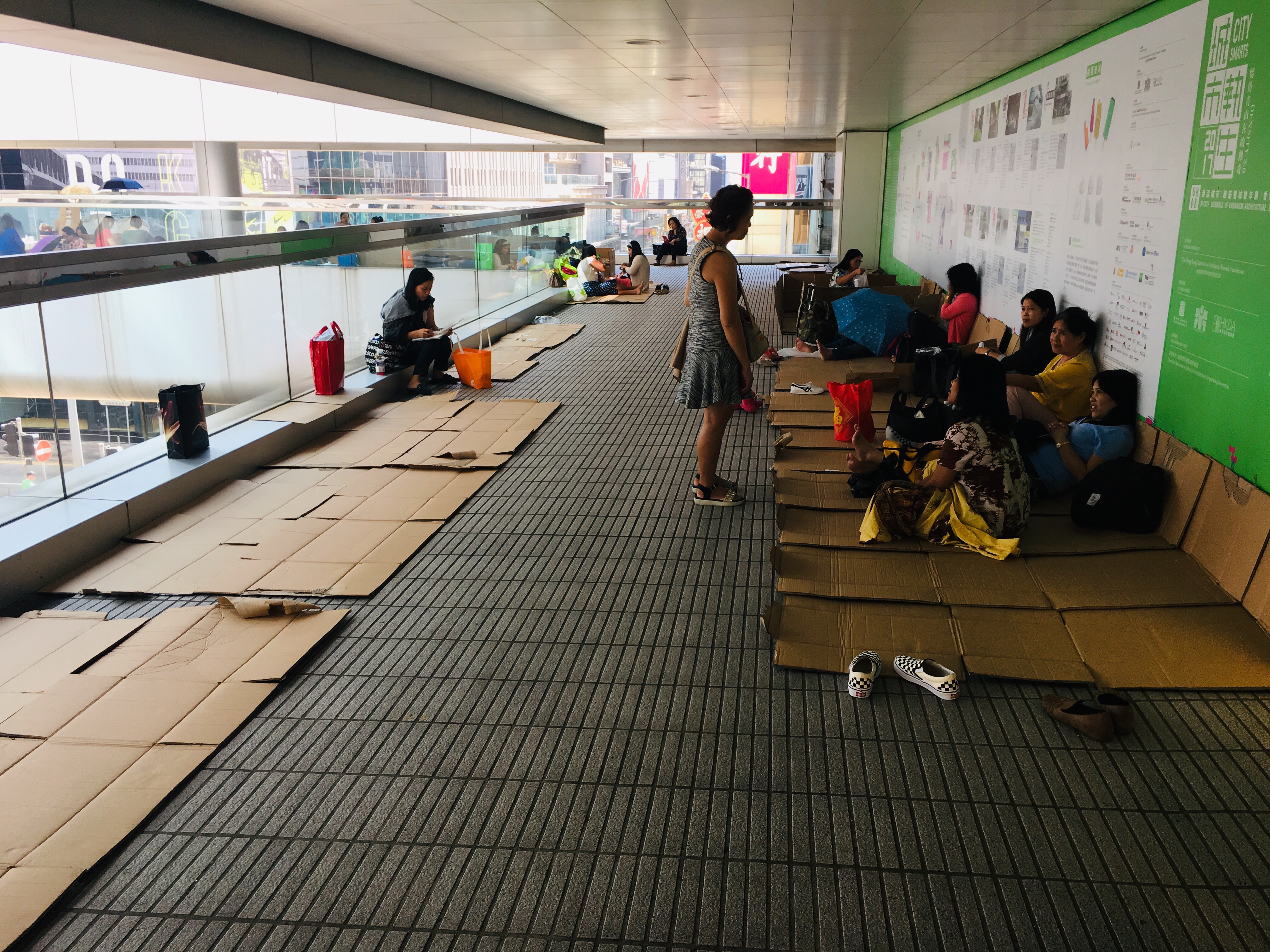
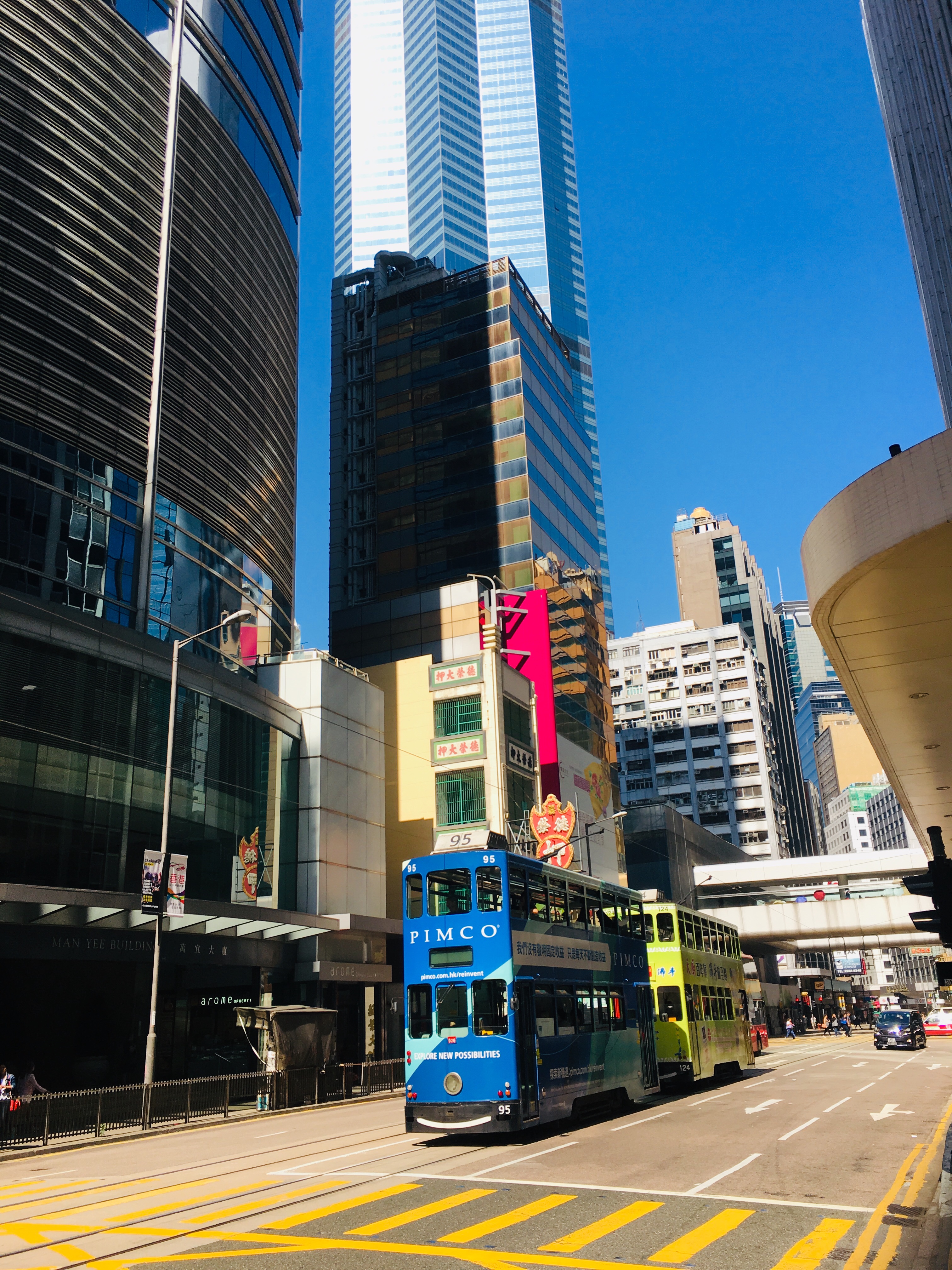
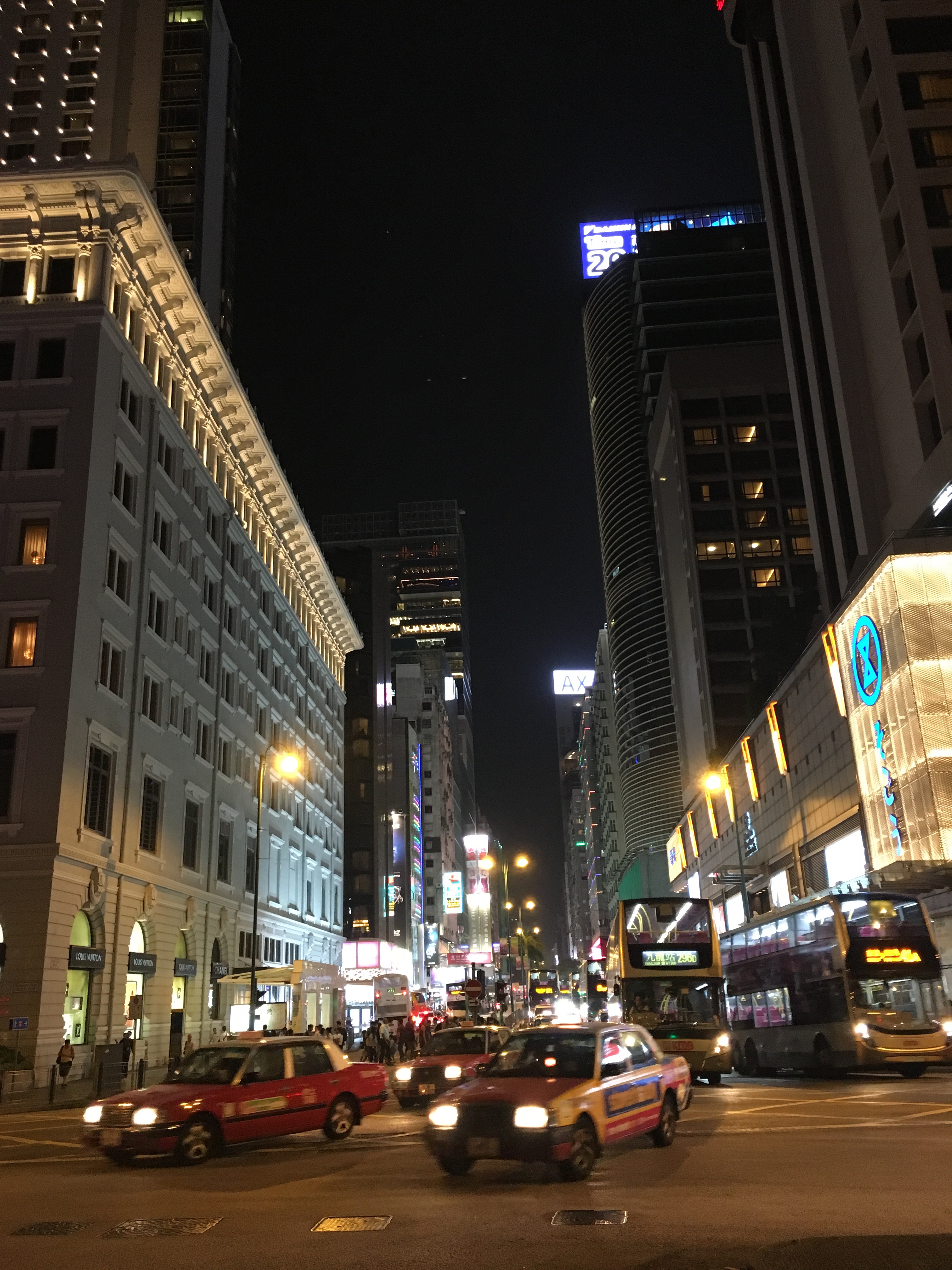
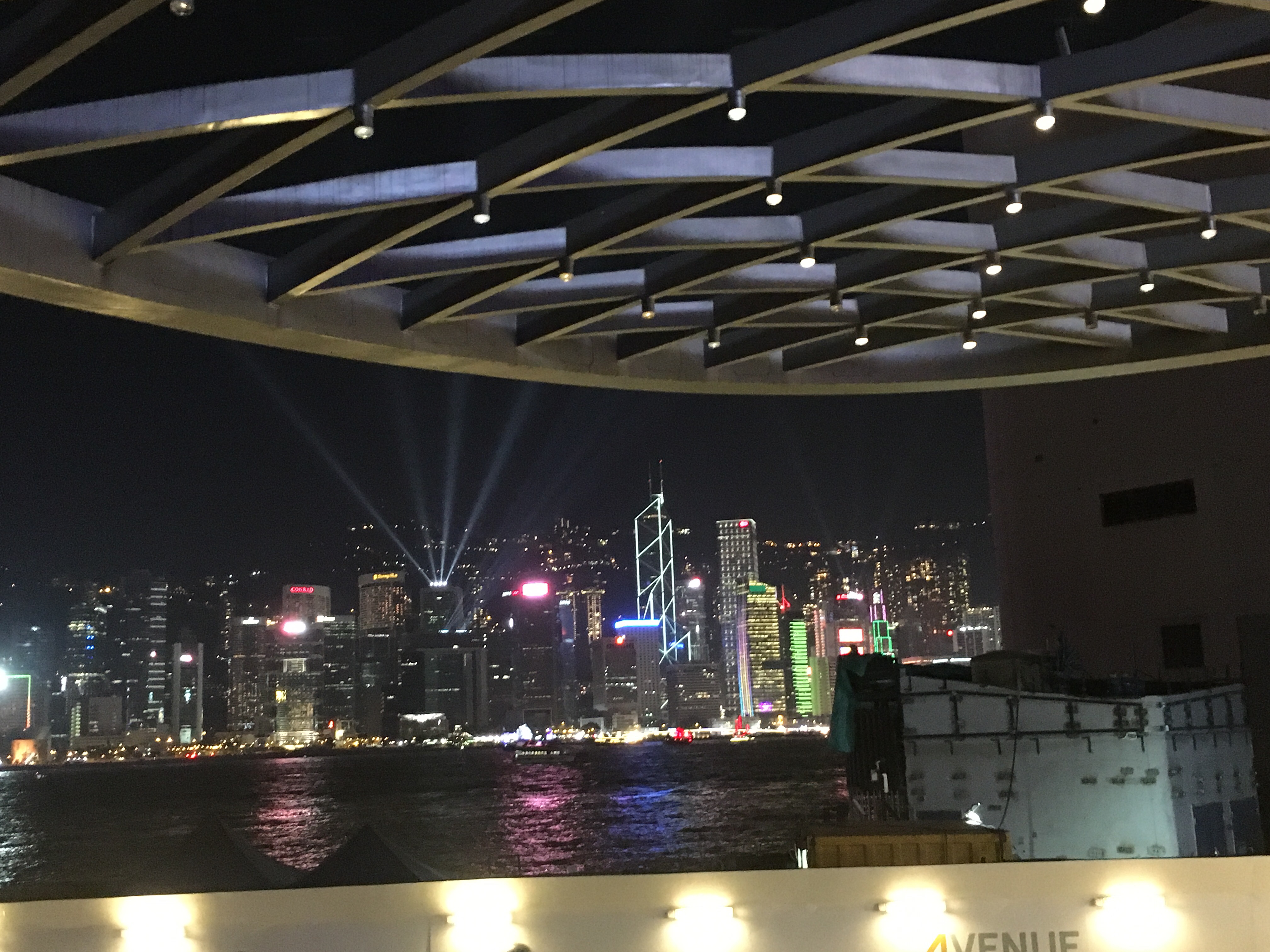
-
Sri Lanka
Sri Lanka is the land of kind people surrounded by beautiful hills, warm ocean and endless tea plantations together with spices, curry, banana’s combined with monkeys, elephants and whales. And not to forget all the history and beautiful temples
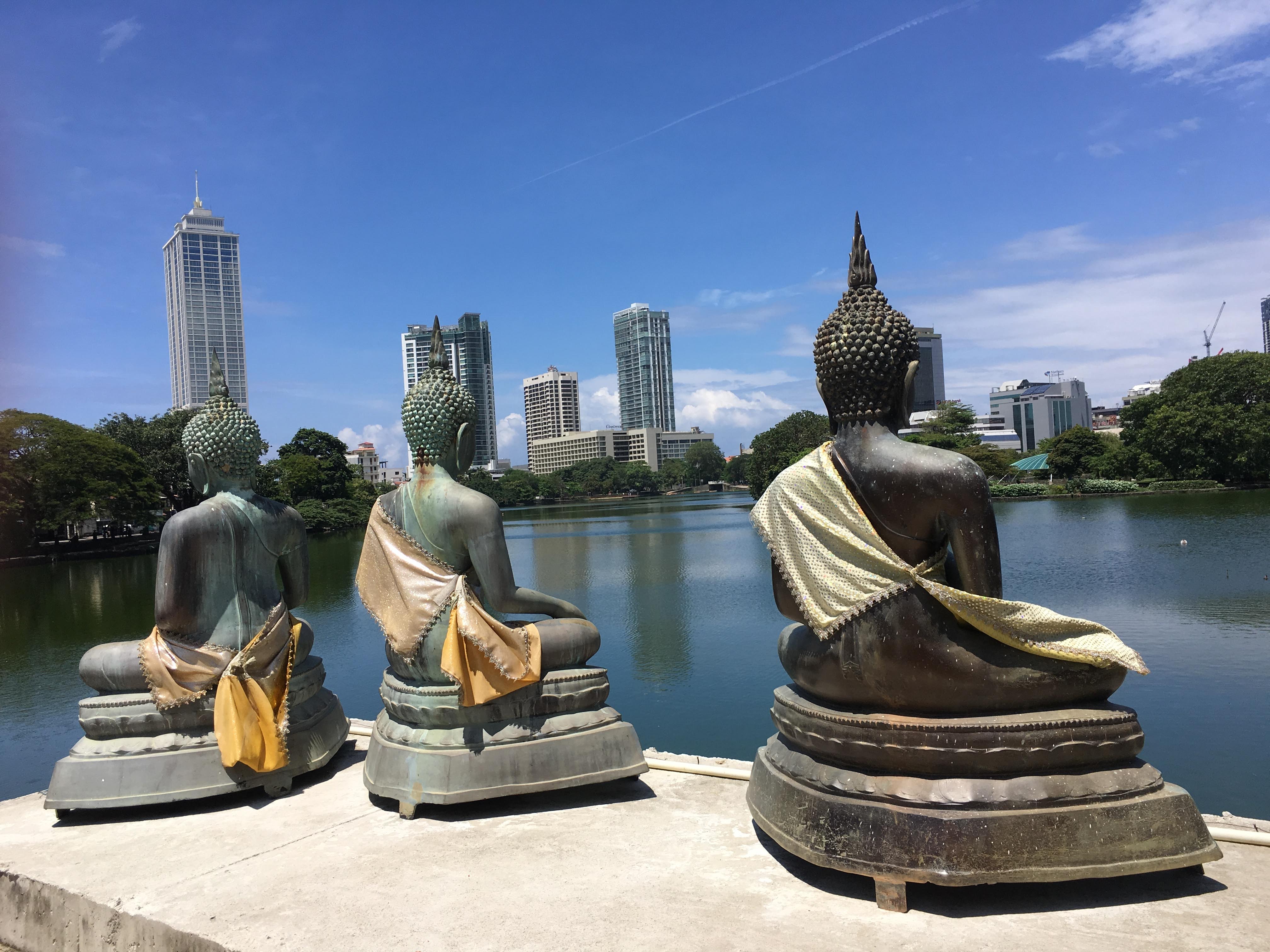
In October 2018 we spent just over 10 days with a group of friends in the beautiful country of Sri Lanka. Our itinerary unfortunately did not cover all highly recommended spots but we saw enough to want to go back!
Negombo:
A little town north of the airport famous for.. being close to the airport and much less hectic and traffic prone than Colombo. It is handy as a destination when you arrive or just when you’re about to leave; there is not too much to see but it is also much more relaxed than Colombo. Some tips: rent a bike for a couple of hours and cycle to the fish market and around town; check out Zen Cafe (great coffee and cake, cheap) and definitely go to the beach around sunset – those were some of the most beautiful sunset colours I’ve seen.
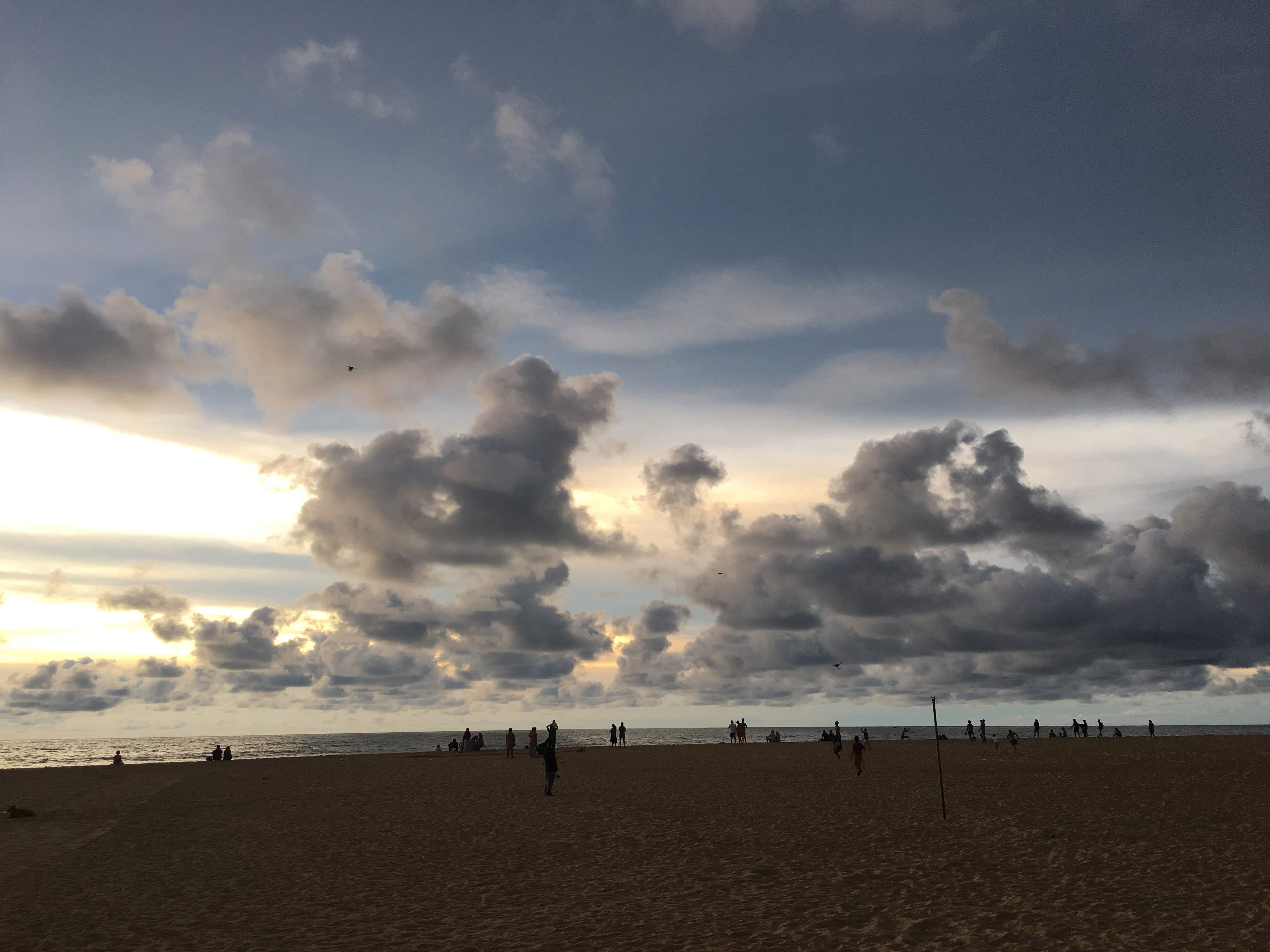
If you’re looking for a hotel, we liked ours: Christima Residence (low to midrange with a nice pool area; rooms are basic but clean).
Colombo
As most guides say, the city doesn’t offer a lot to do or see. Probably a day suffices. Check out the temples Seema Malakaya (beautiful temple on the lake) and Gangaramaya Temple (if you’re lucky, you can spot a praying elephant!). From there you can head to Viharamahadevi Park and stroll a bit towards Galle Green. The Pettah area and market are worth seeing


From Colombo you can head inland north or head south to Galle. We started off with heading north to Dambulla
Dambulla caves
We would highly recommend to visit the five caves with 150 Buddha statues. It’s really cool and probably one of the highlights of our trip! Plus there were lots of monkeys to observe


Sigiriya rock is another top sight location, however it was raining a lot so we couldn’t visit.
Polonnaruwa
Polonnaruwa offers ancient temples. It is good to rent bikes as the location is rather big (as always, try negotiating on price; we paid 2.5k for 4 bikes and probably we could have gotten it cheaper). Be careful for the monkeys in there – compared to other locations in Sri Lanka, these ones were bigger and more aggressive. Polonnaruwa itself was interesting, though not comparable to some similar sites – perhaps one of the issues was that there is simply not enough information on display to tell you what you’re seeing.
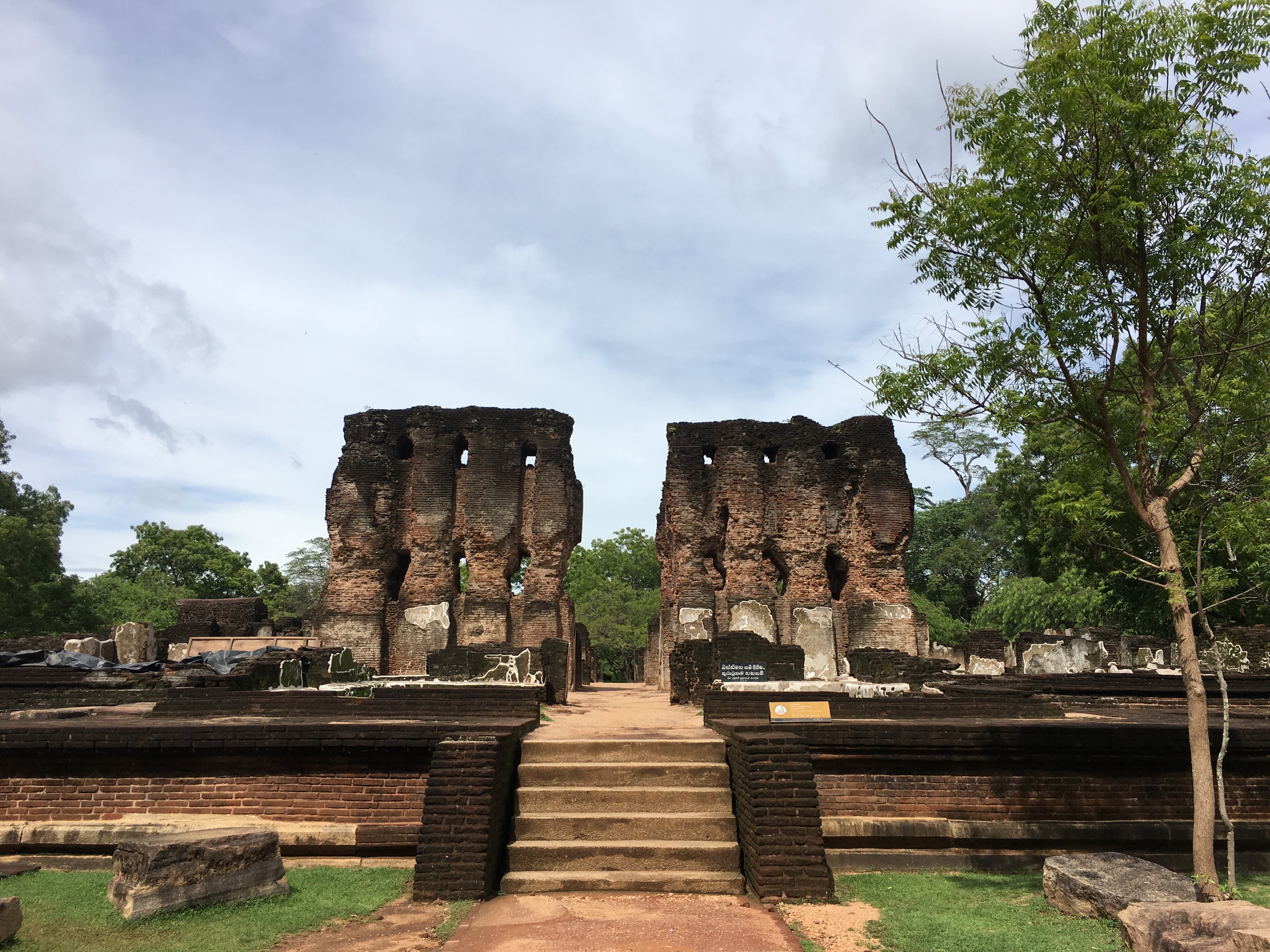
Village ‘safari’
Our driver then offered a touristy but nice experience – namely the village safari. We were first taken on a oxen carriage, then on a small boat through a beautiful lake to arrive in the jungle forest to a small ‘village’ where they showed us how they used to cook traditional meals. It’s not comparable to a cook class as you do practically nothing yourself (we do recommend during a separate cooking class – it’s offered in most touristy towns), but there was a specific charm to the village safari, not to mention that the food was simply delicious!


Elephants @ Jeep safari
If you’re also in the area of Dambulla, you can check out the jeep safari trips either at Kaudulla national park (which is what we did and we saw 100+ elephants!) or at Mineriya national park. Price for Kaudulla was 40 dollars pp for two or 30 dollars pp for four (incl jeep, driver, entrance and pickup; excl tip). I would definitely recommend this! However, I am not sure how these parks compare to the more famous Yala national park located in the south of Sri Lanka (though I doubt it could offer more sights of elephants)
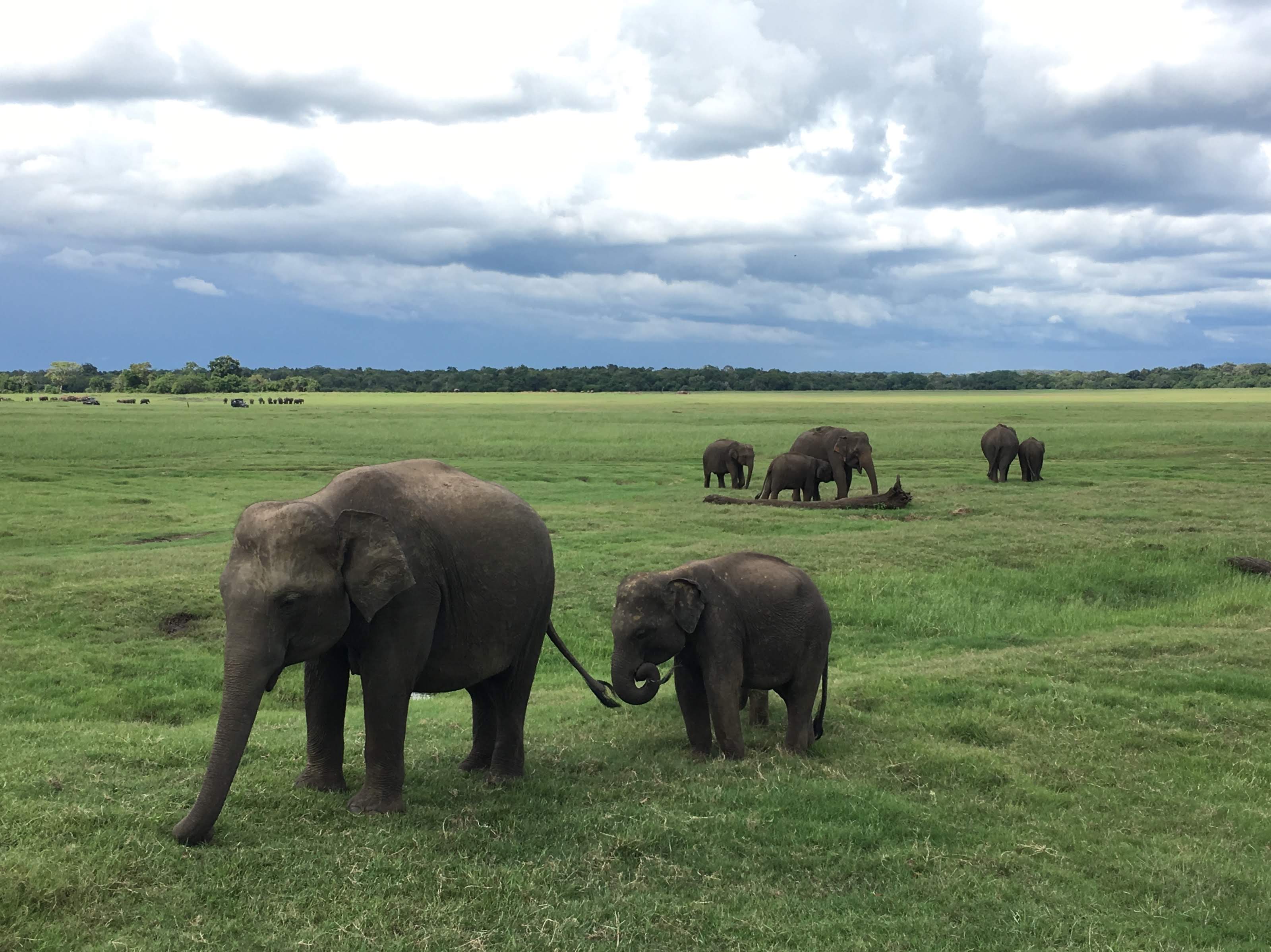
In terms of what to use as your base of visiting the above mentioned locations, I am not sure where is the best place (ie Habarana, Sigiriya or Dambulla). We personally stayed at Habarana, ; the towns are more the location to get to, not really a place to sight-see (as there’s nothing to see 🙂
Herbal tour
Another one of the typical tourist ‘traps’. In our experience this was not something special and we would have easily skipped it. It seems most drivers need to stop you there for commission. The tour itself is ‘free’ but you are very highly encouraged to purchase some overpriced things from their store.
Kandy
We stayed one night there up in the hills at the Skyloft hotel, which quite difficult to reach. Main attraction is Natha Devalaya, the so-called Temple of the Tooth.
In the city you can also attend a local dance show (recommend!); it’s around an hour for 1000 ruppes. This one finished off with the dancers walking on fire, which reminded me of the traditional Bulgarian nestinari


Train ride
Many people then take the train from Kandy to Ella for the scenery (takes around 7hrs; second class was perfect, there’s a toilet and two rows of two seats each). We had a driver so on his advice we drove to Nuwara Eliya and from there took the train to Ella which took around 2.5hrs.


This allowed us to see the Ramboda waterfalls (beautiful), stop at a tea plantation, stop and eat at Hela Bojun (traditional food court with lots of traditional delicious meals sold at very cheap prices), visit Nuwara Eliya (interesting to see the huge influence of the Brits / Scots – part of the city has old traditional Scottish cottages and English style parks and the rest is typical chaotic Sri Lankan style).
Ella
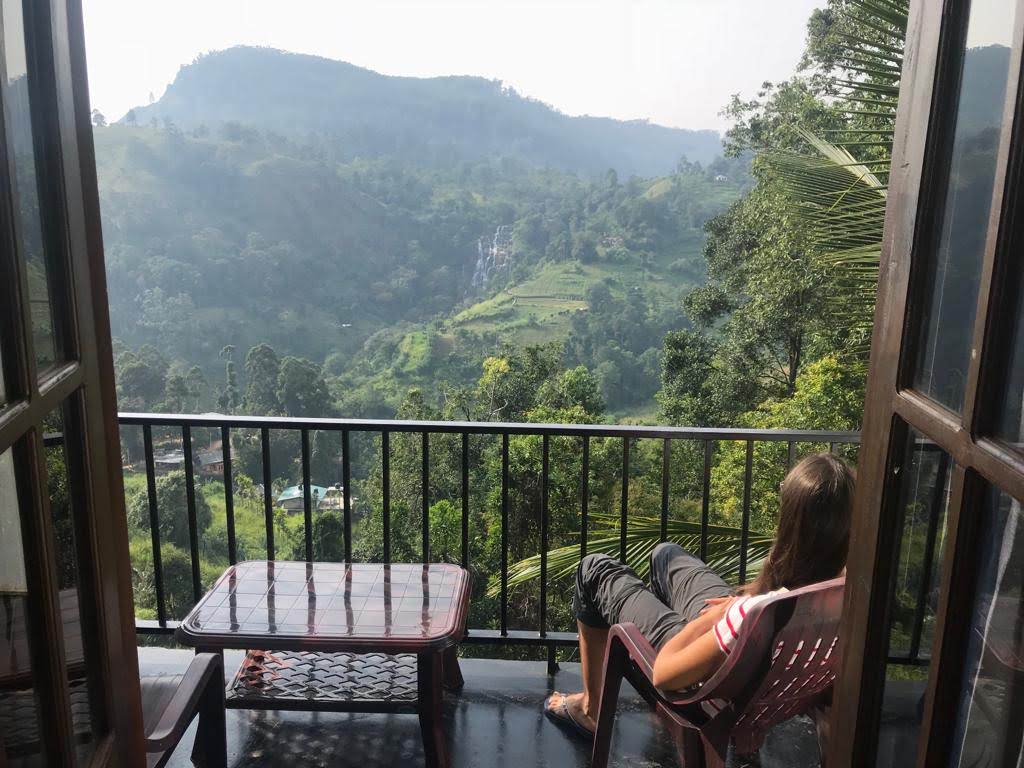
Ella is a rather touristic destination (the most touristic from all we’ve seen) with a main street full of bars and restaurants targeting Westerners. We stayed at the Ella Nature View hotel, basic hotel with the best view you can imagine across the tropical/tea hills and an amazing waterfall. You can eat curd with honey (definitely do so!), go to the Nine Arch Bridge or find a spot to observe it when a train is coming by (eg we stayed at Asanka caffee). Little Adam’s Peak is also close by which offers beautiful views after a light hike as well as the Ravana Falls where next to the waterfall, it is also very interesting to observe all the monkeys eating their breakfast and locals taking a shower at the waterfall.


You can also take part in a cooking class (this is offered not only at Ella, but in most touristy towns). We paid 2000 pp for seven curries after some negotiating. It was super tasty and I even bought a coconut machine to try to do this at home (hmm..)


Mirissa
Mirissa is a nice little beach town, famous for wheel watching (not something we did). It is quite touristy (though we were just in the start of the tourist season). We suggest you try to stay close to the beach, there are plenty of guesthouses in the neighbourhood. As mentioned, we were just before the tourist season so I am not sure if it doesn’t get too crowded


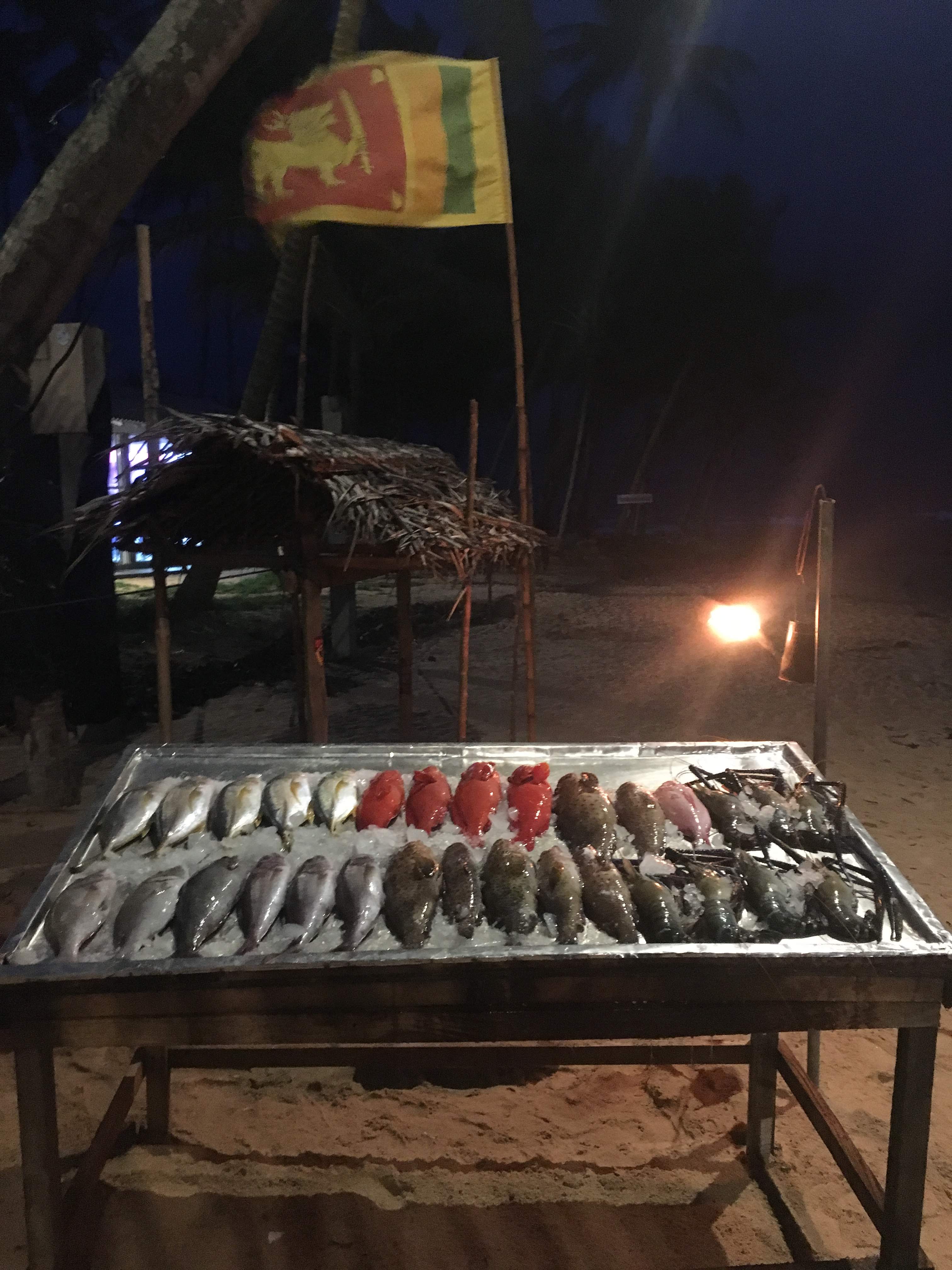
We ate at Zephyr, probably one of the nicer ones and the most Western hipster restaurants (which after 10 days in Sri Lanka was refreshing). Ask for the catch of the day or wait until 6pm when they put it outside for you to see.
Galle
One of the last places we visited was Galle, a charming ‘Western’ city in the south part of the island. It is famous for its Dutch port and cute European-style small streets. However, if you’re looking for true Sri Lankan experience, best to focus on other parts of the country.
On our way from Galle to Colombo we also visited a turtle rescue center (apparently there are many of these rescue centers for turtles and elephants), as well as an interesting mask museum (where as with many other similar places you get a free tour and you’re highly encouraged to buy something; check out the bottles on the working tables). There are also many ayurvedic massage spots. We actually had a massage in Ella and we’d definitely recommend trying it out somewhere in the country.


Food is super tasty!
The most traditional thing is rice & curry (eg coconut sambal, aubergine, green beans, pumpkin, daal, mango curry, bamia). After our cooking class I might have gotten overenthusiastic and purchased quite some spices as well as a coconut machine, let’s see if I’ll ever get to use them.
Some other popular treats are rotti (with coconut); kotthu (broken rotti with food); curd with ‘honey’; devilish chicken (didn’t try but we heard it’s quite devilish); rise flour pancakes; dosa; aluwa.


General observations:
- There are stray dogs everywhere though they appear somewhat lazy (perhaps because of the heat). At some point we even played a game of who will not spot a stray dog for 5 seconds first (it took some time before someone won). Next to that there are lots of monkeys, most of which are uninterested in humans. At some locations however they are
- Internet is unreliable but you will always find a place with wifi (just often not strong enough); some tourists get a
- Going with a driver: recommend it; we used A4 tours with Susanta as a driver. We got a very big car seating 10 plus driver which made the trip very comfortable as we did a lot in a week. Price was 350 dollars for 5 nights, 6 days excl tip; we added an extra day and night for 80
- Negotiating for prices: don’t shy away from negotiating the prices; use common sense – for some things you can half the price, for many things you can get around 15-20% off
- PickMe: very useful app comparable to uber especially for Colombo or Negombo. We drove in a mini car for 2200 ruppes from Negombo to Colombo (plus 300 toll road) while for example another driver asked 25 dollars (or around 4250)
- Visas: you would need a visa to enter Sri Lanka; it’s super easy to arrange; check out this link
And to finish off this post, here are some more photos from the beautiful land


-
Bulgaria
Bulgaria is a land of beauty!
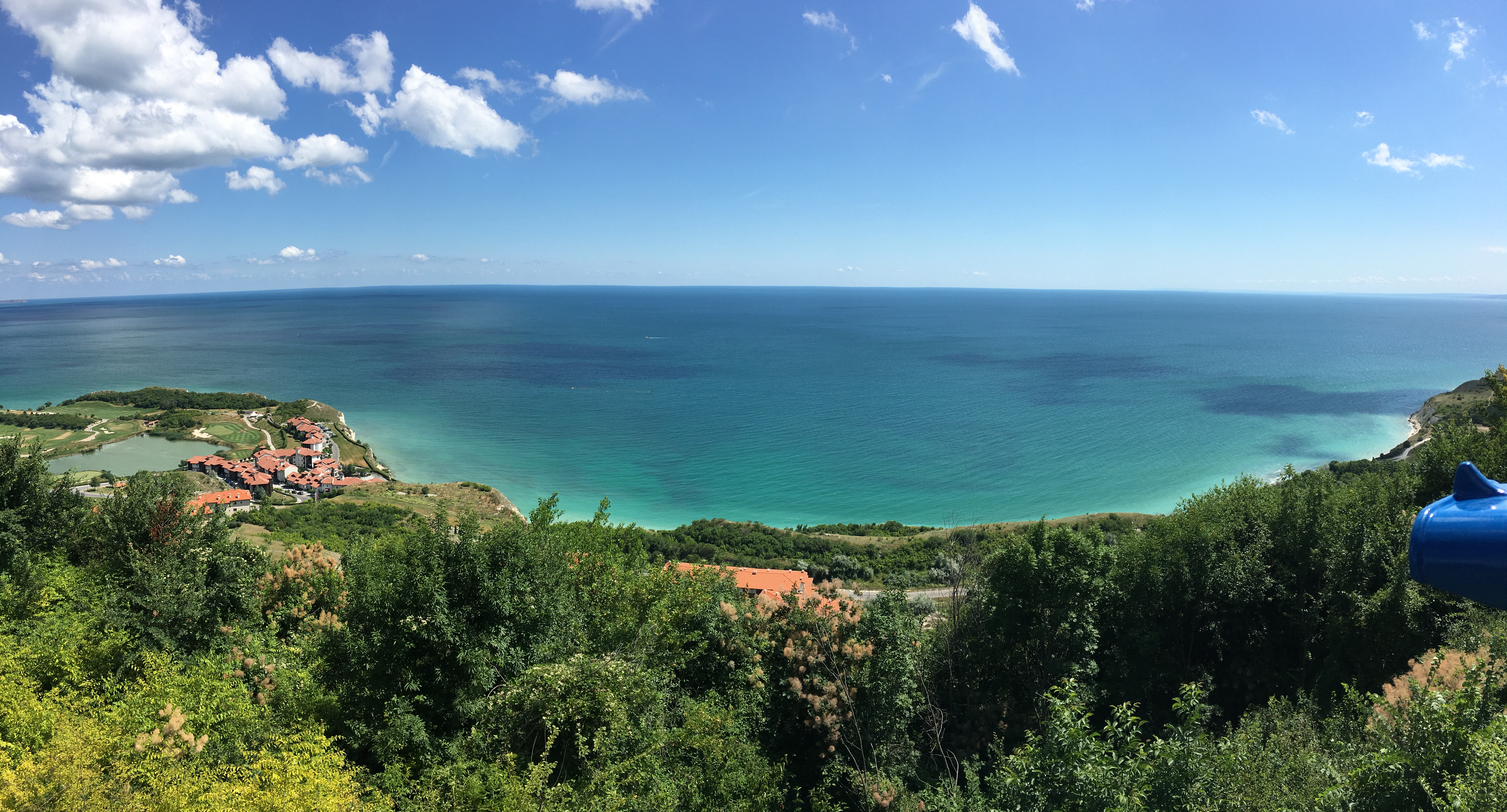
For now it remains under-explored despite its deep cultural and historical heritage (oldest gold found here, the country of the Thracians and the cyrillic alphabet), yummy tasty food, warm people and diversity of holidays offered.
Here you can hike beautiful mountains (highest peak is 2925m), chill at beach bars at the seaside, visit endless caves, explore the culture and history, enjoy the (allegedly) healing warm mineral water spa’s, have some wine or go for some golf.
Below are some factual tips, which I would work on in the future. For more on the capital, visit the separate post on Sofia
Mountains:
For the hike lovers among you, mountains constitute a significant part of Bulgaria and are dominant in the southwest and central parts. Bulgaria’s highest mountains are Rila (highest peak Musala, 2925 m; the highest in the Balkans) and Pirin (highest peak Vihren, 2914 m). The large mountain chain of Stara planina (Balkan Mountains) runs west-east across the entire country, giving the name to the entire Balkan peninsula. Other extensive mountains are the massifs Rhodopes and Strandzha in the south.
This is a useful website on the Bulgarian mountains
Vitosha – the mountain surrounding Sofia, just 20 minute drive from the city
Rila – it takes around 1.15hrs from Sofia to get to Borovets from where you can best explore the mountain. Rila has the highest peak in Bulgaria, 2925m as well as the beautiful seven lakes
Pirin – it takes around 2hrs from Sofia to get to Bansko, a ski resort and cosy mountain village (though parts of it feel overconstructed). From here you can explore the Pirin mountains with its highest peak 2,914 m. The mountain is named after Perun, the highest god of the Slavic pantheon and the god of thunder and lightning
From Bansko, a famous ski resort as well as a pleasant mountain village in the summer, you can do a three day hike trip to the town of Melnik (2.20hrs from Sofia, close to the border with Greece, more on the city further below)
There are also cute old style villages which can be used as a starting point for easier hikes. For example check out Zheravna (2.5hours from Varna) or this hotel.
Seaside:
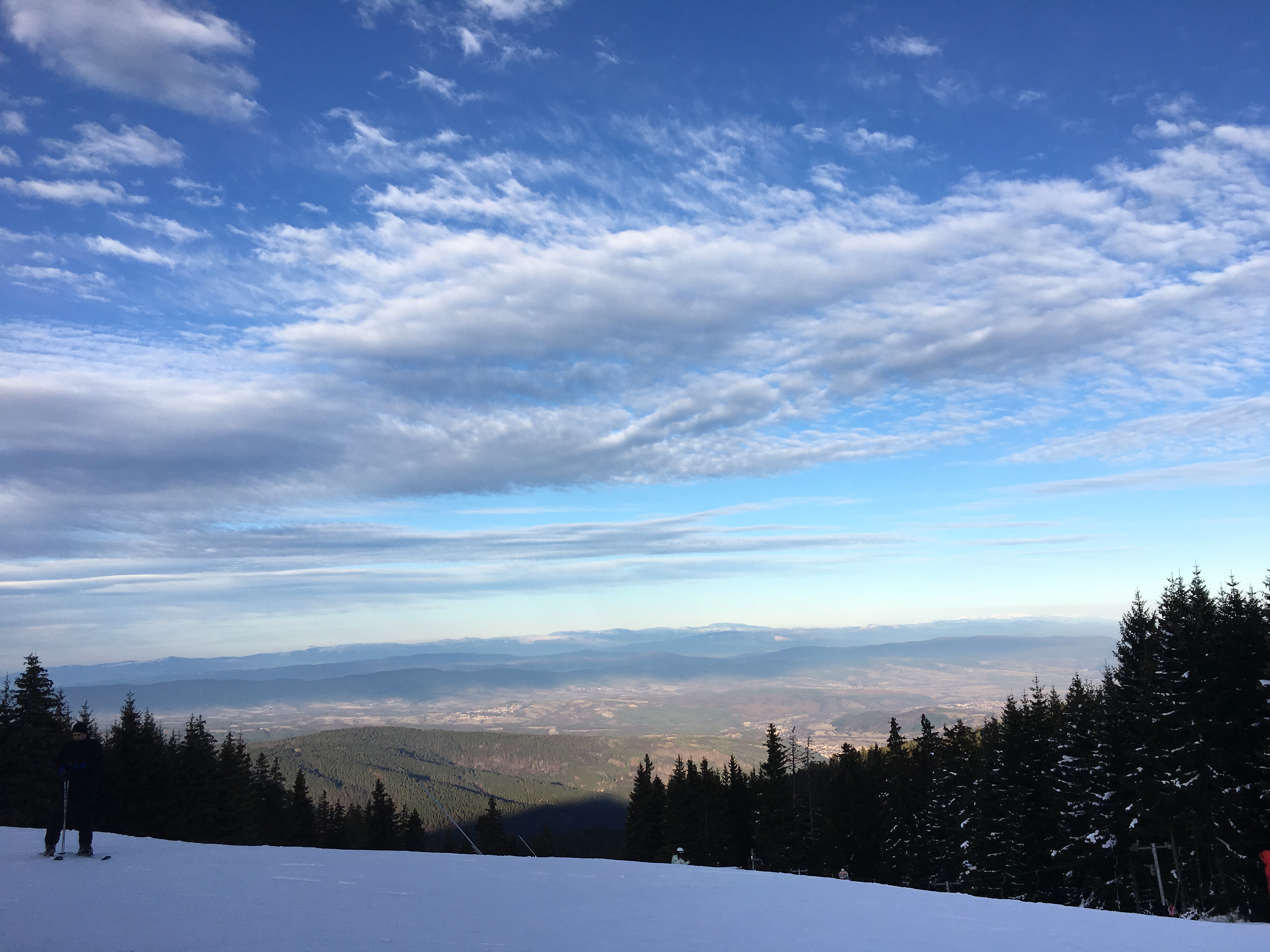
Bulgarian coastline is almost 400km long, filled with nice beaches and resorts for all tastes and overall at a bargain compared to Western prices.
There are two large coastal cities – Varna and Bourgas. The wedding venue is north of Varna and lies in one of the most northern parts of the coastline.
Varna has a rich history and is a cultural center within Bulgaria. Should you wish to make a day or half-day stop before your departure, good places to visit are the churches, the town center – which offers good shopping and dining options and the sea garden. Here some brunch/breakfast suggestions. For restaurants and bars it is best to just head directly to the beach and the sea garden that surrounds it. The beach itself is not spectacular and there are many better options around Varna.
Driving from Varna to Bourgas takes around 2-3 hours. Starting form the North we list here some notable beach places.
Between Black Sea Rama and Varna there are several other golf resorts as well as larger predominantly family-oriented resorts, namely Albena, Golden Sands and Sveti Konstantin and Elena.
More or less in the middle of the road between Varna and Bourgas you will find Obzor (seaside town, family-oriented) and Irakli, one of my most favourite beaches. Irakli is one of the few remaining wild beaches on the Bulgarian coast. Here you can find amazing nature, clean water and beautiful beach rocks. The bay has a large beach stripe (more than 3 km), which reaches to Cape Emine. The place is visited mainly by young people, who ignore the lack of comfort and enjoy their contact with wild nature. By now there are a couple of beach bars/cafes in the beginning of the beach. Irakli is included in the list of protected areas to preserve the typical coastal habitats of rare and endangered floral species, as well as lots of birds. The beach is home to nudists (in the farther parts only), tortoises and off-shore dolphins, and an emblem of Bulgaria’s protest movement against the country’s preoccupation with flogging the Black Sea coast to developers as quickly as possible.
Further south you have Pomorie, just next to the well-known Sunny Beach – for the most part overconstructed tourist trap full with Nordic teenagers. Next to it is Nessebar and between the two you have Cacao beach with some of the most visited beach bars and clubs at the seaside (where for example you can see Armin van Buuren live).
Nessebar has an old town part with cobbled streets that sits on a promontory and the city is lined with ruins such as Byzantine-era fortifications and baths
Bourgas/Burgas is the fourth largest city in Bulgaria situated 130 km from Varna. There are few beaches in the town of Burgas, but it is more famous for its proximity to the southern Bulgarian Black Sea resorts like Sunny Beach, Nessebar, Sozopol, Dyuni, Elenite, etc. As usual for the seaside (and in general Bulgaria), there are plenty of restaurants, bars and night life. If you stay there for a day, make sure you check out the sea garden where you can also rent bikes.
Some natural resorts in the area are the Kaliakra and Ropotamo
35km south of Bourgas is Sozopol, an ancient seaside town. This town is also very close to is one of the hipsters and quite popular camping places, Gradina, where you have several cool beach bars such as the Kite bar (check the video for the atmosphere). There are multiple other beach spots 15-20min drive from Sozopol (eg Kavatsite), though it gets crowded in the summer weekends.
Further south there are more seaside resorts and towns, but those might be a bit too far from the venue without offering something special compared to the other ones. So we won’t recommend going this way unless you plan to continue with a trip to Turkey (in that case Lozenetz, Tsarevo and Ahtopol are best options, you can skip Primorsko or Kiten).


An example drive from Sofia to Varna:
Koprivshtitsa – museum village, once the heart of Bulgaria’s revolution against the Ottomans, around an hour drive from Sofia.
Shipka Pass – Communist-style Freedom Monument on the way from the south to the north side of Bulgaria
Bojentsi – village and architectural reserve. We stayed once at this house and it is lovely: Stefanina kushta
Devetashka cave – this is Ewout’s favourite cave. The Krushuna waterfalls are also really close by
Etar – open air ethnographic museum. The Sokolski monastery is just next to it
Veliko Turnovo – one of Bulgaria’s oldest cities famous for its fortified walls, cobbled lanes and the Tsarevets fortress. Arbanasi – old style village close to Veliko Turnovo.
An example drive from Varna to Sofia:
You can drive from Varna to Bourgas (see seaside section). From Bourgas you can drop by Sozopol and check out the beaches close to it or head to Plovdiv. On the way you can visit Zheravna or have some wine at Starosel. From Plovdiv you can head directly back to Sofia or head south and spend some time in the mountains (you can also check the next section for more options).
South / South East from Sofia:
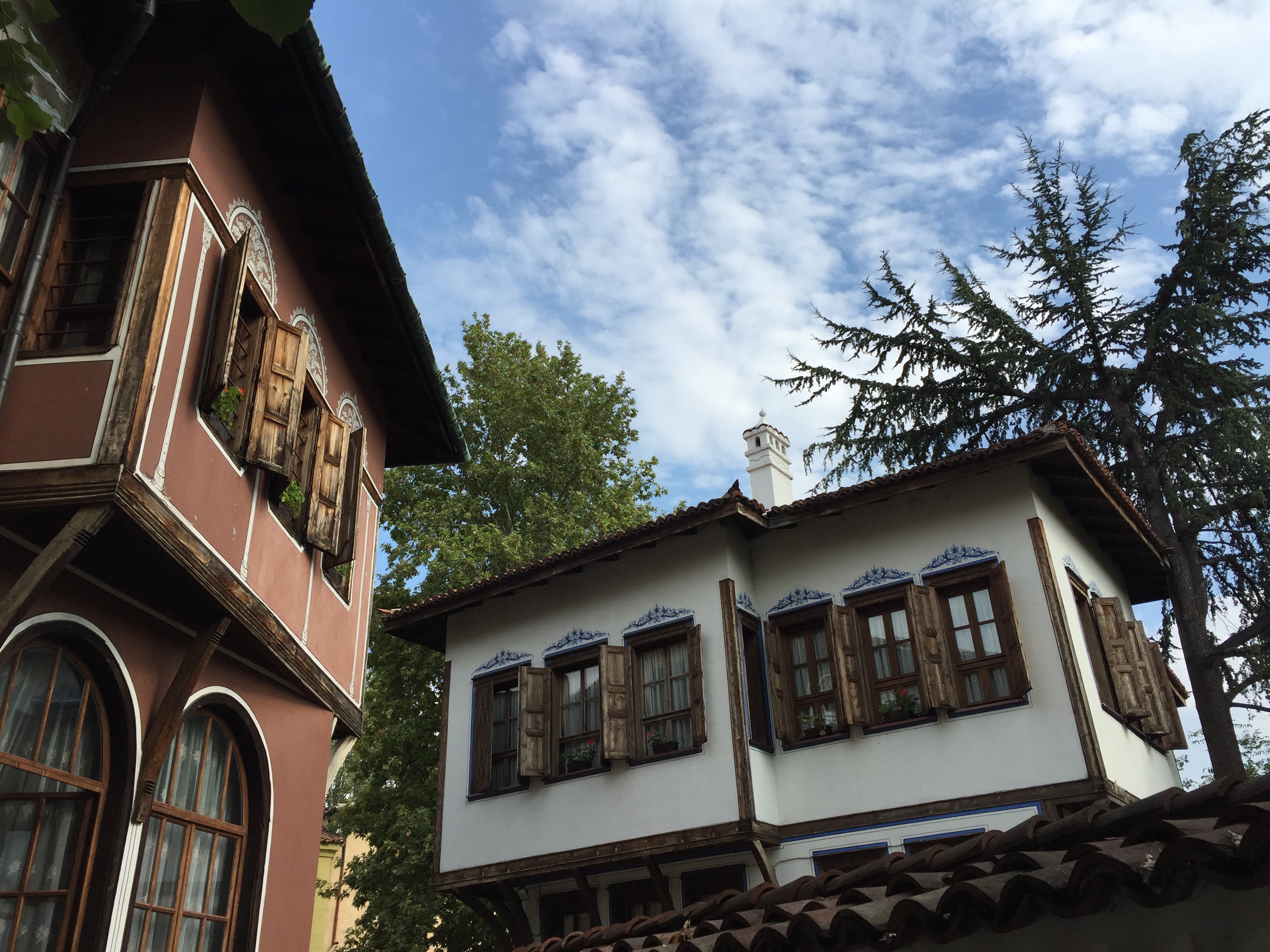
Plovdiv – like Rome, Plovdiv straddles seven hills; but as Europe’s oldest continuously inhabited city, it’s far more ancient. Plovdiv, the second largest city, is best loved for its romantic old town, packed with colourful and creaky 19th-century mansions that are now house-museums, galleries and guesthouses. Great for a day visit.
Rhodopi mountains – Shiroka Luka – cute mountain village. You can stay over at the peaceful mountain village Gela (15min drive) and also visit two unique caves Diavolsko gurlo cave (Devil’s throat) and Yagodina cave in the Trigrad canyon. Here some more on hiking in the region
Tsigov Chark is a cute village just next to the lake Batak dam in Bulgaria. Example of a hotel in the area
Leshten and Kovachevica villages are popular destinations for rural tourism. The two villages are separated by just 8 km and are located in the Western Rhodopes. Another article on these two spots
Rila monastery – the largest and most famous Eastern Orthodox monastery in Bulgaria
Melnik is the smallest town in Bulgaria, famous for its wine, sand pyramids forming bizarre shapes (and also great for a hike) and the nearby Rhozen monastery
Wine / Spa / Climbing holidays:
As you’ve seen from all of the information above, there are different sort of holidays you can plan – hiking in the mountains, beach holiday, city trip, golf. Here some additional options such as wine, spa or climbing/cave tourism.
This is an excellent intro article on Bulgarian wine. Melnik and Starosel are great wine destinations.
Starosel is a village in central Bulgaria, close to Plovdiv (second largest city). It is known for the abundance of ancient Neolithic and Thracian sites, with some finds dating as far back as the 5th-6th millennium BC, as well as for wine and wineries.
Spa / mineral water: When it comes to mineral waters, Bulgaria does stand out. It boasts well over 200 mineral springs! Most of them were discovered and developed centuries ago and they played pivotal role for the establishment of several towns. Nowadays some of them have become popular spa resorts that attract lots and lots of people who relish the healing power of water. The average temperature of the springs in Bulgaria ranges from 37 to 50°C and their waters are generally characterised by low levels of mineralization.
As a very mountainous country, Bulgaria cannot complain from a lack of interesting caves. Here are some of the most notable ones. If you love climbing, also read this article.
Northwest:
Belogradchik Rocks are a group of strange shaped sandstone and conglomerate rock formations located on the western slopes of the Balkan Mountains in northwest Bulgaria (unfortunately somewhat far away from most of the other sights as well as in one of the poorest regions of the country). The rocks are still breathtaking, so if you have lots of time, keep it in mind.
Some good-to-know things about Bulgaria
The currency is Bulgarian lev, which is fixed to the euro at a nearly 2:1 exchange rate. ATMs are easy to find (nearly everywhere)
Younger people in general speak better English than the older generation. Likewise for larger cities vs smaller ones
It’s European Union (though we are sure you know this already ;). So no visum needed for the ones travelling within the EU
Food is amazing! (check the food video). Try it with some Bulgarian drinks
More on food and drinks
Here are some funny/unusual Bulgarian customs and traditions
Folk dances are still played nowadays and are integral part of weddings too (such as the Choros and Rutschenitsa danced hand in hand in open circles)
We write in Cyrillic as the Russians (the alphabet was actually invented in Bulgaria in the middle of the 9th century.. and get used to this -> Bulgarians being proud of their heritage). Back to the topic – most restaurants have a menu in English. Some street names in the bigger cities are written in Latin letters also. Not only the writing is different to most parts of Europe, also the body language is pretty confusing. Nodding the head in the up-and-down-direction means no and nodding from side to side means yes. This can cause pretty tricky situations
Renting a car is quite easy and also cheap. For distances between cities best check google maps and look at the time it takes to get from A to B -> many of the roads are not highways and 100km may sometimes take 3x longer than on other roads (also given the mountainous roads in some areas)
-
The Journey Continues
Thanks for joining me!
Remember that happiness is a way of travel – not a destination. — Roy Goodman

About Me
The sky is not completely dark at night. Were the sky absolutely dark, one would not be able to see the silhouette of an object against the sky.
Follow Me On
Subscribe To My Newsletter
Subscribe for new travel stories and exclusive content.
 Tutto il mondo è paese